
African striped cricket
Libanasidus vittatus
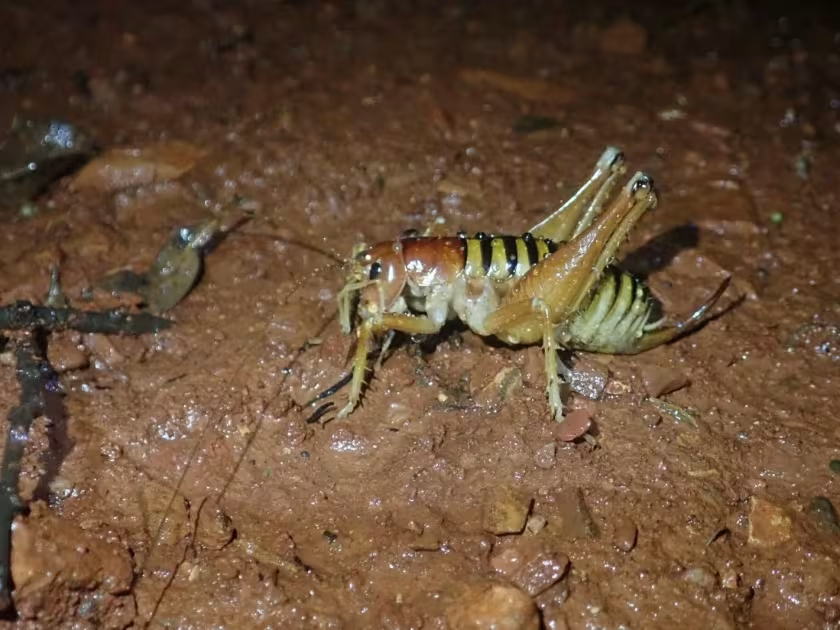
Description
How to identify
The African striped cricket (Libanasidus vittatus) belongs to the family Anostostomatidae, order Orthoptera. It is a robust insect, often referred to as the king cricket, characterized by its heavy body and distinct longitudinal stripes on its back.
Adults possess powerful mandibles capable of cutting through firm plant stems with ease, making them formidable pests for young agricultural plants.
This species is nocturnal, spending the daylight hours hiding in burrows in the soil or beneath layers of mulch and leaf litter to avoid desiccation and predators.
The coloration ranges from reddish-brown to yellowish-brown, featuring dark stripes that provide effective camouflage in dry grass and soil environments.
Their biological cycle consists of egg, nymph, and adult stages. Females lay eggs directly into the soil, where nymphs develop while feeding on roots or organic matter before surfacing.
What it damages
This pest poses a significant threat to a wide range of horticultural and vegetable crops, frequently devastating newly planted seedlings in small-scale agriculture.
Targeted crops include tomatoes, peppers, potatoes, and various cabbages, as the crickets typically feed by severing the stems just above the root zone.
Young fruit tree saplings and decorative shrubs are also susceptible, with damage often manifesting as bark girdling or total destruction of young terminal shoots.
The high appetite of the crickets, coupled with their tendency to feed in groups, can result in the total loss of a seedbed overnight.
Damage is most severe during the early growing stages, as plants are less able to recover from the physical destruction caused by the insects' powerful jaws.
Signs of infestation
A primary indicator of a cricket infestation is the presence of young seedlings that have been cleanly severed at the base, looking as if they were cut with a tool.
Large, irregular holes in leaves of established plants suggest that the insects are active in the area and feeding on the succulent tissue.
In the evening or at night, inspectors may spot the insects resting on stems or moving across the soil surface using a simple flashlight.
Small holes or burrows leading into the soil near damaged plants are classic signs of the cricket's diurnal hideouts.
- Sudden death of young seedlings.
- Cleanly severed stems near the soil line.
- Ragged feeding marks on vegetable leaves.
- Small soil mounds or burrows near the base of damaged plants.
Control measures
Chemical control often involves the use of poison baits containing methiocarb or metaldehyde, strategically placed to target the crickets during their active feeding periods.
Physical protection, such as plastic guards or collars placed around the base of individual seedlings, acts as a highly effective barrier against stem cutting.
Agricultural practices, including deep tillage and soil turning, are vital for destroying subterranean nests and killing nymphs before they emerge to feed.
Removing garden debris and maintaining weed-free areas around the crops significantly reduces the availability of daytime shelters for the crickets.
In cases of heavy infestation, registered systemic insecticides may be applied, ensuring all safety protocols and pre-harvest intervals are strictly followed.
Taxonomy
- Latin name
- Libanasidus vittatus
- Order
- Orthoptera (locusts)
- Family
- Anostostomatidae
- EPPO code
- LIBAVI
Discussion
No discussions yet — be the first.