
Giant weta
Deinacrida
Description
How to identify
The giant weta (Deinacrida) belongs to the order Orthoptera and the family Anostostomatidae. These insects are among the heaviest in the world, characterized by a heavy, flightless body and powerful armor.
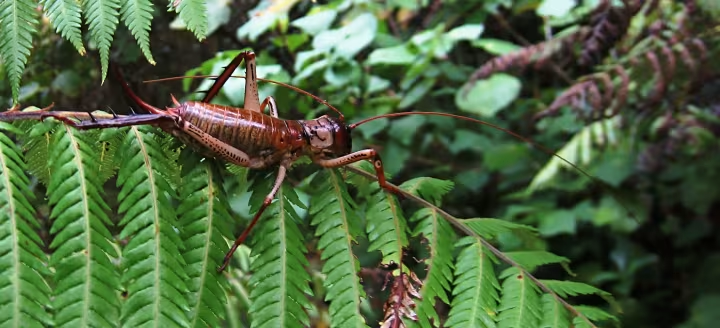
They resemble oversized crickets with robust, spine-covered legs. Their coloration typically blends with tree bark and decaying leaves, which serves as a natural camouflage.
Females are significantly larger than males and possess specialized mandibles adapted for grinding tough plant matter. They lack traditional sound-producing organs found in other grasshoppers, relying on leg-rubbing for communication.
The lifecycle is notably long, with development stages extending over many months or even years. This slow development makes them highly dependent on stable environmental conditions.
Taxonomically, the genus is native to New Zealand, having evolved in isolation to fill niches occupied by other herbivores on larger continents.
What it damages
As nocturnal herbivores, giant weta primarily feed on foliage, shoots, and fruit of various woody and herbaceous plants. Their feeding style is characterized by consuming large portions of leaf tissue.
In nursery settings, they can cause significant damage to young seedlings by gnawing through the stems or consuming the apical buds, which stunts future growth.
While they do not typically cause widespread crop failure like locusts, their feeding can be devastating to individual high-value plants in localized garden settings.
Repeated feeding sessions by a cluster of weta on a single plant can lead to severe defoliation and increased vulnerability to secondary infections and pathogens.
The impact is most significant on tender young vegetation, where even minor browsing can disrupt the vascular development of the plant tissue.
Signs of infestation
The most diagnostic sign of weta activity is the presence of ragged, coarse feeding marks on the edges of leaves, caused by their large and powerful mouthparts.
Deep gouges or rasping marks on the bark of young branches indicate where the insect has been browsing on nutrient-rich cambium layers during the night.
Frass (droppings) found at the base of the plant or within the cracks of wood provides clear evidence of their daytime shelter location.
During the day, search for crevices in tree trunks, hollow logs, or piles of leaf litter near the damaged plants; these are the typical nesting sites for giant weta.
If you encounter a plant that appears to be losing foliage specifically in the overnight hours without signs of small insect activity, it is a strong indicator of weta browsing.
Control measures
Manual removal of insects at night using a flashlight is the most practical and non-toxic method of control for small-scale garden plots.
Habitat modification, such as removing debris and leaf litter around the base of trees, forces the insects to relocate, effectively protecting vulnerable plants.
Physical barriers like sticky traps or bands applied to the trunks of trees can prevent the flightless insects from reaching the canopy foliage.
Since many giant weta species are considered conservation-sensitive, chemical insecticide applications should be strictly avoided in favor of physical exclusion methods.
Regular monitoring and cultivation of the soil around the garden beds can disrupt their ground-level habitat and reduce the likelihood of colonization.
Taxonomy
- Latin name
- Deinacrida
- Order
- Orthoptera (locusts)
- Family
- Anostostomatidae
- EPPO code
- DNCRSP
Discussion
No discussions yet — be the first.