
Weta
Hemideina
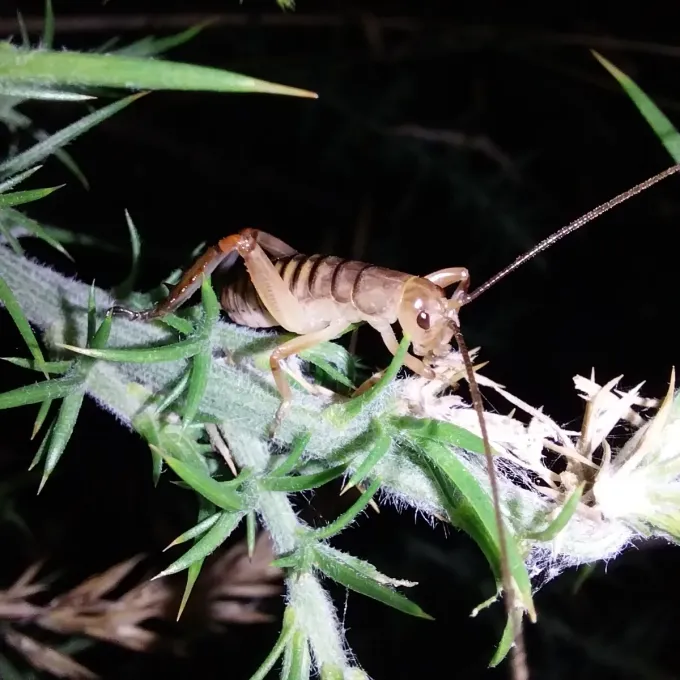
Description
How to identify
Weta are large, flightless insects belonging to the Anostostomatidae family, order Orthoptera. Physically, they resemble giant crickets or grasshoppers with powerful mandibles and long antennae.
These insects possess a massive body structure, which can reach up to 10 centimeters in length, excluding their long legs. Females are typically larger than males and feature a prominent ovipositor.
Their body color ranges from brown to reddish-tan, providing effective camouflage within tree bark and forest litter.
The legs of a Weta are equipped with sharp spines used for defense and for gripping vertical surfaces of trees during nocturnal movement.
A primary identification characteristic is their nocturnal lifestyle; they spend daylight hours hidden in narrow crevices in wood or artificial shelters.
What it damages
In their natural habitat, Weta primarily consume lichens, decaying leaves, and soft plant tissues, though they may damage young shoots when populations are dense.
Significant damage occurs in forest nurseries and orchards, where the insects can gnaw on the bark of young seedlings, leading to reduced vigor or eventual death.
The pest targets fruit and ornamental species if the plantings are located in proximity to natural Weta habitats in New Zealand.
Damage caused by their mandibles creates entry points for secondary infections, including fungal pathogens and bacterial rot within the tree structure.
Unlike specialized agricultural pests, Weta are not typically considered a major broad-scale threat, but they require management in human-altered landscapes.
When it appears
The life cycle of a Weta can span several years, resulting in overlapping generations, with peak activity observed during warm, humid months.
Activity peaks at night when the insects emerge from their retreats in hollows or bark crevices to forage for food sources.
Reproduction typically occurs in late summer and autumn, after which females deposit eggs into soil or soft decaying wood.
Adults and nymphs overwinter in a state of diapause inside woody cavities, allowing them to survive unfavorable weather conditions.
Spring and summer months see the emergence of nymphs, which undergo several molting stages before reaching sexual maturity.
Control measures
The primary control method involves cultural practices, such as clearing debris and decaying wood from around the base of trees to eliminate nesting sites.
Installing physical barriers on tree trunks can help restrict access to vulnerable saplings during their early growth stages.
In cases of severe infestation within nurseries, sanitary logging or removal of weakened trees is necessary to minimize habitat availability.
Biological control agents, such as entomopathogenic fungi, are being explored as sustainable alternatives to conventional chemical insecticides.
- Regular inspection of tree bark and stems.
- Sanitation of the garden or plantation.
- Usage of light-based monitoring traps.
- Promoting natural predators like insectivorous birds.
Taxonomy
- Latin name
- Hemideina
- Order
- Orthoptera (locusts)
- Family
- Anostostomatidae
- EPPO code
- HMDNSP
Discussion
No discussions yet — be the first.