
Mountain weta
Hemideina maori
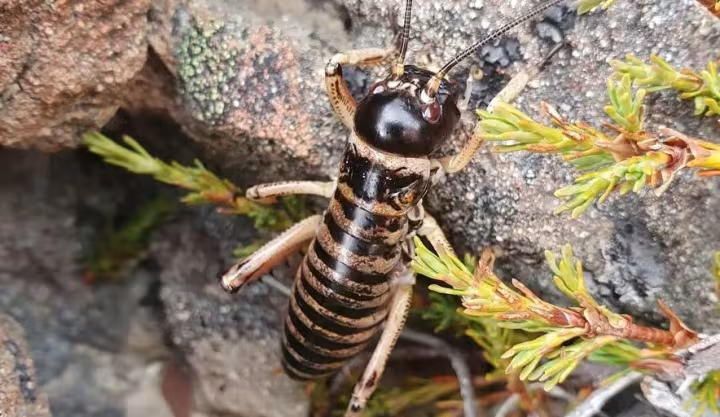
Description
How to identify
The mountain weta is a large, flightless insect of the order Orthoptera, belonging to the family Anostostomatidae. Physically, it resembles a massive cricket with powerful mandibles adapted for chewing tough, fibrous plant material.
The body is typically brown or reddish-brown, providing excellent camouflage against rocky terrain and wood. Males are significantly larger than females and possess elongated, curved mandibles used primarily for ritual combat.
The biology of this species is unique as it is adapted to the extreme cold of New Zealand's high-altitude regions. They possess specialized anti-freeze proteins in their hemolymph, which allow them to survive freezing temperatures during winter.
The life cycle is slow, with the insects requiring several years to reach sexual maturity. Breeding takes place in protected crevices such as rock gaps or voids within alpine scrub vegetation.
Unlike common agricultural pests, this species is an endemic insect with a strictly limited range. Encountering one in a commercial orchard is highly unlikely unless the site is immediately adjacent to alpine habitats.
What it damages
The diet consists mainly of native alpine flora, including leaves of high-altitude grasses and shoots of low-growing shrubs. In their natural environment, they are not considered mass pests due to their dispersed population structure.
In cultivated gardens adjacent to their natural habitat, they may occasionally damage tender shoots of ornamental plants. Their feeding pattern involves consuming soft leaf tissues, leaving behind ragged edges and distinct holes.
During periods of food scarcity, these insects may gnaw on the bark of young saplings, which can stress the plant and increase susceptibility to secondary infections. However, this is rare due to the species' specialized dietary preferences.
The species does not cause significant economic loss to commercial agriculture due to its rarity and restricted geographic distribution. Nevertheless, in private gardens in high-altitude zones, they may be viewed as a curiosity rather than a threat.
Wetas are nocturnal creatures, so their feeding activity is hidden from the gardener's view during the day, with damage becoming apparent only upon morning inspections of the garden beds.
Control measures
As the mountain weta is a unique endemic species, its eradication via insecticides is considered unethical and unnecessary. It is strongly recommended to use physical methods of control if their presence is undesirable.
To prevent access to young plants, installing physical barriers such as collars or netting is effective. This protects delicate plantings from nocturnal visits without harming the insect's population.
Maintaining garden hygiene, such as removing piles of rocks or decaying wood debris near planting beds, helps eliminate daytime hiding spots and reduces the likelihood of the insects settling in the area.
Preserving ecosystem balance is a vital consideration, as wetas play a role in seed dispersal for various alpine plants. Integrated management should focus on non-lethal exclusion rather than total population liquidation.
If removal is necessary, individuals should be carefully relocated to their natural environment, far away from garden crops, avoiding the use of chemical pest control products entirely.
Taxonomy
- Latin name
- Hemideina maori
- Order
- Orthoptera (locusts)
- Family
- Anostostomatidae
- EPPO code
- HMDNMA
Discussion
No discussions yet — be the first.