
Giant weta
Deinacrida rugosa
Description
How to identify
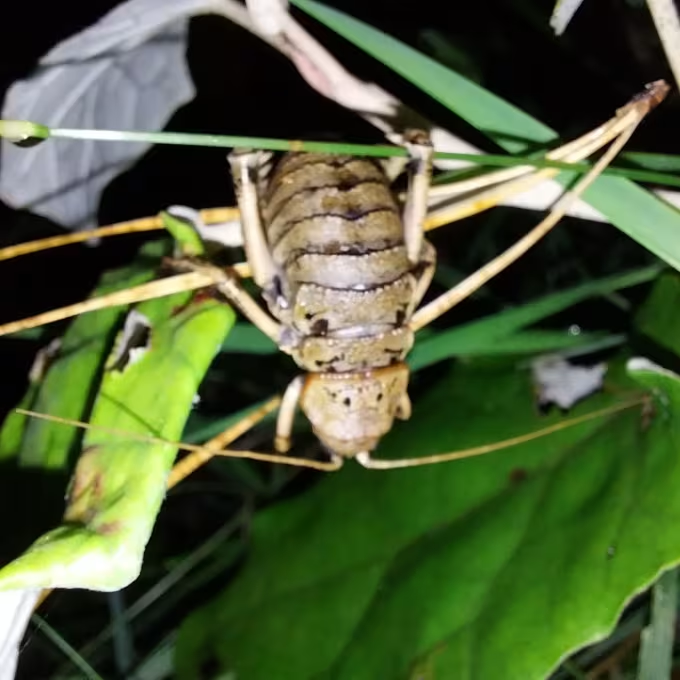
The giant weta (Deinacrida rugosa) is a large, flightless insect belonging to the family Anostostomatidae. Native to New Zealand, these insects are known for their massive body size and robust appearance, often reaching lengths of 10 cm or more.
They possess a heavily armored exoskeleton with a rugose or rough texture, which provides effective camouflage against tree bark and forest floors. The coloration typically ranges from earthy brown to dark grey, blending perfectly with their natural habitats.
Giant wetas are primarily nocturnal, using their long, sensitive antennae to navigate and locate food sources in the dark. Their mouthparts are strong and specialized for chewing through tough fibrous plant matter, including leaves and stems.
The life cycle of the giant weta is relatively slow, often spanning several years before reaching maturity. They go through a series of molts, and females are distinguishable by their long, upward-curving ovipositors used for egg-laying in soil or wood crevices.
Despite their intimidating size, they are generally docile, but they can defend themselves by striking out with their spiny hind legs if threatened. Understanding their biology is essential for differentiating them from other agricultural insect pests.
What it damages
While often viewed as ecological curiosities, giant wetas can impact agricultural settings, particularly in nursery environments. They feed on various plant species, including foliage, shoots, and ripening fruit if access is not controlled.
Young seedlings are particularly vulnerable to weta herbivory. Damage to the primary stem or growing tip can significantly stunt growth or even lead to the death of the plant during the critical establishment phase in a nursery or garden.
In mature plants, they may graze on the outer bark of younger branches. These feeding wounds can become necrotic or serve as entry points for secondary infections like fungal pathogens and opportunistic bacteria, further damaging the host plant.
The economic impact is typically low due to their localized distribution and status as a protected or managed species. However, in specific micro-environments where populations are high, they may cause noticeable defoliation of cultivated shrubs.
Overall, damage is mechanical in nature. Because they are not prolific breeders like locusts, the scale of destruction is usually confined to specific plants rather than widespread crop failure across large agricultural fields.
Control measures
Management of the giant weta must prioritize conservation ethics, as they are iconic species in their native habitat. Eradication is not a standard practice; instead, focus on exclusion and physical deterrents is highly recommended.
Mechanical barriers, such as sticky bands or specialized plastic collars applied to the base of tree trunks, effectively prevent the insects from climbing into the canopy. This protects vulnerable foliage and fruit from nocturnal feeding.
Cultural control practices include maintaining a clean growing area by removing debris, excessive leaf litter, and decaying logs near valuable plants. Reducing these daytime refuges limits the number of wetas that colonize the cultivated area.
Biological control through the encouragement of natural predators—such as native birds or reptiles—creates a natural balance that prevents population outbreaks. This approach is sustainable and avoids the use of harmful agricultural chemicals.
If direct intervention is necessary, the use of environmentally safe repellents can discourage weta presence without harming the insects or the surrounding ecosystem. Monitoring populations is the first step in deciding whether any action is needed.
Taxonomy
- Latin name
- Deinacrida rugosa
- Order
- Orthoptera (locusts)
- Family
- Anostostomatidae
- EPPO code
- DNCRRU
Discussion
No discussions yet — be the first.