
Libanasidus
Libanasidus
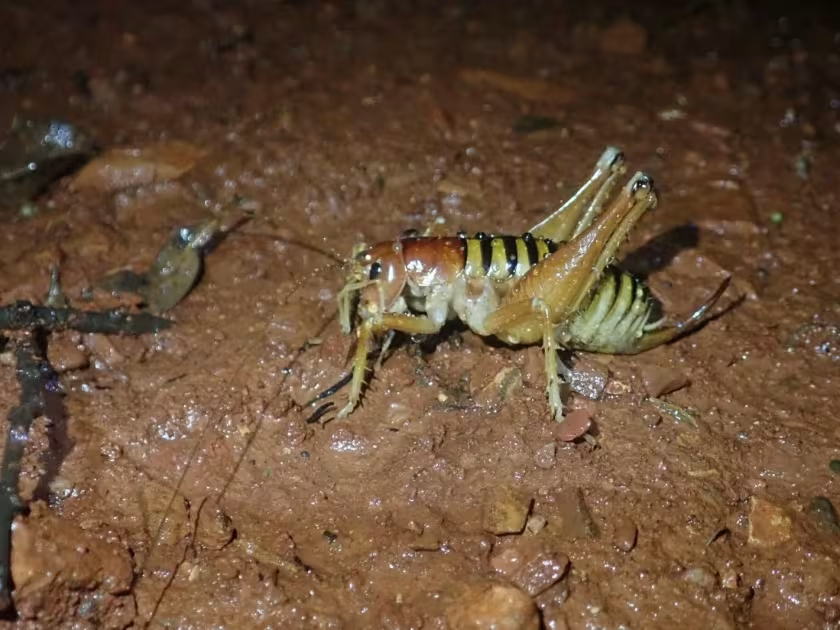
Description
How to identify
Libanasidus is a genus of insects belonging to the order Orthoptera and the family Anostostomatidae. These organisms are commonly referred to as king crickets due to their large size and robust anatomy.
Adult individuals possess a heavy, wingless body with powerful, thickened hind legs adapted for jumping and burrowing. Their coloration is typically dark brown or blackish, blending well with moist soil and leaf litter.
Their biological behavior is primarily nocturnal and subterranean. They spend most of their time in burrows or beneath organic debris, which provides them with a stable microclimate and protection.
Reproduction involves laying eggs deep in moist soil. The life cycle includes several nymphal instars, where the young insects gradually grow and develop features similar to the adults without undergoing metamorphosis.
Given their lack of wings, their dispersal ability is relatively limited, often resulting in localized but intense infestations within fields or greenhouse environments.
What it damages
This pest is known for causing significant damage to a variety of plants, including young vegetable seedlings, ornamental crops, and developing saplings in nurseries.
The primary damage is caused by their strong mandibles, which are used to sever the roots and the base of the stems. This leads to the rapid wilting and eventual death of the affected plants.
In nursery settings, Libanasidus can be particularly devastating, moving from plant to plant in the soil and destroying the entire crop row before the infestation is detected.
- Destruction of root systems in young seedlings.
- Biting through stems at ground level.
- Creation of soil tunnels that can dry out the rhizosphere.
- Feeding on organic seed materials during germination.
The damage is often underestimated until the plant shows visible signs of collapse, at which point the root system is already severely compromised.
When it appears
The activity of Libanasidus is highly dependent on environmental conditions, specifically soil moisture and temperature levels throughout the growing season.
They are most active from late spring to early autumn. Increased rainfall often triggers higher activity, as the softer soil allows for easier movement and foraging closer to the surface.
During dry summer months, they tend to retreat into deeper soil layers or areas near irrigation points to escape dehydration, maintaining their feeding activity in the rhizosphere.
Their life cycle is seasonal, with the highest levels of foraging activity coinciding with the emergence of young nymphs and the planting season for many vegetables.
As winter approaches and temperatures drop, these insects enter a period of dormancy, retreating well below the frost line to survive the colder months.
Signs of infestation
The most prominent sign of an infestation is the sudden and unexplained wilting of healthy plants. Often, a gentle pull on the plant reveals that the roots have been entirely severed.
Careful inspection of the soil surface near the affected plants will often reveal small holes or distinct tracks where the insects have entered or exited their burrows.
In greenhouses, the presence of these pests can be confirmed by nocturnal observations, where individuals can be spotted active on the soil surface in low light.
The presence of chewed leaf margins on seedlings located very close to the soil surface is another strong indicator of their feeding activity.
Accumulations of frass or waste material near the entry points of their tunnels serve as a clear indicator of a persistent colony living in that specific area.
Control measures
Cultural control is essential. Regular tilling and soil cultivation help disrupt tunnels and destroy egg-laying sites, significantly reducing the population density in the area.
The use of insecticidal baits placed near plant bases can be an effective chemical control measure, targeting the insects during their nocturnal foraging periods.
Biological control options, such as using entomopathogenic nematodes that search for and infect soil-dwelling insects, provide a safe and targeted method to manage infestations.
Maintaining a weed-free field is critical, as weeds provide food and shelter for the insects, allowing populations to thrive even when the primary crop is not present.
In high-pressure situations, preventive soil treatment with registered systemic or contact insecticides before planting can provide long-term protection for the crop roots.
Taxonomy
- Latin name
- Libanasidus
- Order
- Orthoptera (locusts)
- Family
- Anostostomatidae
- EPPO code
- LIBASP
Discussion
No discussions yet — be the first.