
Lestids
Lestes
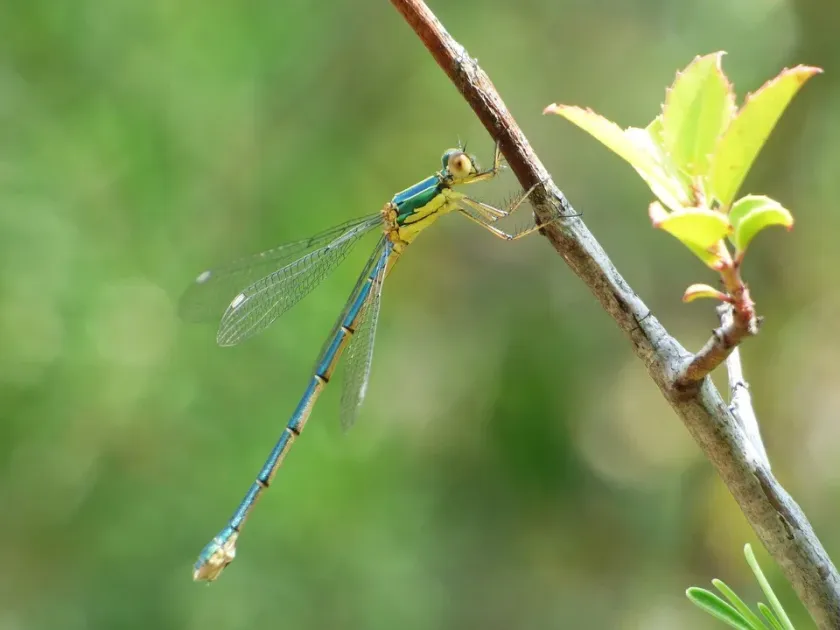
Description
How to identify
Lestids (Lestes) are a genus of damselflies belonging to the Lestidae family within the Odonata order. These insects are characterized by a slender body, often exhibiting a distinctive metallic green or bronze luster.
Unlike many other damselflies that fold their wings over their backs, Lestes individuals typically rest with their wings spread slightly apart. They are commonly found near stagnant or slow-moving water bodies with dense vegetation.
They possess well-developed compound eyes and are highly efficient aerial predators. Their morphology allows them to thrive in grassy habitats where they hunt for smaller flying insects.
What it damages
Lestids are not pests; they do not cause damage to crops, vegetables, or garden plants. On the contrary, they are considered beneficial insects and natural predators that provide essential ecological services.
Both the larvae (nymphs) and adult damselflies are carnivorous. They feed on a variety of small insects, including mosquitoes, midges, and other dipterans that are often considered nuisance pests in garden environments.
By keeping populations of smaller flying insects in check, Lestes damselflies act as natural biocontrol agents, contributing to the overall health of the agricultural landscape.
When it appears
The life cycle of the Lestid is dependent on the availability of water. Adults are most active during the summer months, typically from June through September, when mating and egg-laying occur.
Females deposit their eggs into the tissues of aquatic or semi-aquatic plants. Many species within this genus have adapted to survive winter stages as eggs, ensuring the next generation is ready for spring.
The larval stage occurs underwater, where the nymphs develop through several instars. This aquatic phase is critical, and the presence of healthy, vegetative water habitats is necessary for their successful development.
Control measures
There is no need for control measures against Lestids, as they are not detrimental to agriculture. Their presence is highly desirable and indicates a balanced local ecosystem.
To support these beneficial predators, farmers and gardeners should focus on habitat preservation rather than eradication. Avoiding excessive use of broad-spectrum insecticides is crucial for their survival.
- Maintain pond margins and wetland buffers.
- Avoid chemical drift from pesticides into water sources.
- Promote biodiversity to sustain healthy populations of predatory insects.
Taxonomy
- Latin name
- Lestes
- Family
- Lestidae
- EPPO code
- LESTSP
Discussion
No discussions yet — be the first.