
Speckled bush-cricket
Leptophyes punctatissima
Description
How to identify
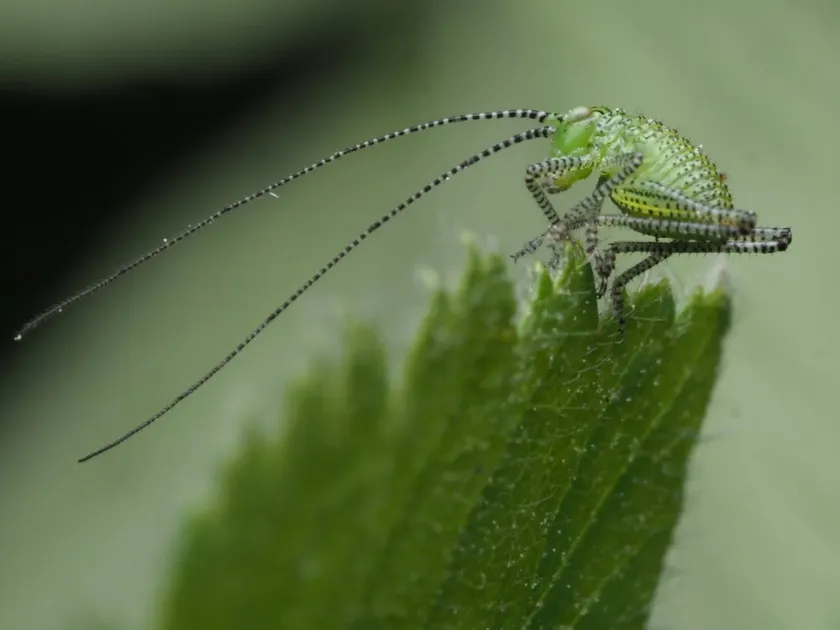
The speckled bush-cricket (Leptophyes punctatissima) is a flightless or short-winged insect belonging to the Tettigoniidae family. Adult specimens typically reach 10–15 mm in length and are characterized by a vibrant green color covered with small, dense black speckles.
They feature a conical head shape and antennae that are significantly longer than their own bodies. Females are equipped with a sturdy, sickle-shaped ovipositor, which they use to insert eggs into plant tissues, tree bark, or cracks.
As flightless insects, they rely on jumping and crawling to navigate through vegetation. They are predominantly nocturnal or crepuscular, spending the daylight hours concealed within dense foliage to avoid predators.
Nymphs look like miniature versions of the adults but lack developed wings and fully functioning reproductive organs. Their coloring is often slightly lighter, helping them blend into the spring greenery.
Proper identification relies on spotting the distinctive black speckling on the exoskeleton and observing the insect’s habit of freezing motion when disturbed, which is a classic defensive behavior.
What it damages
The speckled bush-cricket is a polyphagous pest, meaning it feeds on a wide range of plant species. While they are not usually considered major pests, local outbreaks can cause significant damage in gardens and allotments.
They frequently target fruit bushes such as raspberries, blackberries, and currants. The insects consume the leaf tissue, creating irregular, ragged holes that reduce the plant's photosynthetic capacity.
In vineyards, they may feed on young shoots and leaves, potentially affecting the plant's overall development. Vegetables like lettuce, beans, and tomatoes are also vulnerable, especially when grown near overgrown garden borders.
Beyond leaf consumption, these crickets can damage floral buds and developing fruit. This often results in cosmetic blemishes or structural deformities, which can render produce unsuitable for market sale.
In ornamental gardens, they are known to attack roses and other flowering shrubs, feeding on petal margins and leaves, which significantly impacts the aesthetic value of the plantings.
When it appears
The life cycle of the speckled bush-cricket is strictly seasonal. The winter months are spent in the egg stage, with eggs deposited deep within plant stems or bark crevices during the previous autumn.
Nymphs emerge in May, coinciding with the first flush of spring growth. This period is critical for their development, as they feed voraciously on fresh, tender foliage to fuel their rapid growth through several molting stages.
Adults typically appear by mid-summer, in July. This is the period of peak activity, during which feeding increases as the insects prepare for the mating season and subsequent egg-laying.
Activity remains steady until the first frosts of autumn. Late summer is the most important time for monitoring, as the increased adult population can cause the most noticeable damage to maturing crops.
Climatic factors play a major role; warm, dry springs significantly improve the survival rate of nymphs, leading to larger populations later in the growing season.
Signs of infestation
The most visible sign of an infestation is the presence of irregular, ragged holes in the leaves. Unlike the smooth edges left by some caterpillars, cricket damage often appears as jagged or torn-looking bite marks.
If you suspect an infestation, check the underside of leaves or deep inside the foliage during early evening hours, when the insects are most likely to be actively feeding.
The presence of small, dark, granular frass (insect droppings) on leaves or the soil surface beneath the plant is a clear indicator that a bush-cricket colony is active nearby.
Damage to flowering buds often appears as missing petals or jagged margins on the blossoms. If apical buds on young shoots are consumed, you may notice stunted growth or distorted branching in the affected plant.
A high-pitched, faint ticking sound emitted by males in the evening is a reliable indicator of their presence. If you hear this sound in your shrubs or hedges, a population of bush-crickets is likely present.
Control measures
Cultural control is the most effective management strategy. Keeping garden boundaries, hedges, and fence lines clear of weeds and long grass removes the primary habitat and refuge for the crickets.
Promoting a healthy garden ecosystem by encouraging natural predators such as birds, ground beetles, and spiders can help keep bush-cricket numbers in check without the need for chemicals.
If an outbreak becomes severe, biological controls such as formulations containing entomopathogenic fungi or nematodes can be used to target the population while sparing beneficial insects.
Chemical intervention should be considered a last resort. If insecticides are necessary, they must be applied outside of flowering periods to protect bees and other vital pollinators present in the garden.
Early monitoring in early summer allows for manual removal of visible individuals or targeted local applications, preventing the need for large-scale treatment later in the season.
Taxonomy
- Latin name
- Leptophyes punctatissima
- Order
- Orthoptera (locusts)
- Family
- Phaneropteridae
- EPPO code
- LPTPPU
Discussion
No discussions yet — be the first.