
Boscii's bush cricket
Leptophyes boscii
Description
How to identify
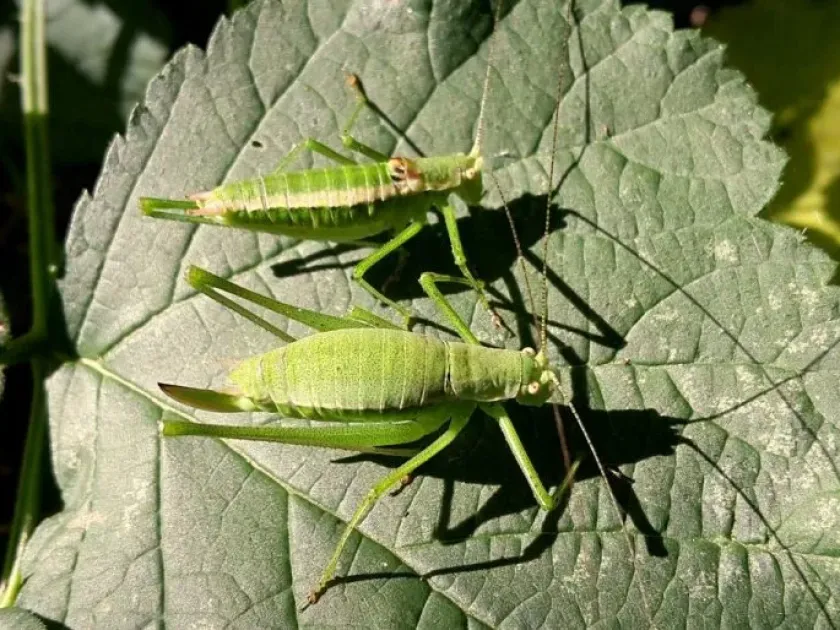
Leptophyes boscii, commonly known as Boscii's bush cricket, belongs to the family Tettigoniidae. This insect is recognized for its slender, green body, typically measuring between 12 and 18 millimeters in length, which blends perfectly with grapevine foliage.
Adult crickets have vestigial wings, rendering them flightless. They move primarily through jumping, which is characteristic of the species within their preferred warm and bushy habitats.
The female possesses a distinct, sickle-shaped ovipositor, which she uses to deposit eggs into plant tissues, such as cracks in bark or within stems, to protect them throughout the winter.
The life cycle consists of a single generation per year. Development proceeds through several nymphal stages, which appear similar to adults but are significantly smaller and lack reproductive organs.
This species is highly thermophilic, preferring open, sunlit areas. It is most active during the warmest months of the year, which aligns with the peak development phase of the grapevine.
What it damages
The primary agricultural target for Leptophyes boscii is the grapevine. While they can inhabit various shrubs, they frequently migrate to commercial vineyards where they feed on green tissue.
Both nymphs and adults feed on young leaves, creating irregular holes that reduce the total leaf area available for photosynthesis, thereby stressing the vine.
Under heavy infestation, these crickets can cause significant damage to emerging inflorescences and young fruit clusters, leading to direct yield loss and reduced fruit quality.
Sustained feeding can result in the skeletonization of leaves, leaving behind only the veins. This severe damage weakens the vine, making it less resilient to environmental stress and disease.
Although they are often considered minor pests, their feeding activities can accumulate, making integrated pest management necessary for high-value vineyard production.
Signs of infestation
The most common sign of infestation is the presence of irregular, notched feeding marks on the leaves. These patterns often resemble those made by other foliage-feeding insects.
Visual confirmation involves inspecting the undersides of leaves during the morning hours, as these crickets tend to hide to avoid midday heat and direct sunlight.
The presence of small frass deposits on the leaves or stems can indicate active feeding sites, helping growers locate the pests before significant damage occurs.
Acoustic monitoring during the evening can reveal the presence of males, as they produce a high-pitched chirping sound which confirms the arrival of the adult stage in the vineyard.
Damaged flower clusters may appear ragged or partially missing. Careful examination of these clusters in late spring can identify the presence of the crickets during their most destructive phase.
Control measures
Effective management begins with good horticultural practices, such as maintaining clean vineyard aisles and removing weeds that serve as alternative hosts and refuges for the crickets.
Chemical control should be applied based on economic thresholds. If populations are high, insecticides effective against Orthoptera can be used during the nymphal stages to prevent adulthood.
Promoting a balanced ecosystem by protecting natural predators, such as insectivorous birds and predatory ground beetles, can significantly suppress cricket populations naturally.
Routine monitoring using visual inspections or sticky traps during the early spring allows growers to intervene early, protecting the crucial stages of grapevine development.
Applications of integrated control products should ideally be timed for when the insects are most active, ensuring better contact and efficacy while minimizing impact on non-target species.
Taxonomy
- Latin name
- Leptophyes boscii
- Order
- Orthoptera (locusts)
- Family
- Phaneropteridae
- EPPO code
- LPTPBO
Discussion
No discussions yet — be the first.