
Leptophobia
Leptophobia
Description
How to identify
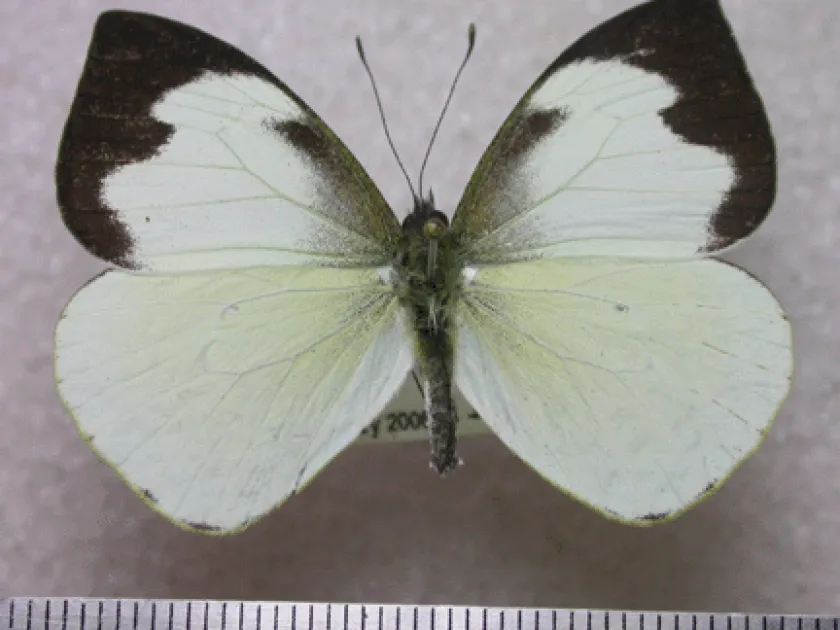
Leptophobia is a genus of butterflies within the Pieridae family. These insects are known for their distinct wing patterns, which often involve white coloration with dark markings at the tips of the forewings, resembling other common white butterflies.
Adult specimens typically feature a wingspan that classifies them as moderate in size. Their morphological characteristics, particularly the venation and genitalic structure, are critical for entomologists to distinguish them from other look-alike Pierid species found in similar ecosystems.
Larvae, or caterpillars, are the primary stage of interest for agronomists. They possess a robust chewing mouthpart structure, essential for consuming dense leaf tissue. Their coloration is usually adapted for camouflage, blending well with the host plant foliage.
Pupae of the genus are often found secured to the underside of leaves or stems. They use silk structures to anchor themselves, remaining immobile as they undergo metamorphosis, which makes them susceptible to environmental changes and natural predators.
Accurate identification in the field often requires observing both the adult butterfly activity and the presence of specific larval feeding patterns, which can distinguish them from other lepidopteran pests sharing the same habitat.
What it damages
The damage caused by Leptophobia is primarily restricted to plants in the Brassicaceae family. Vegetables such as cabbage, kale, broccoli, and various root crops are frequently targeted, making this pest a significant concern in horticulture.
Caterpillars cause extensive defoliation by consuming leaf blades. In early stages, this results in small perforations, but as the larvae grow, they can leave only the midribs of the leaves intact, effectively stripping the plant of its photosynthetic capacity.
Young transplants are at the highest risk, as even minimal feeding can result in the destruction of the apical meristem. This leads to stunted growth or total plant mortality, which can compromise the entire field stand if not managed early.
Secondary damage occurs through the accumulation of larval frass, which serves as an entry point for various plant pathogens. This degradation reduces the marketability and shelf life of the harvested crops, leading to significant economic losses.
Host plants also include wild mustard and other cruciferous weeds. These act as reservoirs for the pest, allowing Leptophobia to persist in an area even when cultivated crops are not actively growing or are rotated out.
When it appears
The biological cycle of Leptophobia is highly dependent on ambient temperature and moisture levels. Activity begins in the spring as temperatures rise, signaling the emergence of adults from the overwintering pupal stage.
The lifecycle consists of egg, larval, pupal, and adult stages. Depending on the climate, the pest can complete multiple generations within a single season, leading to a rapid buildup of population numbers during the peak summer months.
Eggs are typically laid in clusters on the undersides of host plant leaves. The rapid transition from egg to larvae ensures that a single female can contribute to significant infestation localized to a specific area of the field.
Summer is the period of highest activity and damage. During this time, the overlapping generations mean that larvae of various sizes are present on the plants, necessitating continuous monitoring by field scouts to determine the best timing for intervention.
Overwintering usually occurs in the pupal stage, hidden within plant debris or near the soil surface. This strategy allows the species to survive low temperatures and restart the cycle as soon as favorable conditions return the following season.
Control measures
Effective management of Leptophobia involves an Integrated Pest Management (IPM) approach. Cultural practices like deep plowing and the removal of crop residues are essential to destroy overwintering pupae and reduce the initial population size.
Crop rotation remains a fundamental strategy. By moving away from Brassicaceae for a season or two, growers can break the lifecycle of the pest, making it difficult for the next generation of adults to locate suitable host plants.
Biological control methods are highly recommended. Encouraging local natural enemies, such as parasitic wasps (e.g., Trichogramma spp.), can significantly suppress larval populations without the use of chemical pesticides.
Chemical control should be applied strictly based on monitoring data and economic threshold levels. Selective insecticides, particularly those containing biological agents like *Bacillus thuringiensis*, are preferred to minimize impact on beneficial predatory insects.
- Use pheromone traps to monitor adult flight and predict larval emergence times.
- Maintain weed control to remove non-crop host plants around the perimeter.
- Apply biological sprays during the early larval stages for maximum efficacy.
Taxonomy
- Latin name
- Leptophobia
- Order
- Lepidoptera (butterflies)
- Family
- Pieridae
- EPPO code
- LEPPSP
Discussion
No discussions yet — be the first.