
Rice bug
Leptocorisa filiformis
Description
How to identify
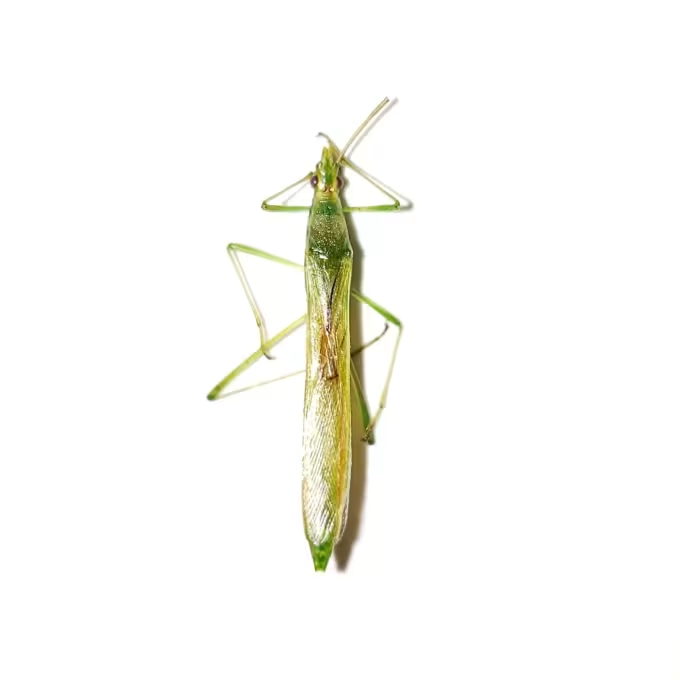
The rice bug (Leptocorisa filiformis) is a member of the Alydidae family in the order Hemiptera. These insects typically have a slender body, reaching 15–17 mm in length, with coloration ranging from yellowish-brown to greenish-brown.
They are easily recognized by their long, thread-like antennae and thin legs, which facilitate movement within the dense canopy of rice crops during the grain-filling stage.
The life cycle involves incomplete metamorphosis. Females lay rows of dark brown or black, metallic-looking eggs on the upper surfaces of leaves, which are usually laid in straight lines.
Nymphs resemble smaller, wingless versions of the adults. They progress through five instars, gradually increasing in size and developing wing pads before reaching maturity.
As strong fliers, the adults are highly mobile, allowing them to rapidly colonize rice paddies from surrounding grasses as soon as the rice plants begin to produce panicles.
What it damages
The primary host for this pest is rice (Oryza sativa), although they can survive on various wild grasses when rice is not available in the fields.
Damage is caused by both adults and nymphs, which use their piercing-sucking mouthparts to feed on developing rice grains during the milk and soft dough stages.
Feeding results in shriveled, deformed, or empty grains. The puncture marks serve as entry points for pathogens, leading to discoloration and grain decay, often referred to as "pecky rice".
Heavy infestations significantly reduce both grain weight and quality. The grains become brittle, causing high breakage rates during the milling process, which drastically lowers the value of the crop.
In severe cases, yield losses can reach 30–50%, making this pest a major economic concern in many rice-growing regions around the world.
When it appears
Rice bug activity is closely linked to temperature and the growth stage of the rice plant. They typically appear in large numbers when temperatures rise, coinciding with the booting and flowering stages.
The life cycle can take between 30 to 45 days, allowing for several generations per season, especially in tropical or subtropical climates with consistent moisture and heat.
Adults overwinter in sheltered areas, such as wild grasses, leaf litter, or debris at the margins of fields, emerging when environmental conditions become suitable for reproduction.
Early in the season, they feed on weed hosts near the paddies. As the rice crop matures, they migrate into the fields, attracted by the scent of developing grain.
The population peaks during the grain-filling period, making the interval between flowering and harvesting the most critical window for surveillance and management.
Signs of infestation
The most prominent sign of infestation is the presence of empty or discolored grains on the panicle. These grains may show dark, sunken spots where the bug has fed.
Farmers can often detect the presence of rice bugs by a strong, unpleasant, bug-like odor emanating from the field, especially during the early morning or evening hours.
Observing the crop closely may reveal the bugs themselves, which are shy and often drop to the lower parts of the plant or fly away when disturbed.
Patches of premature yellowing or drying panicles within the field can indicate localized infestation hotspots that require immediate attention.
Opening the affected grains will reveal a lack of starch or a necrotic, powdery residue, confirming that the grain has been successfully drained of its contents by the pest.
Control measures
Sanitation is key to prevention. Keeping field bunds and surrounding areas free of weeds removes the secondary host plants that allow the population to build up early in the season.
Synchronized planting across a region helps to ensure that the vulnerable stage of the rice crop does not last for an extended period, making it harder for the pest population to stabilize.
Biological control agents, such as egg parasitoids (e.g., Telenomus species), play a significant role in naturally suppressing rice bug populations and should be preserved.
When the economic threshold is exceeded, chemical control via systemic or contact insecticides is recommended. Timely application during the early grain-filling stage is crucial.
Regular scouting using sweep nets or light traps provides the data needed to make informed decisions about intervention, preventing unnecessary pesticide use.
Taxonomy
- Latin name
- Leptocorisa filiformis
- Order
- Hemiptera (bugs, aphids, leafhoppers)
- Family
- Alydidae
- EPPO code
- LEPRFI
Discussion
No discussions yet — be the first.