
Silverfish
Lepisma
Description
How to identify
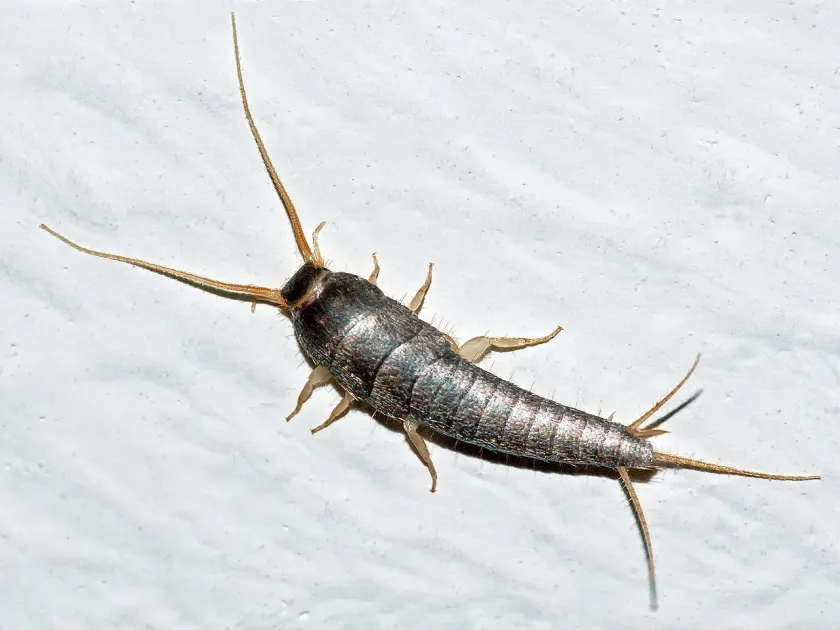
The silverfish (Lepisma saccharina) is a wingless insect belonging to the order Zygentoma and the family Lepismatidae. Adults are approximately 8–12 mm long and covered in metallic, silver-grey scales.
The body is elongated and flattened, tapering towards the posterior, with long antennae and three distinct long tail-like appendages (cerci and a caudal filament).
These insects are nocturnal and possess a strong aversion to light, which makes them difficult to observe during standard working hours in warehouses.
Their life cycle is highly dependent on environmental conditions, particularly humidity and temperature, with 20–25°C being the optimal range for development.
The nymphs go through several molting stages, gradually acquiring the characteristic silver scales and body structure as they reach maturity.
What it damages
In an agricultural and storage setting, the silverfish is considered a pest of stored products rich in starches, polysaccharides, and dextrins.
They infest warehouses to feed on seed supplies, dried vegetables, grain residues, and various plant-based materials, contaminating them with excrement.
Silverfish cause significant indirect damage by consuming starch-based glues used in packaging, labels, book bindings, and cardboard storage boxes.
Stored botanical specimens, herbaria, and seed collections are particularly vulnerable to their feeding habits if stored in damp conditions.
Although they rarely attack plants in the field, they can thrive in greenhouses or propagation areas where organic mulch or damp conditions exist near young seedlings.
Signs of infestation
The most common sign of an infestation is observing the insects themselves when moving items in dark, moist storage corners during the night.
Small, pepper-like black droppings, often found near feeding sites, serve as a clear indicator of a silverfish population present in the area.
Evidence of feeding damage includes small, irregular patches or notches on starchy food materials, paper labels, or thin cardboard surfaces.
Finding translucent, shed exoskeletons in storage corners or under pallets confirms that the insects are actively molting and reproducing.
Yellowish staining or ragged edges on cardboard packaging and paper goods are typical symptoms of an established silverfish infestation.
Control measures
The primary control strategy involves reducing humidity levels through proper ventilation and maintaining a dry environment in all storage facilities.
Sanitation is critical; regular cleaning of warehouses to remove dust, spilled grain, and organic debris reduces the food supply available to the pests.
Sealing cracks, crevices, and gaps in flooring and wall structures effectively eliminates the hiding spots these insects require to thrive.
Boric acid-based baits can be strategically placed in areas where silverfish are detected to provide effective population suppression.
Sticky traps should be used for ongoing monitoring, and in severe infestations, surfaces may be treated with approved residual insecticides suitable for warehouses.
Taxonomy
- Latin name
- Lepisma
- Family
- Lepismatidae
- EPPO code
- LEPISP
Discussion
No discussions yet — be the first.