
Grey silverfish
Ctenolepisma longicaudata
Description
How to identify
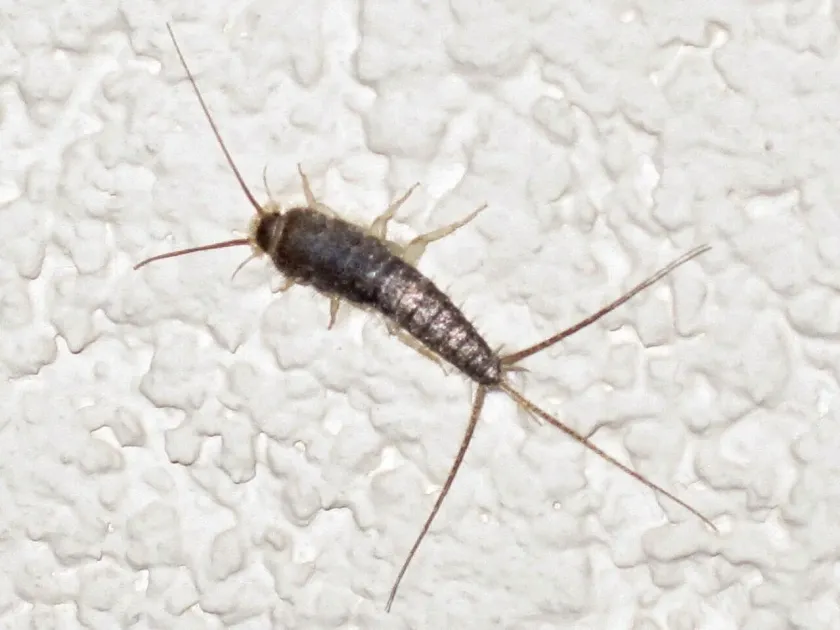
The grey silverfish (Ctenolepisma longicaudata) is a wingless insect belonging to the order Zygentoma and the family Lepismatidae. It typically measures 12–19 mm in length and is covered in delicate, grey-silver scales.
This species is easily distinguished by its three extremely long tail filaments (cerci and epiproct) and very long antennae, which are longer than the body itself. It is highly mobile and thrives in indoor environments.
Unlike other household silverfish, the grey silverfish is well-adapted to drier conditions. It is nocturnal, avoiding bright light and preferring dark, sheltered crevices for daytime resting.
The life cycle involves an egg stage, followed by several nymphal stages that resemble the adult form but are smaller. Development is gradual and sensitive to temperature and humidity levels.
Females lay eggs in small cracks or crevices, and the rate of development can vary significantly based on environmental conditions, allowing the population to persist in various storage settings.
What it damages
The grey silverfish is a scavenger that damages plant-based products, including seeds, stored grains, and botanical specimens within greenhouses and storage facilities.
It feeds on starchy materials, including book glue, paper, labels, and dried plant matter. In storage areas, they frequently damage cardboard boxes and packaging, compromising the protection of goods.
Damage is characterized by irregular holes and surface grazing on paper and thin plant tissues. While not a primary field pest, their presence in storage areas can be highly destructive to seed quality.
Beyond physical damage, silverfish contaminate stored products with their frass (excrement) and shed skins, leading to a loss of product purity and market value.
They are also known to graze on fungi that grow in damp areas, essentially acting as an indicator that the storage facility lacks proper climate control or hygiene standards.
Signs of infestation
The most common sign of an infestation is observing the insects scurrying quickly across surfaces when lights are turned on in a storage room or warehouse.
Evidence of damage includes small, notched holes in paper packaging, seed labels, or organic debris scattered on warehouse floors.
Homeowners and managers often find small clusters of shed silver-grey scales near baseboards or shelves, which indicate a population is actively growing.
Tiny black fecal pellets, which resemble fine black sand or pepper, are frequently found in areas where the silverfish have been feeding on starch-based materials.
The presence of damaged book bindings or delicate paper products within storage boxes is a clear indicator that these pests are present in the facility.
Control measures
Managing the grey silverfish begins with moisture control. Reducing the relative humidity of the storage environment is the most effective way to discourage their survival.
Maintaining high sanitary standards is critical; regular vacuuming of cracks, crevices, and storage areas removes food sources and egg-laying sites.
Sealing gaps and cracks in walls, floors, and around plumbing lines prevents the migration of silverfish and denies them the refuge they require during the day.
Glue traps placed in dark, quiet corners of a warehouse provide an effective non-toxic monitoring tool to track infestation levels and reduce the adult population.
If chemical control is necessary, use specialized insecticides applied directly to cracks and crevices, ensuring that such treatments do not contaminate stored seeds or food products.
Taxonomy
- Latin name
- Ctenolepisma longicaudata
- Family
- Lepismatidae
- EPPO code
- CTELLO
Discussion
No discussions yet — be the first.