
Silverfish
Ctenolepisma
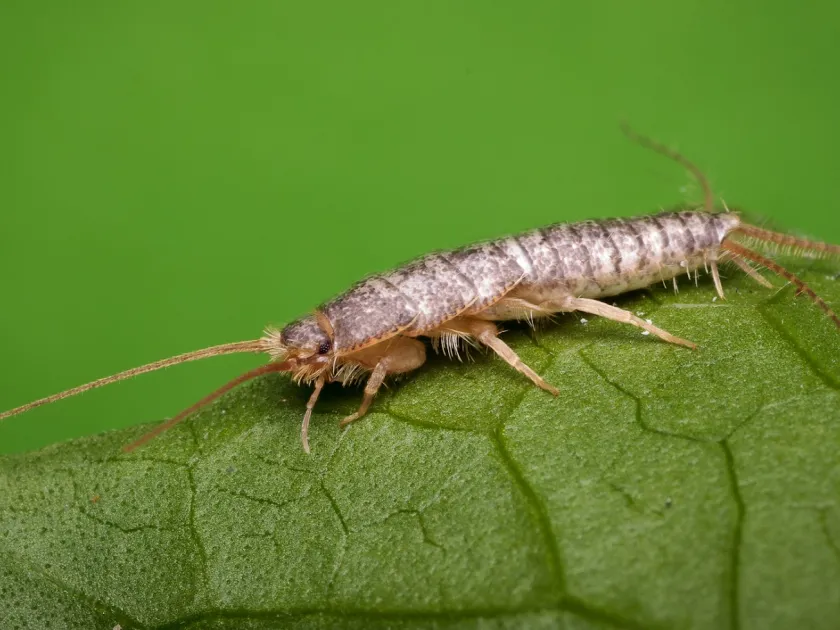
Description
How to identify
The silverfish (genus Ctenolepisma) is a wingless insect of the order Zygentoma, family Lepismatidae. Physically, it is an elongated insect measuring up to 12-15 mm, covered with tiny silvery scales, featuring long antennae and three filaments at the end of the abdomen.
The insect is primarily nocturnal, moves rapidly, and avoids direct light. The adult body is flattened, allowing them to penetrate into the narrowest cracks of storage facility structures, warehouses, or flower pots.
A distinctive feature is its ability to move quickly across vertical surfaces. Unlike some other pests, the silverfish maintains activity and reproductive capacity throughout the year if a suitable microclimate is present.
The life cycle progresses through the egg, larva, and adult stages. Adults can live for several years, which makes control difficult if sanitation standards for plant product storage are not strictly followed.
Reproduction is optimal at temperatures above +20°C and high air humidity. In such conditions, the silverfish population can increase rapidly, infesting dry plant-based debris.
What it damages
Ctenolepisma causes the most damage in greenhouse environments and warehouses where seeds or organic substrates are stored. The pest is a polyphage, feeding on substances rich in starch, dextrins, and polysaccharides.
Silverfish can damage agricultural seeds, dry plant residues, herbarium collections, and organic mulch used in potted plants. In an agronomic context, they rarely attack live plants, preferring decaying organic matter.
During mass reproduction, the pest can damage paper seed packaging, leading to spoilage of the planting material. By gnawing surface layers, silverfish open a path for mold fungi and secondary infections to develop on the seeds.
In floriculture, Ctenolepisma is often found in peat-based or coconut fiber substrates where it feeds on organic inclusions. High concentrations of pests in a pot can negatively affect the condition of young roots being nibbled.
Economic damage consists of reduced germination of seed stock and loss of the commercial appearance of collectible or ornamental crops. Furthermore, insects carry spores of pathogenic fungi on their legs between product batches.
Signs of infestation
The first sign of silverfish presence is small, irregular holes or grazing marks on the surface of organic materials. Unlike beetle larvae, silverfish damage often looks like superficial scraping of tissues.
The presence of excrement in the form of tiny black dots, resembling ground pepper, is a certain indication of pest activity. They accumulate directly under feeding sites or in cracks in floor coverings.
Molt skins (exuviae), which insects shed during growth, are found near damaged objects. This is an important marker for determining areas of highest population activity within the room.
Behavioral changes at night allow for pest detection when lights are suddenly turned on. They lightning-fast attempt to hide in dark corners, behind baseboards, or under plant residues.
A specific "dusty" coating on the surface of seeds or packaging, resulting from insect scales, can also indicate the presence of a significant population at the storage site.
Control measures
The main control method is maintaining low air humidity in warehouses and plant care areas. Silverfish are extremely sensitive to drying, so the use of air dehumidifiers is an effective preventive measure.
Regular sanitary cleaning of premises from plant debris, dust, and feed residues deprives insects of their food base. Thorough cleaning of cracks and wall joints prevents their spread.
The use of pyrethroid-based insecticides is effective against adults and larvae in their active movement zones. Treatments should be carried out taking into account safety requirements for stored products.
Sticky traps placed in room corners or near seed racks are used for population monitoring. Traps help identify infestation hotspots in the early stages of pest emergence.
- Optimization of humidity levels (below 40%).
- Sealing of seed material packaging.
- Regular disinfection of storage areas.
- Mechanical destruction upon detection.
Taxonomy
- Latin name
- Ctenolepisma
- Family
- Lepismatidae
- EPPO code
- CTELSP
Discussion
No discussions yet — be the first.