
Urban silverfish
Ctenolepisma urbana
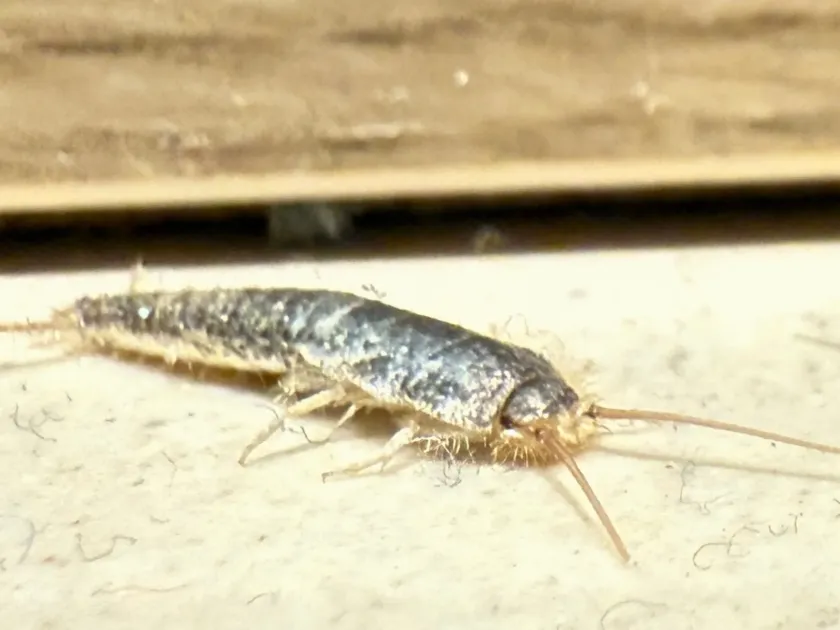
Description
How to identify
The Urban silverfish (Ctenolepisma urbana) is an insect belonging to the order Zygentoma and the family Lepismatidae. It is characterized by an elongated, teardrop-shaped body covered in greyish-silver scales.
Adult insects measure about 10–12 mm in length. They are easily recognized by their three long, tail-like appendages at the rear and two long antennae at the front of the body.
This species is nocturnal, highly photophobic, and exhibits rapid, scurrying movements. Unlike other silverfish species, it is better adapted to drier environments, making it a common pest in buildings and greenhouses.
They undergo ametabolous development, meaning the nymphs look like smaller versions of the adults. The life cycle is quite long and depends heavily on ambient temperature and food availability.
Their ability to squeeze into extremely narrow crevices makes them difficult to eradicate once they have established a population in a greenhouse or storage facility.
What it damages
Ctenolepisma urbana is primarily a scavenger that feeds on organic material, including plant residues, seeds, and starch-rich substances stored in agricultural facilities.
In storage environments, they damage seeds and grain by feeding on the outer layers and starch components, which can lower the germination rate if they feed on the embryo.
Inside greenhouses, they can cause damage to young seedlings, feeding on tender plant tissues and leaves, especially those near the soil surface or in contact with organic debris.
They also pose a nuisance by damaging agricultural documentation, seed labels, and cardboard packaging, which can lead to logistical and inventory management issues.
While not a major primary pest, high populations can cause significant cosmetic and structural damage to delicate plant tissues in sensitive indoor cultivation environments.
Signs of infestation
The most reliable sign of an infestation is the sighting of individuals when moving quickly across floors or walls during nighttime inspections.
Accumulations of small, dark, pepper-like fecal pellets are often found near feeding sites or in the corners of storage bins and greenhouse shelving.
Irregular, surface-level grazing marks on leaves or seeds indicate feeding activity, often resulting in a skeletonized or thin, translucent appearance of the plant tissue.
The presence of shed skins (exuviae) left behind after molting indicates an established population is actively growing and reproducing within the site.
Damaged items often show signs of superficial nibbling, with fine dust or debris collecting underneath the areas where the insects have been actively feeding.
Control measures
Sanitation is the most effective management strategy; removing plant debris, organic waste, and trash eliminates the primary food sources for the silverfish.
Reducing relative humidity and keeping storage areas as dry as possible will naturally limit the survival and reproductive success of the population.
Storing seeds and valuable plant materials in sealed, pest-proof containers prevents access and protects the inventory from potential damage.
If intervention is necessary, the use of contact insecticides or targeted baits labeled for indoor use can effectively reduce high-density populations.
Structural maintenance, such as sealing cracks in floors and walls with caulk, effectively removes the hiding spots (harborage areas) essential for the silverfish's survival.
Taxonomy
- Latin name
- Ctenolepisma urbana
- Family
- Lepismatidae
- EPPO code
- CTELUR
Discussion
No discussions yet — be the first.