
Leistus terminatus
Leistus terminatus
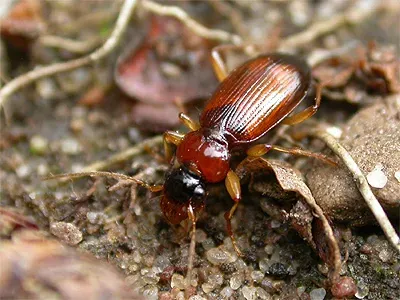
Description
How to identify
Leistus terminatus is a small species of ground beetle belonging to the family Carabidae, order Coleoptera. These beetles are generally recognized by their distinctive metallic luster and specific mandible structure adapted for predation.
The adult beetle typically reaches a body length of 7 to 9 millimeters. The coloration of the elytra is often dark or metallic, and the shape of the pronotum is a key characteristic used for scientific identification of the species.
The larvae follow the campodeiform model, characterized by high mobility and well-developed thoracic legs, which allow them to navigate effectively through the soil substrate.
This species thrives in humid environments and prefers shady, vegetated areas such as field margins, hedgerows, and soil surfaces covered with crop residues.
Accurate field identification often requires the use of pitfall traps, as these insects are primarily nocturnal and demonstrate secretive behavior during the daytime hours.
What it damages
While most carabids are beneficial predators that help manage other insect populations, Leistus terminatus can occasionally act as a pest, especially when natural prey populations are scarce.
The primary concern for farmers is the potential for these beetles to feed on germinating seeds and young seedlings of cereal crops, leading to significant stand loss.
The beetles consume the germ portion of the seeds, preventing the plants from ever breaking the soil surface, which results in irregular and sparse crop emergence.
This damage is most severe during the early developmental stages of crops, where the vulnerability of seeds and roots is at its highest in the spring season.
Damage is typically patchy and localized, often starting from the edges of the fields that are adjacent to natural habitats where the beetle population resides.
When it appears
The activity period of Leistus terminatus begins in early spring as soon as soil temperatures reach a threshold that supports the emergence of overwintering adults.
Peak activity levels usually occur during the month of May, aligning with the crop germination stage, making it a critical period for field monitoring and management.
During the hot summer months, activity levels decrease as the beetles retreat deeper into the soil profile to avoid desiccation and high temperatures.
An autumn secondary wave of activity occurs as the insects prepare for the winter months, during which time egg-laying takes place in protected soil environments.
The species overwinters as both adults and late-instar larvae, taking refuge under stones, crop debris, or deep within soil crevices to survive cold temperatures.
Signs of infestation
The presence of this pest is first signaled by the appearance of bare patches in the field where seedlings have failed to emerge or have suddenly withered.
Upon inspecting the soil around the damaged areas, one may find seeds that exhibit characteristic gouges or missing germs, which is a hallmark of ground beetle feeding.
During the evenings or in overcast conditions, adult beetles may be observed moving on the soil surface near damaged crop rows if the population density is high.
A consistent trend of increasing damage spreading from the field edge toward the center is a strong indicator of an active pest outbreak.
- Sparse crop stand formation
- Gouged seeds found in the germination zone
- Presence of adults in pitfall traps
- Localized damage concentrated near field boundaries
Control measures
Effective management begins with sound agricultural practices, such as deep plowing, which disrupts the beetle's habitat and reduces overwintering success.
The use of insecticide-treated seeds is considered the most reliable method to protect crops during the critical early stages of germination and seedling establishment.
Crop rotation should be implemented to break the beetle's life cycle and prevent the build-up of high population densities in individual fields over several seasons.
Chemical control via foliar application should be used cautiously, as broad-spectrum insecticides can also kill beneficial predatory insects that naturally control other pests.
Monitoring using pitfall traps is highly recommended to assess the population density and determine if intervention is economically justified before applying chemical treatments.
Taxonomy
- Latin name
- Leistus terminatus
- Order
- Coleoptera (beetles)
- Family
- Carabidae
- EPPO code
- LEITTE
Discussion
No discussions yet — be the first.