
Leistus spinibarbis
Leistus spinibarbis
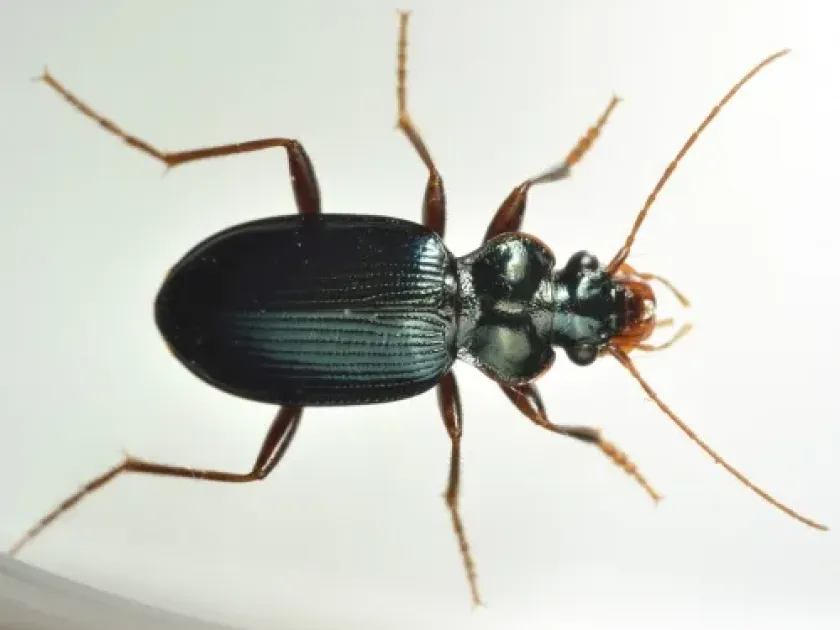
Description
How to identify
Leistus spinibarbis is a species of ground beetle belonging to the family Carabidae. While most ground beetles are beneficial predators, this specific species can cause agricultural damage.
The adult beetle typically measures between 7 and 9 mm in length. Its body exhibits a characteristic metallic copper or bronze sheen, which is a key identifying feature.
The name spinibarbis refers to the long, bristle-like setae found on the underside of its head, creating a distinct "bearded" appearance when viewed under magnification.
These beetles have a flattened morphology, allowing them to navigate efficiently through soil crevices, leaf litter, and under stones during the daytime.
Larvae are campodeiform with elongated bodies and well-developed mandibles, adapted for an active predatory lifestyle within the soil, but potentially damaging to seedlings.
What it damages
Damage caused by Leistus spinibarbis is primarily observed in the early stages of plant development, specifically affecting young vegetable and cereal seedlings.
Adults and larvae can feed on the tender parts of stems at the soil surface, leading to girdling and subsequent plant wilting or death.
Cotyledons and young leaves are also susceptible to mechanical damage, manifesting as irregular notches or complete tissue destruction in extreme cases.
This pest poses the greatest threat during cold, damp springs when plant emergence is delayed, keeping the crops in the vulnerable stage for a longer duration.
Significant infestations can lead to thinning of plant stands, resulting in reduced yields and potential economic losses for farmers and gardeners.
When it appears
The activity of these beetles begins in early spring as soil temperatures rise, allowing them to emerge from their winter hibernation sites.
Peak activity and mating typically occur during the late spring and early summer, coinciding with the prime window for planting most garden crops.
During the warmer months of summer, the beetles may retreat deeper into the soil to escape desiccation and high temperatures, becoming less visible.
A second, minor peak in activity is often observed in the autumn as the population prepares for the onset of winter by seeking overwintering shelters.
The life cycle is heavily influenced by humidity and soil moisture levels, with wetter years generally favoring higher population densities.
Signs of infestation
The presence of Leistus spinibarbis is usually indicated by the unexplained wilting or death of young seedlings shortly after emergence.
Careful inspection of the soil around the base of affected plants often reveals the beetles themselves or evidence of their burrowing activity.
Nighttime visual surveys using a flashlight can help identify adult beetles foraging on the surface, confirming their role as the cause of damage.
Mechanical damage to the stalks near the soil line, characterized by ragged edges, serves as a distinct sign of ground beetle feeding activity.
Irregular leaf damage in low-lying areas of the field often indicates the presence of these beetles, especially in damp, shaded parts of the garden.
Control measures
Cultural control measures, such as deep autumn plowing, are highly effective as they disturb the soil and expose overwintering beetles to predators.
Seed treatment with systemic insecticides provides a robust defense for crops during the critical germination and emergence period, reducing initial attack rates.
Maintaining optimal soil fertility and avoiding excessive mulch near young seedlings can reduce the attractiveness of the area to these moisture-loving beetles.
Biological control using entomopathogenic fungi or nematodes applied to the soil can help manage population levels without relying solely on chemical inputs.
- Remove weeds and debris that provide refuge for the beetles.
- Use barrier traps or sticky bands to monitor and catch moving adults.
- Ensure adequate irrigation to avoid stressing seedlings, making them more resilient.
Taxonomy
- Latin name
- Leistus spinibarbis
- Order
- Coleoptera (beetles)
- Family
- Carabidae
- EPPO code
- LEITSB
Discussion
No discussions yet — be the first.