
Leistus rufomarginatus
Leistus rufomarginatus
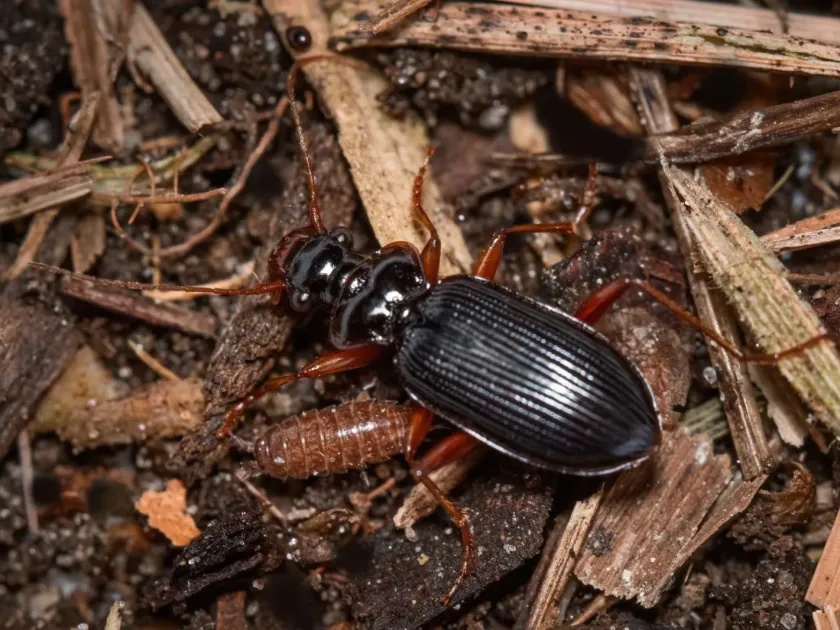
Description
How to identify
Leistus rufomarginatus is a species of ground beetle belonging to the family Carabidae, known for its distinctive appearance and predatory habits.
The adult beetle typically measures between 7 and 9 mm in length and is easily recognizable by its dark body with reddish-brown margins on the pronotum and elytra.
They possess specialized mandibles adapted for grasping prey, a feature shared by many members of the genus Leistus.
The larvae are active and mobile, characterized by their sclerotized body parts and legs suited for hunting within the upper soil layers or leaf litter.
This species is moisture-loving and is most frequently observed in shaded, damp environments, such as forest edges or undisturbed agricultural margins.
What it damages
In an agricultural context, Leistus rufomarginatus is generally considered a beneficial insect rather than a crop pest.
These beetles are active predators, consuming a variety of small soil invertebrates, insect larvae, and sometimes mollusks that reside in the soil.
They contribute to the natural biological control of various agricultural pests by reducing their population density throughout the growing season.
There is no evidence of significant damage to crop roots, foliage, or seeds caused by this species under normal field conditions.
Labeling this beetle as a "pest" is inaccurate; in most cases, its presence should be encouraged as a natural ally for integrated pest management.
When it appears
The activity of these ground beetles is most pronounced during the spring and autumn months when soil moisture and temperature are favorable.
They overwinter as adults, finding shelter in the soil or beneath dense vegetation, which allows them to survive cold periods.
Reproduction typically occurs in the spring, leading to the emergence of the next generation after a series of larval instars.
During the peak of summer, if environmental conditions become too dry or hot, the beetles often seek refuge in deeper, cooler soil layers.
The development from egg to adult is a process involving multiple stages occurring within the soil ecosystem.
Control measures
No control measures are necessary for Leistus rufomarginatus, as they do not pose a threat to agricultural productivity.
Indiscriminate use of broad-spectrum insecticides should be avoided to protect this predatory beetle from unnecessary mortality.
Conservation biological control, including the maintenance of field margins and hedges, is the best strategy to support these populations.
Farmers should focus on agricultural practices that preserve soil structure and habitat for beneficial predatory ground beetles.
By promoting the presence of such beneficial organisms, the need for chemical intervention against actual crop pests can be significantly reduced.
Taxonomy
- Latin name
- Leistus rufomarginatus
- Order
- Coleoptera (beetles)
- Family
- Carabidae
- EPPO code
- LEITRM
Discussion
No discussions yet — be the first.