
Leistus fulvibarbis
Leistus fulvibarbis
Description
How to identify
Leistus fulvibarbis belongs to the Carabidae family, commonly known as ground beetles. These insects are characterized by a distinct body shape with a narrow pronotum and agile legs.
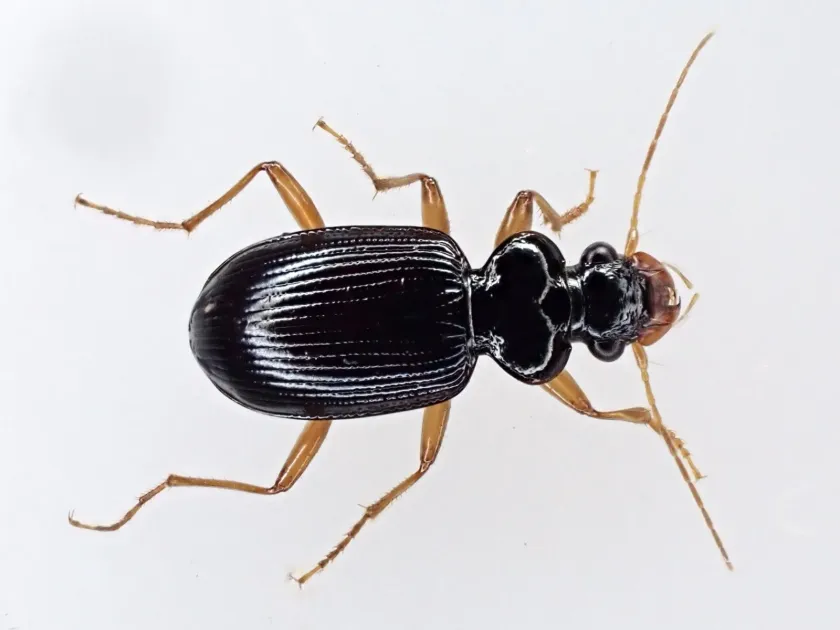
Adult beetles typically reach a length of 7 to 9 millimeters. The body color is often dark or metallic, while the legs and antennae are noticeably reddish or brownish, serving as a key identification trait.
Their surface exhibits fine punctures, and the head is well-developed with powerful mandibles, which are functional tools for their predatory behavior in the soil ecosystem.
The larvae are campodeiform, highly mobile, and possess well-developed thoracic legs, enabling them to navigate efficiently through soil particles to hunt for prey.
They prefer humid environments and are commonly found in agricultural fields, forest edges, and areas with high soil moisture, where their life cycle remains undisturbed.
What it damages
While most carabids are considered beneficial predators that feed on smaller pests, Leistus fulvibarbis can occasionally act as an opportunistic pest, particularly in specific crop environments.
The damage primarily affects young sprouts and seedlings of vegetable and grain crops during the critical phases of germination and early leaf development.
The beetles gnaw at the tender tissues of stems and leaves, which can lead to the wilting, lodging, and eventual death of young plants in the affected field areas.
High population densities often result in significant thinning of crop stands, especially when natural soil prey is scarce, forcing beetles to shift their diet to plant matter.
This damage is most severe during cool and wet springs, which favor the activity of the beetles while slowing down the growth rate of the emerging crop.
When it appears
Adults exhibit peak activity in the spring, typically from April to May, which aligns with the most vulnerable development stages of many agricultural crops.
They are primarily nocturnal, remaining hidden during the day under plant debris, soil clumps, or in crevices to avoid dehydration and predators.
The life cycle involves overwintering as adults in the soil or protected areas, allowing them to resume feeding and reproductive activity as soon as the weather warms up.
Larvae develop throughout the summer months, passing through several instars within the soil profile, where they continue their predatory activity until cooling temperatures trigger hibernation.
Monitoring should be conducted during the spring window, as this is the period when the risk of economic damage to young seedlings is at its highest.
Signs of infestation
The most evident sign of damage is the appearance of irregular holes or notched edges on the cotyledons and the first true leaves of young seedlings.
In cases of severe infestation, stems may be girdled or bitten off at the soil surface, leading to rapid plant collapse that mimics the effect of other soil-dwelling larvae.
Pitfall traps installed at ground level are the most effective diagnostic tool for detecting the presence and density of these beetles in a specific crop field.
The distribution of damaged plants usually follows a patchy pattern, often starting from the edges of the field or areas with higher soil moisture content.
Visual verification of the presence of reddish-legged beetles under surface residue or soil clods confirms the source of the injury to the crop.
Control measures
Good soil preparation and cultivation practices are essential to disrupt the beetle's habitat, reducing its population and exposing larvae to natural enemies.
Crop rotation and effective weed management serve as foundational strategies to minimize the availability of shelter and alternative food sources for the pests.
Seed treatments with systemic insecticides are highly effective in protecting the vulnerable germination stage from damage by soil-dwelling insects.
If population levels exceed economic thresholds, timely insecticide applications should be performed in the evening when the beetles are most active on the surface.
Fostering rapid crop establishment through proper fertilization and irrigation helps plants grow past the susceptible stage, significantly reducing the potential for yield loss.
Taxonomy
- Latin name
- Leistus fulvibarbis
- Order
- Coleoptera (beetles)
- Family
- Carabidae
- EPPO code
- LEITFU
Discussion
No discussions yet — be the first.