
Leistus ferrugineus
Leistus ferrugineus
Description
How to identify
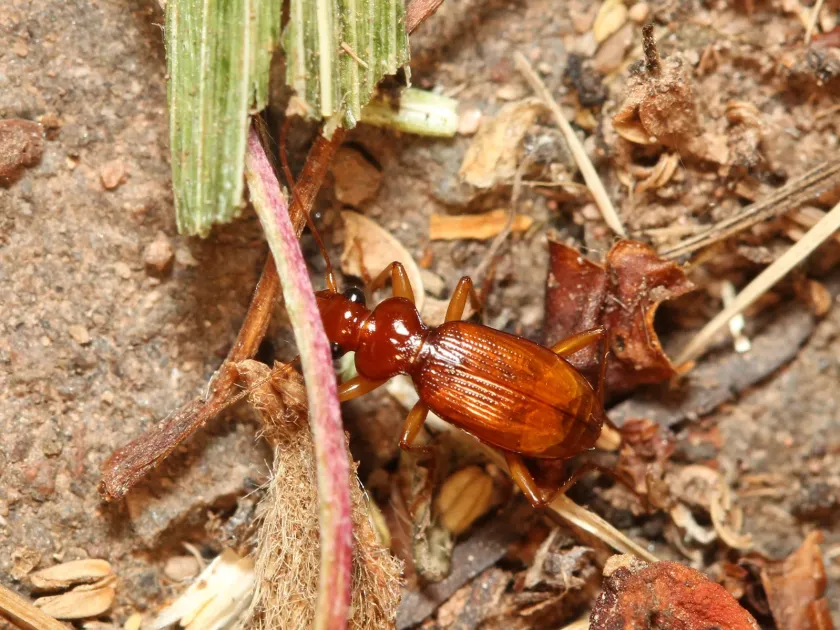
Leistus ferrugineus is a small beetle belonging to the Carabidae family, order Coleoptera. The adult insect is characterized by a rusty-brown or reddish coloration, which gives the species its common name.
The body length of the beetle typically ranges from 6 to 8 millimeters. The surface of the elytra is covered with fine longitudinal grooves, and the legs and antennae are often lighter than the general body tone.
An important diagnostic feature is the structure of the mouthparts. Like other members of the Leistus genus, this species possesses specialized mandibles adapted for grasping small prey within the soil layer.
In natural conditions, the beetle prefers moist, shaded habitats and is often found under plant debris or in the topsoil layer in fields and hedgerows.
The larvae of the pest have an elongated campodeiform body with well-developed legs, which allows them to move actively in search of food within the root zone of plants.
What it damages
Leistus ferrugineus mainly causes damage to cereal crops, vegetables, and young seedlings of various agricultural crops during the early spring period.
Adults and larvae are primarily predatory; however, when natural food sources are scarce, they can damage young seedlings by feeding on tender plant tissues.
The pest poses the greatest threat to crops in the early emergence phase, when any injury to the seedling can lead to plant death or significant growth retardation.
The harmfulness of the pest increases in years with a cold, prolonged spring, when the development of crops slows down, leaving them vulnerable to soil pests for a longer period.
Damage to the root system by larvae disrupts nutrient uptake, which manifests visually as yellowing, wilting, and the eventual thinning of plant stands in the field.
When it appears
The activity of Leistus ferrugineus begins in early spring, as soon as the top layer of soil warms up to temperatures optimal for its life cycle (usually +8...+10 degrees Celsius).
The period of mass emergence of adults on the soil surface occurs in April and May, coinciding with their active feeding and mating period.
During the hot summer months, characterized by dry soil conditions, the pest enters a state of diapause or hides deeper within the soil profile.
A second wave of activity is observed in the autumn, associated with the adults preparing for hibernation, which typically takes place in the soil or under organic debris.
The life cycle of the insect is closely linked to soil moisture levels, so rainy spring seasons often contribute to an increase in the pest population.
Signs of infestation
The first sign of the pest's presence is uneven seedling emergence in fields, where patches of stunted or missing plants are observed without signs of disease.
Upon inspecting damaged seedlings under a microscope or magnifying glass, characteristic feeding scars can be found, often concentrated around the root collar.
The presence of beetles or their larvae can be confirmed by digging soil samples at a depth of 5-10 centimeters, especially in the morning or after irrigation.
An indirect sign of pest activity is the clustering of ground beetles under soil clods or organic residues, which is easily noticed during field inspections.
The nature of the damage is often confused with other soil-dwelling pests, so the definitive criteria for identification is finding the insect specimen near the affected plant.
Control measures
A primary control method is strict adherence to crop rotation, which prevents the accumulation of the pest in the soil that often occurs with cereal monocultures.
Proper soil management, including stubble cultivation and deep autumn plowing, helps disrupt hibernation sites and reduce the total population.
The use of insecticidal seed treatments provides protection for seedlings during the most critical development phase against damage from soil-dwelling insects.
An important agrotechnical strategy is to ensure optimal planting timing, allowing crops to grow past the vulnerable seedling stage before the peak activity of the beetle.
- Use of high-vigor seeds to promote rapid growth.
- Timely removal of weeds that may serve as reservoirs for the pest.
- Application of balanced fertilizers to stimulate root system development.
- Regular monitoring of pest density using pitfall traps in the field.
Taxonomy
- Latin name
- Leistus ferrugineus
- Order
- Coleoptera (beetles)
- Family
- Carabidae
- EPPO code
- LEITFE
Discussion
No discussions yet — be the first.