
Leistus ground beetle
Leistus
Description
How to identify
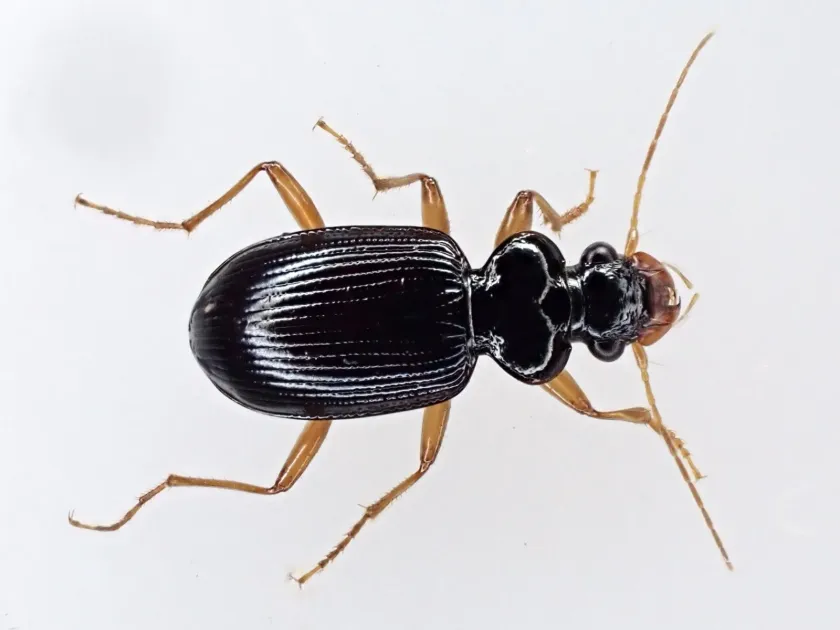
The ground beetles of the genus Leistus belong to the family Carabidae of the order Coleoptera. These are small to medium-sized beetles, often characterized by a metallic sheen or dark coloration.
A distinctive feature of this genus is the structure of the mouthparts, which are adapted for predation, and the elongated shape of the pronotum. The body is flattened, allowing the beetle to move efficiently through leaf litter and soil crevices.
The larvae have a campodeiform shape; they are quite mobile, possessing well-developed mandibles and sclerotized integument. Unlike the adults, the larvae lead a cryptic life within the upper soil layers.
The species diversity of the genus Leistus includes many species adapted to various climatic conditions, though they all prefer moist habitats with sufficient organic debris.
In agroecosystems, these beetles are often found near field margins, meadows, and shelterbelts, from where they may migrate to crops in search of food, especially during drought periods.
What it damages
Although many ground beetles are considered beneficial entomophages, some Leistus species can cause damage when natural prey is scarce, turning to feed on plant tissues.
Seedlings of cereal crops, vegetables, and young transplants in open fields are primarily affected. The beetles chew on young stems and leaves, which stunts plant development.
The greatest damage occurs in the early spring period when crops are most vulnerable and pest populations may increase due to favorable temperature conditions.
Pest damage also manifests as feeding on seeds within the soil, leading to poor emergence and the need to replant damaged areas.
Larval damage often goes unnoticed because they feed on underground parts of stems and roots, causing wilting and eventual plant death.
When it appears
The active period of the beetle's life cycle occurs during the spring months when overwintered individuals emerge from the soil.
Peak larval activity is observed in mid-summer, when soil moisture remains consistently high, facilitating their development and intensive feeding.
Reproduction typically occurs in autumn or spring, after which females lay eggs in the soil near host plants, ensuring food availability for the larvae.
The life cycle is closely linked to environmental moisture; during dry periods, the insects retreat into deeper soil layers for diapause.
Pupation usually takes place in special earthen cells in the soil, providing the young beetles with protection from temperature fluctuations and external factors.
Signs of infestation
The primary sign of crop infestation is the presence of characteristic chewed edges on young leaves and partially gnawed stems near the soil surface.
When inspecting the soil around wilted plants, one can often spot traces of beetle activity and find larvae hiding under soil clumps.
Focal wilting of seedlings in a field serves as an indirect indicator of pest activity, necessitating a detailed inspection of the root system.
A high number of empty seed shells in the soil despite poor germination is another indicator of the activity of this beetle genus.
The presence of beetles in light traps or Barber soil traps at night indicates a high population density in a particular area.
Control measures
Effective management of Leistus begins with implementing proper crop rotations that prevent the buildup of the pest in the soil over time.
Deep autumn plowing significantly reduces the population of overwintering larvae and pupae by disrupting their habitat and exposing them to natural predators like birds.
The use of insecticidal seed treatments prior to planting provides a reliable method for protecting young seedlings from damage during the critical establishment phase.
The application of biological control agents, such as entomopathogenic fungi, helps manage population levels without negatively impacting the ecological balance of the field.
Maintaining field hygiene and timely weeding deprive beetles of shelter and alternative food sources, making the agricultural area less attractive to the pest.
Taxonomy
- Latin name
- Leistus
- Order
- Coleoptera (beetles)
- Family
- Carabidae
- EPPO code
- LEITSP
Discussion
No discussions yet — be the first.