
Lebia grandis
Lebia grandis
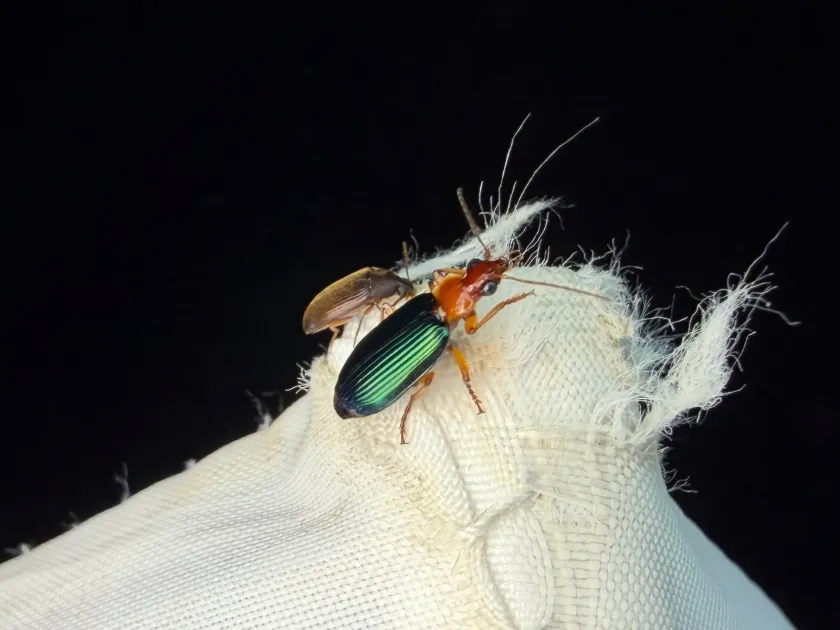
Description
How to identify
Lebia grandis is a species of ground beetle belonging to the family Carabidae. It is widely recognized as a highly specialized predator that targets specific agricultural pests.
The adult beetle is approximately 10–12 mm long. It is easily identified by its metallic blue or blue-green elytra (wing covers) and a distinct orange-red pronotum.
The larvae of this species are rarely seen as they spend much of their time hunting in the soil or directly on the host plant leaves where they locate their prey.
Due to its striking appearance and specific ecological role, Lebia grandis is a subject of significant interest in integrated pest management (IPM) programs.
Its physiological adaptations allow it to move rapidly across plant surfaces, effectively searching for egg clusters of its primary host.
What it damages
Lebia grandis is not a pest; it is a beneficial insect that provides natural biological control in potato fields and other solanaceous crop ecosystems.
The adults are voracious predators that feed on the eggs and early-stage larvae of the Colorado potato beetle (Leptinotarsa decemlineata).
The larvae are equally effective predators, capable of consuming significant quantities of pest eggs, which prevents the development of massive pest populations.
Because it actively reduces the damage caused by the Colorado potato beetle, it serves as an important ally for farmers seeking to reduce chemical usage.
No damage to crops has been associated with this species, confirming its status as a fully beneficial organism in agriculture.
When it appears
The activity cycle of Lebia grandis is strictly synchronized with the life cycle of the Colorado potato beetle, ensuring it has a constant food source.
Adult beetles emerge from hibernation in the spring when soil temperatures rise, beginning their search for host egg masses shortly thereafter.
Peak abundance usually coincides with the mid-summer period when the pest is laying eggs on potato foliage, providing an optimal feeding environment for the predator.
The species overwinters in the adult stage, often sheltering under crop debris or within the upper soil layer, making soil conservation practices beneficial for its survival.
Multiple generations may occur during the growing season, depending on local climate conditions and the population dynamics of the pest.
Control measures
The primary management strategy for maintaining Lebia grandis populations involves the judicious use of pesticides to prevent secondary poisoning of this predator.
Implementing biological control methods and choosing narrow-spectrum insecticides helps preserve the natural balance between predator and prey.
Maintaining field margins and avoiding excessive soil disturbance can create refugia where these beneficial beetles can successfully overwinter.
Monitoring the presence of Lebia grandis in the field is a key component of sustainable agricultural practices, allowing for informed pest management decisions.
Promoting a healthy agricultural ecosystem supports the presence of such specialized predators, reducing long-term dependence on synthetic chemicals.
Taxonomy
- Latin name
- Lebia grandis
- Order
- Coleoptera (beetles)
- Family
- Carabidae
- EPPO code
- LEBAGR
Discussion
No discussions yet — be the first.