
Great Grey Shrike
Lanius excubitor
Description
How to identify
The Great Grey Shrike (Lanius excubitor) is a distinctive songbird within the family Laniidae, belonging to the order Passeriformes. Despite its classification, it behaves like a predator, exhibiting sharp hunting skills.
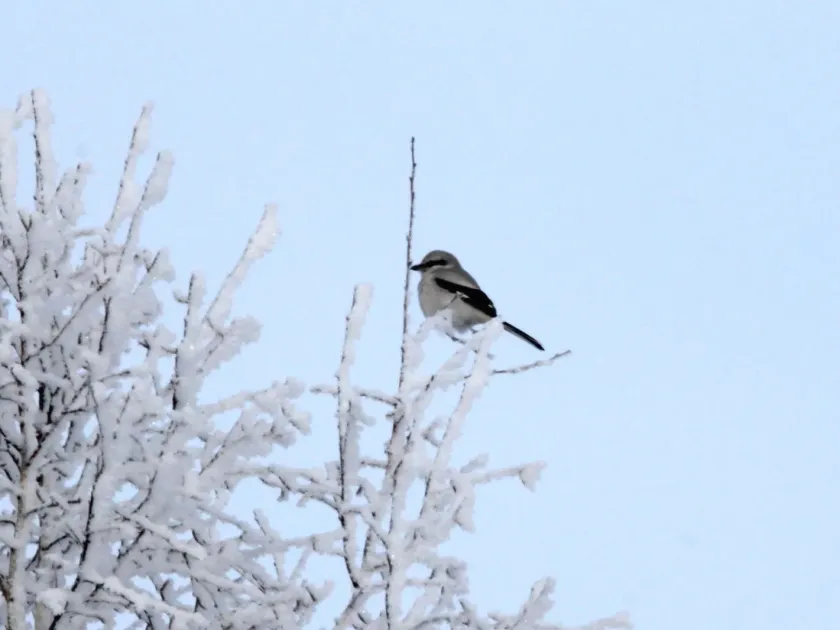
The bird has a grey upper body, white underparts, and black wings with white patches that are clearly visible during flight. A prominent black stripe across the eyes gives it a mask-like appearance.
Measuring around 22–25 centimeters in length, the Great Grey Shrike has a robust, hooked beak designed for tearing prey, resembling that of a raptor.
They are frequently observed perched on high, exposed locations such as treetops or power lines, from which they scan the surroundings for movement on the ground.
Due to its specific habitat requirements and declining populations in many areas, this species is protected by law and international conservation programs.
What it damages
The Great Grey Shrike is not an agricultural pest; it is an insectivore and carnivore. It does not feed on any parts of cultivated plants, including seeds, fruits, or foliage.
Its diet consists primarily of small rodents, which makes it an effective natural control agent against mouse and vole populations that destroy grain crops.
Additionally, the species hunts large insects such as grasshoppers and beetles, thereby helping to reduce populations of harmful pests without the need for synthetic chemicals.
Because it is a predator, its presence in agricultural landscapes poses no threat to the commercial yield of vegetables, cereals, or orchard crops.
The Great Grey Shrike contributes positively to the agroecosystem by regulating the balance of local fauna and mitigating the impact of agricultural pests.
Signs of infestation
The most recognizable sign of a Shrike's presence is its habit of creating «larders» by impaling prey on thorns, barbed wire, or sharp branches.
These caches, often containing remains of insects or rodents, are a clear indicator that the bird is hunting in the immediate vicinity.
Regular sightings of the bird on open, high vantage points indicate an active hunting territory, serving as a sign of natural pest regulation.
The lack of damage to crops in areas where the bird resides further proves that it is not a threat to agricultural production.
Pellets or droppings found under common perches usually contain non-plant materials such as bone fragments or insect chitin, consistent with its predatory lifestyle.
Control measures
No control measures are required or advised, as the Great Grey Shrike is a beneficial species and a valuable component of an integrated pest management strategy.
Farmers are encouraged to preserve hedgerows and shrubbery, which provide essential nesting and hunting perches for this predatory bird.
It is critical to minimize the use of rodenticides and certain pesticides, as they pose a high risk of secondary poisoning to this predator if it consumes contaminated prey.
Promoting biodiversity within agricultural landscapes helps attract natural predators like the Great Grey Shrike, leading to a healthier and more resilient crop environment.
Sustainable agronomic practices recognize the importance of such birds in maintaining biological balance, which reduces the need for heavy chemical intervention.
Taxonomy
- Latin name
- Lanius excubitor
- Family
- Laniidae
- EPPO code
- LANIEX
Discussion
No discussions yet — be the first.