
Shrike
Lanius
Description
How to identify
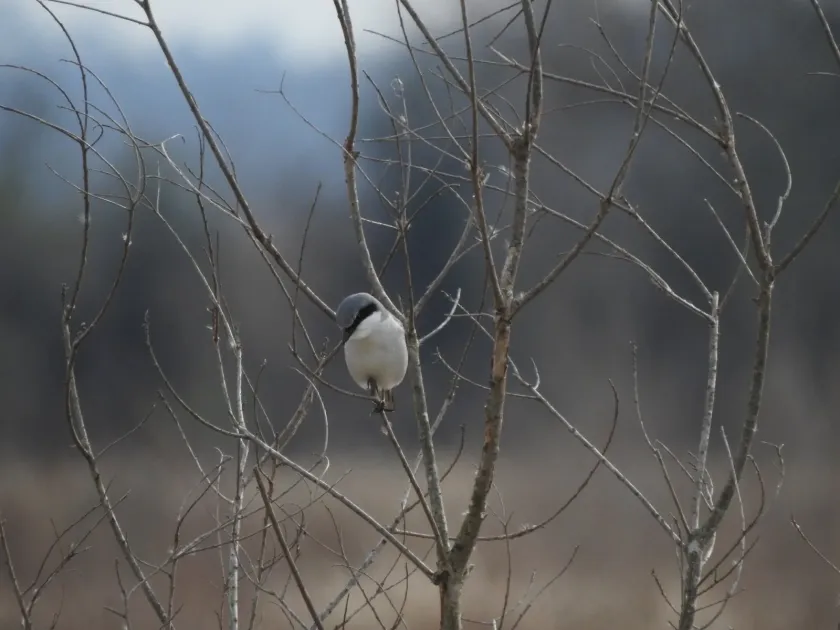
The shrike is a bird genus belonging to the order Passeriformes and the family Laniidae. These birds are known for their raptor-like behavior, possessing a strong, hooked beak used to handle their prey.
They are generally medium-sized birds with a cryptic coloration of gray, black, and white, which allows them to remain inconspicuous while perched in trees or shrubbery.
Shrikes are carnivorous, feeding primarily on insects, small reptiles, and occasionally small mammals. They are highly territorial birds that defend their chosen hunting grounds.
During the day, they are very active, frequently scanning the environment from high vantage points such as fence lines or isolated tree tops.
Taxonomically, they are not pests, but rather specialized hunters that play a specific ecological role in maintaining the balance of insect populations.
What it damages
Shrikes do not cause any direct damage to agricultural crops. They are not herbivores and do not feed on fruits, vegetables, seeds, or roots.
In some agricultural contexts, they might be perceived as problematic if they prey on beneficial insects; however, they also consume significant amounts of agricultural pests like grasshoppers.
Because they do not damage plant tissues, they are classified by agronomists as neutral or beneficial wildlife rather than agricultural pests.
There is no record of shrikes destroying harvests, eating orchard fruits, or damaging irrigation systems, making them harmless to crop production.
Their impact on the agricultural industry is essentially non-existent in terms of crop damage or economic loss.
When it appears
Shrikes are most active during the breeding season, which typically spans from spring through mid-summer, when they are highly motivated to hunt for food.
During the summer months, they are frequently spotted near fields where insect activity is high, providing them with an abundant food source.
As autumn approaches, many shrike populations migrate to warmer regions, leading to a decrease in their visibility in many agricultural areas.
Some species remain in their habitats throughout the winter, adapting their diet to include small rodents or cached prey stored in their larders.
Their presence is dictated by the availability of prey and favorable nesting conditions rather than by any agricultural cycle.
Signs of infestation
The most distinctive sign of a shrike's presence is the existence of "larders"—collections of prey items impaled on thorns or barbed wire.
This unique behavior allows the bird to secure its prey while tearing it apart, compensating for its lack of strong, raptor-like talons.
Observing remains of insects or small lizards on thorny branches is a clear indicator that a shrike has established a territory nearby.
Visual identification is easy as these birds frequently sit motionless for long periods on power lines or the tops of bushes.
No damage signs, such as chewed leaves, bored holes in trunks, or missing fruit, are associated with these birds.
Control measures
Since shrikes are not considered pests, no chemical or physical control measures are necessary or recommended for agricultural settings.
They act as natural controllers of large insect populations, contributing to the health of the farm ecosystem by keeping pest numbers in check.
If interaction with these birds must be limited for specific reasons, passive bird-scaring devices can be used, though this is rarely required.
It is crucial to avoid any form of lethal control, as shrikes are often protected species that contribute to the biodiversity of rural areas.
Promoting a balanced habitat that supports these birds is beneficial for natural pest management in orchards and farmland.
Taxonomy
- Latin name
- Lanius
- Family
- Laniidae
- EPPO code
- LANISP
Discussion
No discussions yet — be the first.