
Bushshrikes
Laniarius
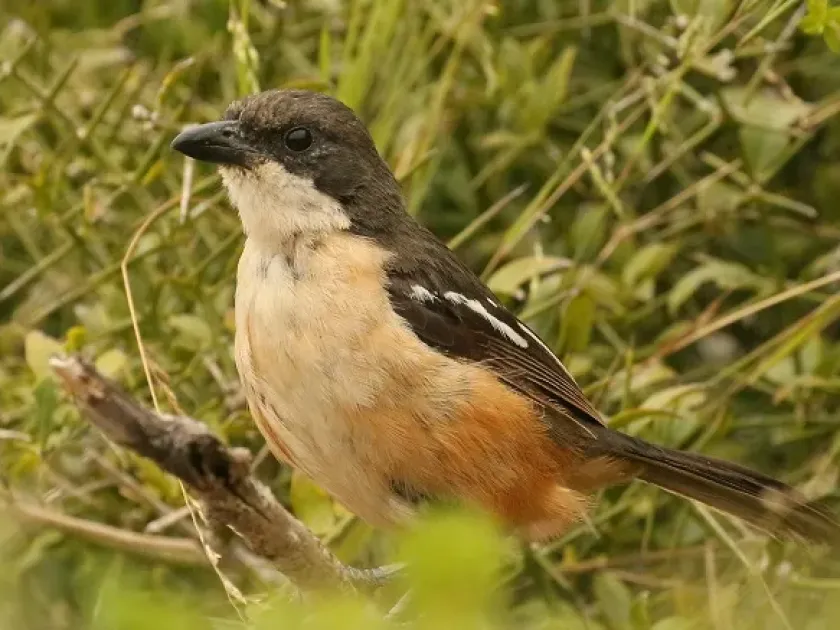
Description
How to identify
The genus Laniarius, commonly known as bushshrikes, belongs to the family Malaconotidae. These birds are characterized by a strong, hooked bill that assists them in their primarily insectivorous diet, though they may adapt to opportunistic feeding.
They are known for their distinct, often dualistic vocalizations and secretive behavior within thick vegetation. Their plumage varies by species, often featuring bold black, white, and sometimes red patterns which help them blend into the foliage.
The biological cycle of these birds is closely tied to the density of shrubs, where they build nests using twigs and plant matter. They are highly territorial, meaning once a pair establishes a presence in an orchard, they remain there throughout the season.
Identifying them is primarily done through acoustic monitoring, as they are rarely seen in the open. A keen agronomist can detect their presence during the early morning hours by listening for their unique, alternating calls.
Reproduction typically aligns with the peak of insect availability, but their presence near fruit-bearing shrubs increases the risk of them foraging on non-animal food sources when conditions become dry.
What it damages
The economic impact of bushshrikes arises when they damage maturing fruit. While they focus on insects, they often pierce the skin of soft fruits and berries with their beaks, causing immediate physical damage.
These punctures act as entry points for fungi, bacteria, and opportunistic pests, leading to rapid decay of the produce. This significantly lowers the marketability and shelf life of the harvested fruit.
Their search for prey inside shrub canopies often leads to the breakage of delicate young shoots and blossoms, which can impact the overall yield of the plant for the following season.
In high-density orchards, these birds can cause cumulative damage that exceeds typical insect-related losses, especially when the fruit is nearing the peak ripening stage.
Proximity to dense forest edges or unmaintained hedgerows significantly increases the likelihood of bushshrikes entering agricultural plots to forage on cultured crops.
Control measures
Anti-bird netting is the most reliable method for protecting high-value fruit crops, providing a physical barrier that prevents birds from accessing the harvestable parts of the plants.
Implementing visual deterrents, such as raptor kites or reflective tape, creates an inhospitable environment, though these must be rotated frequently to prevent habituation.
Maintaining clear orchard edges and pruning dense, excessive growth reduces the availability of nesting and hiding spots, effectively making the area less attractive to bushshrikes.
Sonic deterrents that emit distress signals of local bird species can effectively drive bushshrikes away from larger commercial planting areas without harming them.
Integrated pest management strategies should focus on encouraging natural predators in the vicinity, which can help regulate the bird population and minimize their impact on agricultural produce.
Taxonomy
- Latin name
- Laniarius
- Family
- Laniidae
- EPPO code
- LANRSP
Discussion
No discussions yet — be the first.