
Bull-headed shrike
Lanius bucephalus
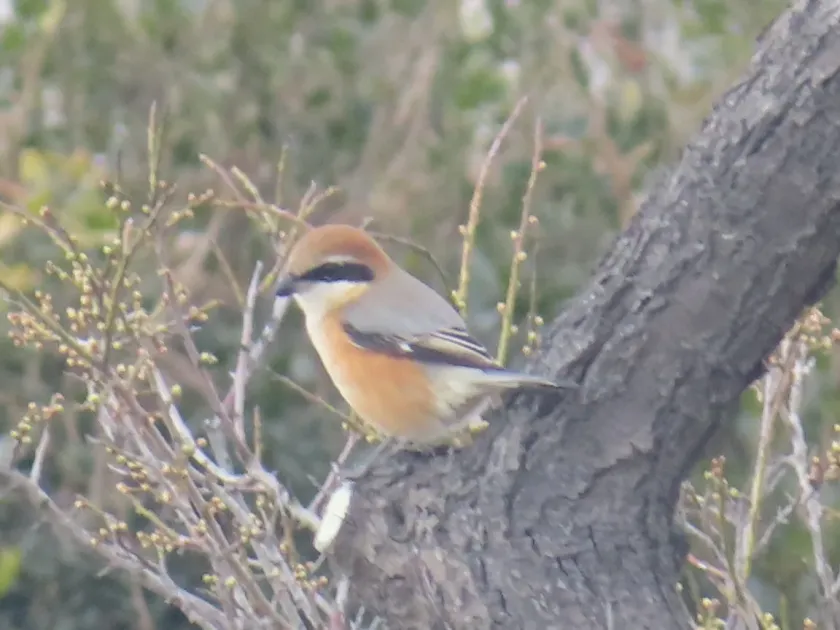
Description
How to identify
The Bull-headed shrike (Lanius bucephalus) is a passerine bird belonging to the Laniidae family. It is a predatory bird characterized by a strong, hooked beak with a small tooth, which is a hallmark of this species' carnivorous nature.
Adults exhibit a distinct color pattern, featuring a brownish-gray back, a rufous crown, and a broad black mask stretching across the eye. Males are typically more vibrant than females, especially during the breeding season.
A unique behavioral trait of the species is the habit of impaling prey, such as insects, lizards, or small rodents, onto thorns or barbed wire. This behavior is highly recognizable in agricultural settings where they store their catch.
Shrikes are territorial birds. They vigorously defend their home range against rivals and other species, which impacts the local ecosystem balance within orchards or farms.
Their biology is closely linked to bushy habitats and forest edges. Depending on the climate and food availability, these birds can be sedentary or migratory, often shifting habitats based on the seasonal abundance of prey.
##damage##While the Bull-headed shrike is an entomophage, it causes indirect harm to orchards by preying on beneficial insects, including honeybees and other pollinators, which can negatively affect crop yields.
In young orchards, these birds can inflict mechanical damage on shoots and stems. They use these plant parts as a base to fix their prey, creating puncture wounds that may act as entry points for pathogens.
Such mechanical injuries to the bark can lead to fungal or bacterial infections in young trees, potentially stunting growth or causing parts of the plant to wither.
Competition from shrikes can drive away other insectivorous birds that provide natural pest control, disrupting the integrated pest management strategies employed by farmers.
The accumulation of stored prey (the bird's "larder") on orchard structures, such as trellises or wooden supports, requires extra maintenance and sanitation efforts to prevent infection spread.
##season##The highest level of activity occurs in spring during the breeding and nesting season. During this time, the birds are particularly aggressive and establish territories near cultivated areas.
Throughout the summer, while feeding their chicks, the intensity of hunting peaks. During this phase, shrikes are most active in their efforts to secure food, leading to more frequent appearances in orchards.
In autumn, as populations move, the concentration of shrikes may fluctuate. Some individuals may remain in the orchard during winter if conditions allow for sufficient food supply.
Winter months see a shift in diet; as insect prey becomes scarce, they may approach human infrastructure or gardens more frequently, seeking alternative food sources.
The seasonality of their presence is strongly dictated by the life cycles of their primary prey and the climatic conditions of the surrounding landscape, forcing them to move in search of resources.
##signs##The most obvious indicator of a shrike's presence is the discovery of impaled prey on thorns (such as hawthorn) or sharp wires surrounding the farm or orchard.
Damaged bark on young shoots with visible puncture marks or necrotic spots in areas where prey was fixed serves as a clear diagnostic sign of shrike activity.
A behavioral marker is the bird's tendency to perch on high, exposed locations like treetops, fence posts, or wires, from which it scans the ground for potential prey.
The presence of a sharp, screeching, or grating call, often heard in the early morning, signals that the bird is monitoring its territory and warning off intruders.
A noticeable decline in pollinator insects and small birds within a specific area, combined with the presence of shrikes, indicates that the birds have established a dominant role in the local ecosystem.
##control##The use of visual repellents, such as holographic tapes, motion-activated devices, or decoy predators (like hawks or owls), effectively discourages shrikes from entering the orchard.
Installing ultrasonic deterrent systems can create an inhospitable environment, encouraging the birds to move to less sensitive areas without harming them.
Covering young, sensitive plants with fine-mesh netting is the most reliable way to prevent birds from using plant branches as "larders" for their prey.
Regular sanitation, including the removal of thorny brush or dry, dead branches that provide ideal impaling surfaces, forces the birds to find nesting grounds elsewhere.
Integrating biological controls and maintaining habitat diversity that supports larger raptors can help manage the shrike population naturally through ecological competition.
Taxonomy
- Latin name
- Lanius bucephalus
- Family
- Laniidae
- EPPO code
- LANIBU
Discussion
No discussions yet — be the first.