
Flat grain beetle
Laemophloeus minutus
Description
How to identify
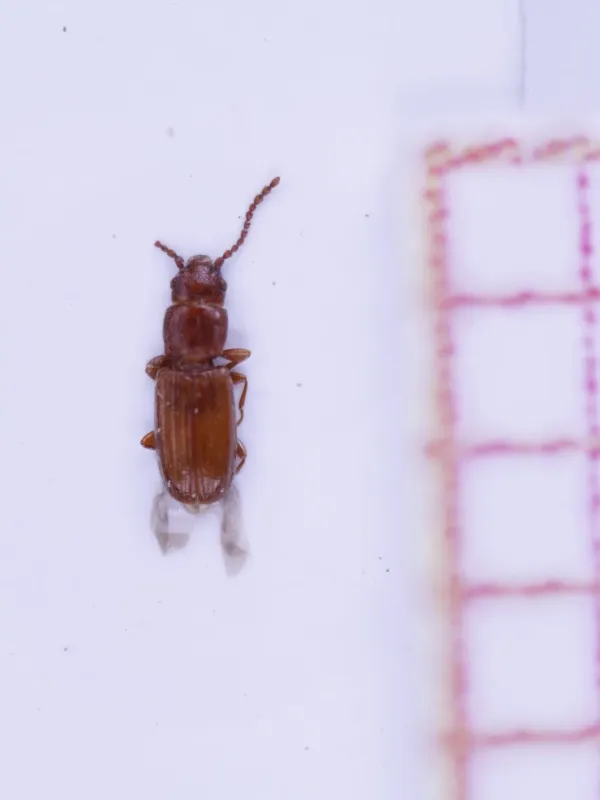
The flat grain beetle, scientifically known as Laemophloeus minutus, belongs to the family Laemophloeidae within the order Coleoptera. It is a very small insect, typically measuring only 1.5 to 2.5 mm in length.
The insect is characterized by its flattened body shape, which enables it to hide and move easily within the narrow cracks, crevices, and joints of grain storage structures, bins, and conveyor systems.
The adult beetle has a color ranging from light yellow to reddish-brown. A key identifying feature is its long, filiform antennae, which are often half the length of its body or even longer.
The larvae are whitish, slender, and reach approximately 3 mm in length. They possess dark sclerotized structures on the terminal abdominal segment, making them distinct under magnification.
Adults are highly active, especially in warm conditions. Their agility allows them to disperse throughout the grain bulk quickly once they have infested a storage facility.
What it damages
This beetle is primarily a pest of stored grains, including wheat, barley, corn, rye, and oats. It also thrives in processed products such as flour, various meals, and bran.
It is generally considered a secondary pest, meaning it usually invades grain that has already been damaged by primary pests like grain weevils, which break the outer shell of the kernel.
The larvae and adults feed on the germ of the grain, significantly reducing the germination rate of seeds. In severe cases, they hollow out the kernel, leaving only the husk filled with frass and dust.
Heavy infestations lead to substantial weight loss and a decrease in the overall quality of the grain. The activity of the beetles creates heat and moisture, which facilitates the growth of mold and fungi.
Economic losses arise not only from the loss of grain volume but also from the degradation of the product's quality, making it unsuitable for human consumption or high-grade food processing.
When it appears
The development of the flat grain beetle is heavily influenced by temperature and moisture levels within the storage facility. They thrive at temperatures between +25 and +30 degrees Celsius.
At temperatures below +10 degrees Celsius, the beetle's development significantly slows down or enters a state of dormancy. However, in heated buildings or deep grain piles, they can remain active throughout the year.
The complete life cycle, from egg to adult, takes approximately 30 to 45 days under optimal conditions. Multiple generations can be produced annually if conditions remain favorable.
The risk of infestation is highest during the late summer and autumn, when freshly harvested grain is moved into storage. If the grain has high moisture content, it serves as an ideal breeding ground for the pest.
Persistent monitoring is required in large silos and grain elevators, as constant ambient temperatures provide a stable environment where the insect can multiply without seasonal interruptions.
Signs of infestation
The most immediate sign of an infestation is the presence of small, fast-moving beetles on the surface of the grain pile or around the edges of storage bins and equipment.
An accumulation of fine grain dust or pulverized kernels indicates that larvae are actively feeding inside the grain mass. This dust often settles in layers along the edges of the storage floor.
A musty or moldy odor often emanates from stored grain that has been infested by these beetles, even if mold is not yet visible to the naked eye. This is caused by the metabolic activity of the pests.
Elevated temperatures within the grain bulk, known as "hot spots," are a clear warning sign. When checking grain samples, the presence of these insects or their shed skins confirms an ongoing infestation.
The formation of grain lumps caused by moisture buildup is another critical indicator that the beetles have established a colony and are altering the physical state of the stored product.
Control measures
Good sanitation is the first line of defense. Thoroughly cleaning silos, removing old grain residues, and clearing out dust from machinery before loading new harvests is essential.
Applying structural treatments, such as approved residual insecticides on walls and floors, helps eliminate potential hiding spots before the storage period begins.
Monitoring moisture levels is vital. Storing grain at low moisture levels (below 13-14%) is a natural way to suppress the development of this pest and prevent colonization.
Using aeration systems to cool the grain pile helps reduce the temperature to levels that inhibit the beetles' metabolic activity and reproductive capabilities.
- Regular inspection of incoming grain lots for signs of pests.
- Use of airtight storage structures to prevent cross-contamination.
- Fumigation of heavily infested grain with registered phosphine-based products.
Taxonomy
- Latin name
- Laemophloeus minutus
- Order
- Coleoptera (beetles)
- Family
- Cucujidae
- EPPO code
- CRYLPU
Discussion
No discussions yet — be the first.