
Kermes vermilio
Kermes vermilio
Description
How to identify
Kermes vermilio is a species of scale insect belonging to the family Kermesidae, order Hemiptera. It is widely recognized for its historical significance as a source of red dye.
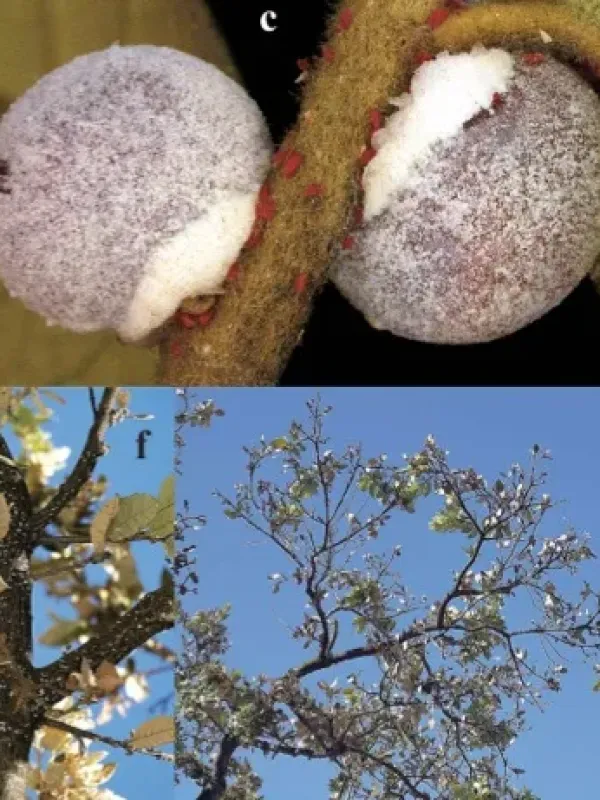
Adult females are globose and look remarkably like buds or small galls, making them difficult to spot on the bark of their host tree.
The body of the female is covered with a thickened cuticle that changes color from yellowish to a vibrant reddish-brown as it matures.
Males are rarely observed; they are winged and short-lived, serving only the purpose of fertilization during the reproductive season.
The first-instar nymphs, known as crawlers, are the mobile stage of the life cycle, capable of dispersing to suitable feeding sites on the oak tree.
What it damages
This pest primarily attacks oak species, particularly the holm oak (Quercus ilex) and the kermes oak (Quercus coccifera).
By inserting their stylets into the plant tissues, these insects extract vital phloem sap, which deprives the tree of nutrients and energy.
Feeding leads to the distortion of young shoots, twig dieback, and a general reduction in the vigor of the infested oak tree.
The insects excrete honeydew, a sugary substance that facilitates the growth of sooty mold, blocking photosynthesis and causing leaves to blacken.
Heavy infestations can result in the structural weakening of branches and, in severe cases, the eventual death of young or stressed specimens.
When it appears
The life cycle of Kermes vermilio is univoltine, meaning there is one generation per year, synchronized with the oak growing season.
Adult fertilized females overwinter in sheltered areas on the bark or near the base of buds, remaining largely inactive until spring.
In spring, as sap flow begins, the females resume feeding, grow significantly, and begin to form egg sacs beneath their bodies.
The crawler stage typically emerges in late spring or early summer, coinciding with the development of new, soft plant shoots.
The nymphs settle and begin their development, transitioning through stages until they reach maturity by the following autumn.
Signs of infestation
The presence of spherical, gall-like structures on young branches is the most prominent indicator of an infestation.
Sticky, shiny foliage caused by honeydew deposits is a classic sign, often accompanied by increased ant activity around the tree.
A black, dusty covering on leaves suggests the presence of sooty mold, which indicates that the scale insects have been feeding for an extended period.
Distorted, stunted, or dying terminal shoots are physical signs of localized tissue damage caused by the insects.
Increased presence of wasps or flies feeding on the honeydew can also serve as an indirect indicator that the tree is harboring a population of scale insects.
Control measures
Effective management requires monitoring the tree for the emergence of crawlers in late spring, as this is the most vulnerable stage for chemical treatment.
Systemic insecticides are generally effective when applied at the right time, as they are translocated through the plant's vascular system to the feeding sites.
Dormant oil sprays applied in late winter can help suppress the population by suffocating the overwintering female scales before they begin their spring growth.
Pruning and disposing of heavily infested branches can physically reduce the pest population and prevent further spread throughout the tree canopy.
Maintaining the overall health of the oak through proper irrigation and fertilization is crucial, as healthy trees are better equipped to tolerate and recover from scale attacks.
Taxonomy
- Latin name
- Kermes vermilio
- Order
- Hemiptera (bugs, aphids, leafhoppers)
- Family
- Kermesidae
- EPPO code
- KERMVE
Discussion
No discussions yet — be the first.