
Kermes
Kermes
Description
How to identify
Kermes are scale insects belonging to the family Kermesidae. These insects exhibit a high degree of sexual dimorphism.
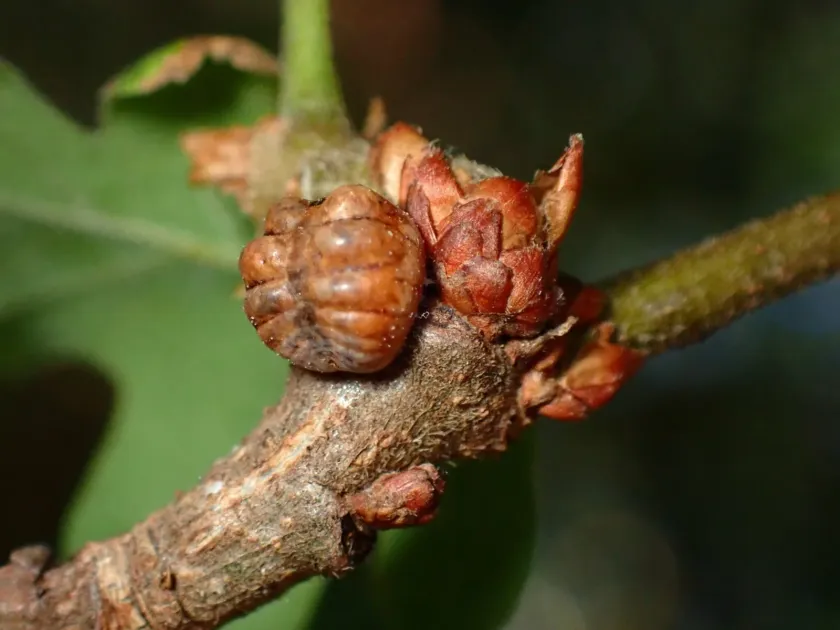
Adult females have a spherical, gall-like appearance, often mistaken for oak buds or abnormal growths on the bark.
The coloration of the female is typically brownish or reddish, providing effective camouflage against the bark of the host tree.
Males are relatively rare, small, and winged, which allows them to locate the sessile females for mating purposes.
First-instar nymphs, known as crawlers, are very small and active, possessing legs that facilitate movement across the tree branches.
What it damages
Kermes insects are specialized pests that primarily infest various species of oak trees in forests and urban landscapes.
The pest feeds on the plant sap by inserting its mouthparts into the young twigs, branches, and occasionally the tree base.
Mass infestations can colonize large sections of the canopy, leading to significant nutrient depletion and stress for the tree.
Young nursery stock and ornamental trees are particularly susceptible to severe damage and growth stagnation.
Prolonged infestation weakens the host, making it more prone to secondary attacks by wood-boring beetles and fungal pathogens.
When it appears
The overwintering stage usually involves fertilized females or nymphs sheltered within bark crevices.
As spring arrives, the overwintered insects begin feeding actively, leading to a rapid increase in their body size.
The emergence of crawlers typically occurs in early summer, marking the period of maximum dispersal within the tree canopy.
Once settled, the nymphs remain stationary for the rest of their development cycle on the woody tissue.
Most Kermes species complete a single generation per year, concluding the life cycle with egg-laying in late autumn.
Signs of infestation
The most distinct visual indicator is the presence of brown, globular structures attached to twigs, resembling swollen buds.
Sooty mold growth on the bark is a common indicator, as it thrives on the honeydew excreted by the feeding insects.
Leaves on infested branches often show symptoms of chlorosis, premature senescence, and early leaf drop.
Reduced shoot growth and dieback of smaller twigs are frequently observed as the insect drains the tree's energy reserves.
Severe infestations can lead to cracked bark and a general decline in the tree's overall vigor and aesthetic value.
Control measures
Chemical control is most effective when applied as a systemic insecticide during the crawler emergence phase in early summer.
Dormant oil applications in late winter or early spring can help control overwintering females by suffocating them.
Pruning and destroying heavily infested branches can significantly reduce the local population density of the pest.
Maintaining tree health through proper fertilization, adequate watering, and mulch application helps the tree resist infestation.
Biological control methods include encouraging natural predators such as lady beetles, lacewings, and parasitic wasps.
Taxonomy
- Latin name
- Kermes
- Order
- Hemiptera (bugs, aphids, leafhoppers)
- Family
- Kermesidae
- EPPO code
- KERMSP
Discussion
No discussions yet — be the first.