
Black-legged tick
Ixodes scapularis
Description
How to identify
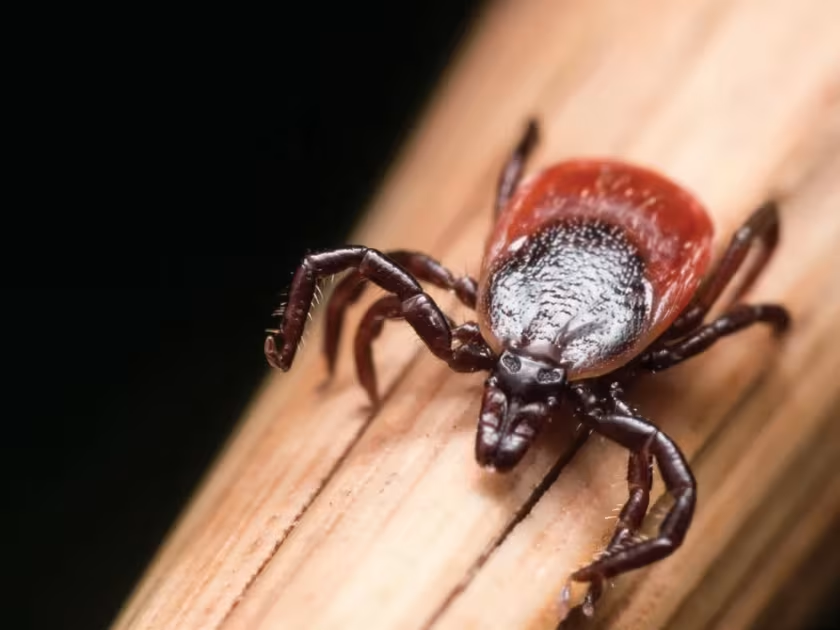
The black-legged tick, scientifically known as Ixodes scapularis, is a member of the Ixodidae family. This arthropod is easily recognized by its dark-colored legs and a distinct dark shield on the dorsal side of its body, which gives the species its common name.
The tick undergoes a complex life cycle consisting of three main stages: larva, nymph, and adult. Each developmental phase requires a blood meal from a vertebrate host to transition to the next stage, which facilitates the wide distribution of the species.
Adult ticks have an oval shape, and their size can vary significantly depending on their level of engorgement. Lacking eyes, they rely on specialized sensory organs on their front legs to detect heat, moisture, and carbon dioxide produced by their hosts.
The total lifespan of Ixodes scapularis typically ranges from two to three years, depending on the environmental conditions and the availability of suitable hosts. They prefer high-humidity environments such as tall grasses and leaf litter.
These ticks are extremely adaptable, allowing them to thrive in various habitats including agricultural fringes, forest edges, and managed grasslands. This adaptability makes them a persistent concern for farmers and agricultural workers.
What it damages
It is important to note that the black-legged tick is not a phytophagous pest. It does not feed on crops or cause direct mechanical damage to plants. However, its presence has significant negative consequences for agricultural productivity and operations.
The primary concern is its role as a vector for various pathogens. Their presence in fields can disrupt agricultural labor, as workers face significant health risks, which may lead to delays in critical field activities such as planting or harvesting.
In livestock production, Ixodes scapularis poses a direct threat to animal health. Infestations can cause significant stress, skin irritation, and the transmission of blood-borne diseases, all of which contribute to reduced meat and milk production.
The economic impact includes increased veterinary expenses and the need for preventive treatments for livestock. Fields heavily infested with these ticks may become unsuitable for grazing, forcing farmers to seek alternative, potentially more costly, feeding solutions.
Furthermore, the need for mitigation strategies, such as continuous monitoring and chemical barriers, adds to the overall cost of farm management, complicating logistical workflows during the most demanding times of the growing season.
When it appears
The seasonal activity of the black-legged tick is primarily dictated by temperature and humidity levels. They are most active during the spring and summer months when weather conditions are mild and moisture levels are adequate.
Larvae and nymphs are generally most active during late spring and throughout the summer. Adult ticks are often active later in the season and can persist into the autumn months until the first hard frost stops their movement.
Extreme heat and low humidity can inhibit tick activity, causing them to retreat into more humid areas near the soil. Conversely, wet and rainy conditions can lead to a surge in activity as they migrate back toward the tips of vegetation to find hosts.
Mild winters can lead to higher survival rates for tick populations, resulting in increased pressure during the following agricultural season. Farmers should be aware of these trends to plan their field management activities effectively.
Early autumn represents a peak activity period for adult females preparing for overwintering. This period often coincides with late harvest activities, necessitating increased vigilance for those working in fields adjacent to wooded or grassy areas.
Control measures
Effective management of Ixodes scapularis requires an integrated approach focusing on habitat modification and chemical interventions. Regular mowing of tall grass and weeds around field edges is the most effective preventative measure.
- Clearing brush and leaf litter to decrease habitat humidity.
- Applying acaricides along the perimeters of fields and livestock areas.
- Ensuring workers use protective clothing treated with appropriate repellents.
- Implementing routine veterinary treatments for all grazing livestock.
- Monitoring the population of small rodents that act as primary reservoirs.
Cultural control practices, such as rotating livestock to well-maintained, sun-exposed pastures, can significantly reduce the risk of tick attachment, as these ticks prefer shaded and humid environments.
Biological control, such as encouraging the presence of natural predators like certain birds or beneficial parasitic wasps, can assist in long-term population suppression within the agricultural landscape.
Consistent monitoring using drag-sampling techniques allows farm managers to assess tick density accurately. By identifying hotspots early, it is possible to implement targeted interventions that minimize the reliance on widespread chemical spraying.
Taxonomy
- Latin name
- Ixodes scapularis
- Family
- Ixodidae
- EPPO code
- IXODSC
Discussion
No discussions yet — be the first.