
Hairy ixodid tick
Ixodes pilosus
Description
How to identify
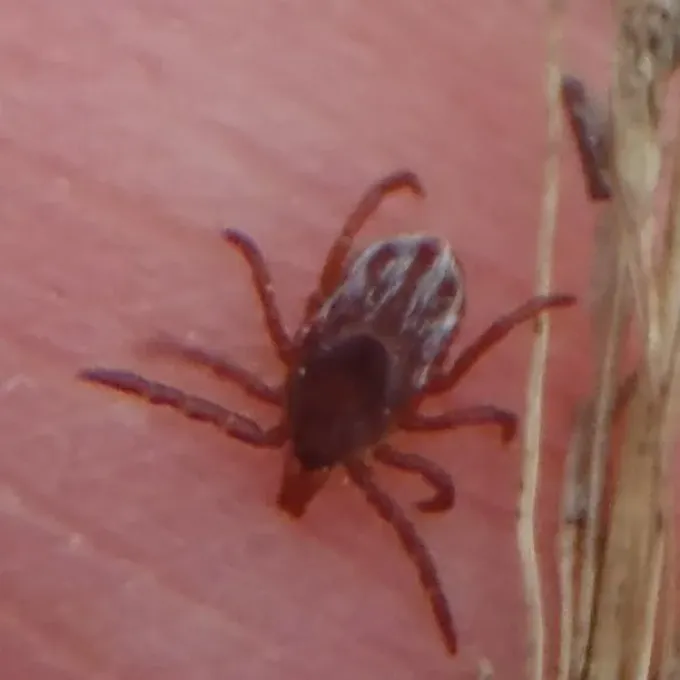
The hairy ixodid tick (Ixodes pilosus) is a member of the Ixodidae family. As the name suggests, this species is characterized by the presence of dense, fine hairs on its dorsal surface, which differentiates it morphologically.
These ticks undergo a complex life cycle consisting of four distinct stages: egg, larva, nymph, and adult. Each developmental stage requires a blood meal to progress further.
They are exophilic parasites, meaning they wait for their hosts on the tips of grasses and low-lying vegetation. They rely on host cues such as heat, CO2, and vibration to detect prey.
Adult females are significantly larger than males and exhibit a dramatic size increase after engorgement with blood, as their cuticle stretches to accommodate the volume.
Accurate identification of this species often requires careful microscopic examination of the mouthparts and the scutum pattern to distinguish it from closely related tick species.
What it damages
While Ixodes pilosus does not feed on plant tissues and is not a phytophagous pest, its role in agricultural ecosystems is significant due to its parasitic relationship with livestock.
The primary damage is caused by direct attachment to sheep, cattle, and other ungulates. These ticks extract blood, which, in cases of heavy infestation, can cause severe anemia and weakness.
Continuous biting causes irritation and skin damage, which affects the quality of hides and may lead to secondary bacterial infections at the bite sites.
Perhaps most importantly, these ticks serve as vectors for various hemoparasitic diseases. These pathogens can cause significant economic losses through morbidity and reduced productivity.
Livestock owners must manage these ticks to prevent health issues, leading to increased costs for veterinary treatments and preventative care.
When it appears
The activity of Ixodes pilosus is highly dependent on environmental variables such as ambient temperature and relative humidity levels throughout the year.
Ticks typically emerge in early spring once soil temperatures rise, signaling the end of the winter diapause. They climb onto vegetation to seek hosts.
The peak activity period usually occurs during the humid, warm months of late spring and early summer when the climate is optimal for tick survival and host-seeking behavior.
Mid-summer heat can cause a temporary decline in tick activity on open pastures if the microclimate becomes too dry, forcing them deeper into the ground litter.
Activity usually picks up again in the autumn, provided that conditions remain sufficiently moist before the onset of winter frost forces the ticks back into dormancy.
Control measures
Integrated Pest Management (IPM) for ticks on agricultural land focuses on both protecting the animals and managing the environment of the grazing areas.
Chemical control remains the most widespread method, involving the application of acaricides to livestock through pour-on solutions, sprays, or treated ear tags.
Environmental management is crucial; keeping pastures clear of overgrown weeds and scrub removes the essential cover that ticks need to survive and wait for hosts.
Rotational grazing systems can be effective by resting pastures, which may cause larvae and nymphs to perish if they cannot find a blood meal within a specific timeframe.
- Regular monitoring of livestock for tick infestations during the high-risk season.
- Mowing or clearing tall, rank grass along pasture borders.
- Quarantine and treatment of newly introduced animals to prevent the spread of ticks.
Taxonomy
- Latin name
- Ixodes pilosus
- Family
- Ixodidae
- EPPO code
- IXODPI
Discussion
No discussions yet — be the first.