
King's tick
Ixodes kingi
Description
How to identify
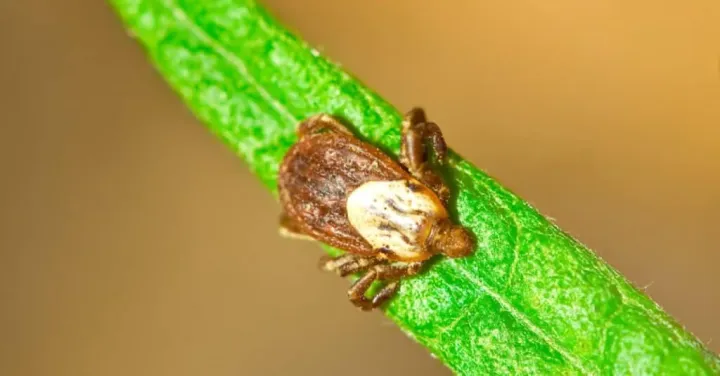
The King's tick (Ixodes kingi) is an ectoparasite belonging to the family Ixodidae. It follows a complex life cycle consisting of three developmental stages: larva, nymph, and adult, all of which require a blood meal to progress.
Adult ticks possess a hard chitinous scutum. Males are smaller and covered by this shield, whereas in females, the scutum covers only the anterior part, allowing the abdomen to expand significantly during engorgement.
These ticks are morphologically specialized to attach firmly to the skin of their host. Their mouthparts (hypostome) are barbed, making manual removal without specialized tools difficult.
The species is primarily found in North America. It demonstrates a strong preference for burrow-dwelling animals, which influences its distribution patterns in rural landscapes.
Identification at the species level requires microscopic examination of the coxae and genital aperture to distinguish Ixodes kingi from other common tick species found in the same habitat.
What it damages
It is important to note that the King's tick is not a plant pest. It does not feed on crops, vegetables, or trees; therefore, it causes no direct damage to agricultural vegetation.
The economic impact of this tick is exclusively linked to animal husbandry and the health of livestock grazing in infested areas.
Infestation with Ixodes kingi causes irritation, dermatitis, and stress in animals. In severe cases, the blood loss caused by a large number of ticks can result in anemia, particularly in young animals.
Furthermore, these ticks are potential vectors for pathogens that can significantly affect the health of livestock, leading to reduced productivity and veterinary expenses.
The presence of high tick densities can also force farmers to abandon certain grazing areas, leading to inefficient use of available pasture resources.
When it appears
The seasonal activity of Ixodes kingi is heavily dependent on soil temperature and humidity levels. Activity typically begins in the spring when ground temperatures become conducive to movement.
Mid-summer heat can lead to a decrease in surface activity as ticks seek moisture in deeper layers of the soil or in the protection of burrows to avoid desiccation.
A second peak of activity often occurs in late summer or early autumn as adult ticks seek hosts before the onset of winter.
The duration of each activity phase is influenced by the microclimate of the host’s burrow and the surrounding vegetation density.
During the winter, the ticks enter a state of diapause, surviving in protected environments such as animal dens or deep leaf litter until conditions improve.
Signs of infestation
The most common sign of tick presence is the discovery of attached parasites on livestock during routine inspections after grazing.
Animals may exhibit signs of intense itching, scratching, or rubbing against fence posts, which can lead to broken skin and subsequent secondary infections.
Local inflammation, swelling, and redness are typical reactions at the site of tick attachment, which persist even after the parasite has been removed.
Field monitoring using a white cloth drag is the standard method for agronomists to assess tick density in pastures before introducing livestock to a new grazing block.
A general decrease in animal vigor, weight gain, and grooming behavior are indicative of long-term parasite exposure in a herd.
Control measures
Management of the King's tick involves an integrated approach combining chemical control, habitat modification, and animal care.
Pasture management includes clearing tall weeds, brush, and accumulated debris along fence lines and field edges where ticks tend to congregate while waiting for hosts.
Topical application of acaricides to livestock is a critical measure to prevent tick attachment and reduce the parasite burden on the farm.
Rotation of grazing lands helps in breaking the tick life cycle by denying them access to preferred hosts during their most active periods.
- Application of veterinary-approved acaricides.
- Strategic clearing of underbrush and tall grass.
- Regular herd health assessments.
- Exclusion of small rodents from animal housing areas.
Taxonomy
- Latin name
- Ixodes kingi
- Family
- Ixodidae
- EPPO code
- IXODKI
Discussion
No discussions yet — be the first.