
Australian paralysis tick
Ixodes holocyclus
Description
How to identify
The Australian paralysis tick (Ixodes holocyclus) is a member of the Ixodidae family, known for its significant medical and veterinary importance in eastern Australia.
As a three-host tick, Ixodes holocyclus requires a blood meal from three different hosts across its larval, nymphal, and adult life stages to mature successfully.
The adult female is particularly notable for its capacity to inject a lethal neurotoxin into the host, which distinguishes this species from many other tick relatives.
They are classified within the order Parasitiformes and are primarily adapted to humid environments where they can survive until they detect a suitable host.
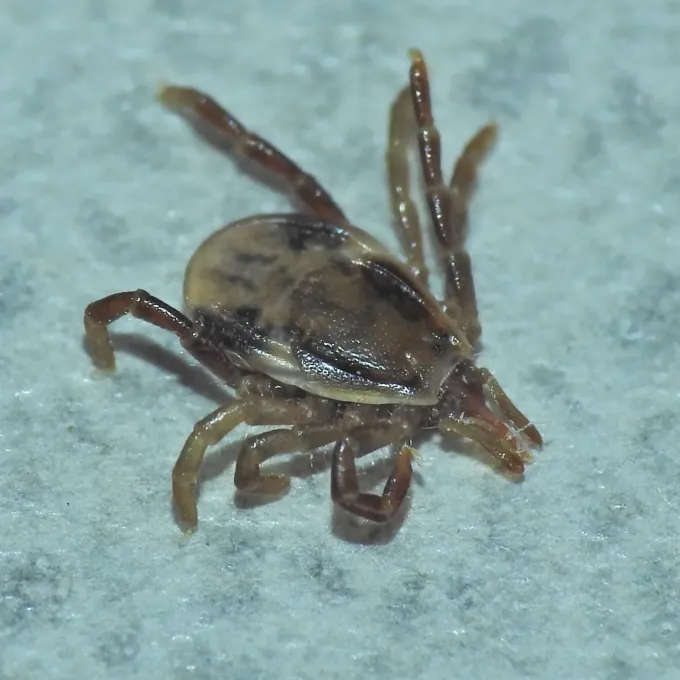
Morphologically, these ticks have a distinct appearance, with adult females being significantly larger and more bulbous once they have attached and fed on their host.
What it damages
The Australian paralysis tick is not a plant pest; it does not consume crops or vegetation, but its presence affects the agricultural sector by threatening livestock.
The primary damage is caused by the injection of toxins during feeding, which leads to tick paralysis, a condition that can result in respiratory failure and death.
Livestock such as cattle, sheep, and goats are susceptible, which causes substantial economic losses for farmers due to medical expenses and loss of stock.
Beyond direct mortality, the stress caused by tick infestation reduces the overall productivity, weight gain, and milk production of the affected animals.
While the tick lives in the vegetation, it uses plants only as a platform to climb and wait for passing animals, making pastures a high-risk area.
When it appears
Tick activity is highly seasonal and heavily dependent on rainfall and humidity levels, as the ticks are prone to desiccation in dry conditions.
In most regions, the peak period for activity occurs during the warmer, wetter months of the year, providing the best environment for larvae and nymphs.
Adult ticks can be active throughout the year, especially in areas with mild winters where the microclimate remains stable for their survival.
Farmers must be vigilant during transitional seasons when moisture levels rise, as this often triggers increased host-seeking behavior among the tick population.
Monitoring local weather patterns allows agricultural managers to anticipate periods of high risk and schedule preventative livestock treatments accordingly.
Signs of infestation
The most alarming sign of infestation is the appearance of physical or neurological symptoms in livestock, such as hind-limb weakness or loss of coordination.
Owners should check animals regularly, as the tick itself can be found attached to the skin, typically near the head, neck, or under the belly.
Respiratory distress, often manifesting as a dry cough or labored breathing, is a critical late-stage sign of tick paralysis that requires immediate action.
In pastures, the presence of various native wildlife, such as bandicoots, often serves as a reservoir for the ticks, signaling a higher risk for grazing animals.
Any sudden lethargy or change in grazing behavior should be investigated immediately to rule out the attachment of a paralysis tick.
Control measures
Effective control of Ixodes holocyclus relies on a multi-faceted approach, starting with chemical protection of the animals using acaricides.
Landscape management, including regular mowing of long grass and brush clearance, is essential to reduce the humidity and shelter available for ticks in pasture areas.
- Regular application of approved acaricidal treatments.
- Routine inspection of livestock for attached ticks.
- Elimination of tick habitats like dense thickets.
Implementing quarantine procedures for new animals entering the herd helps prevent the introduction of ticks to previously uninfested areas.
Combining pasture hygiene with veterinary preventative care remains the gold standard for maintaining the health of livestock in endemic zones.
Taxonomy
- Latin name
- Ixodes holocyclus
- Family
- Ixodidae
- EPPO code
- IXODHO
Discussion
No discussions yet — be the first.