
Deer tick
Ixodes dammini
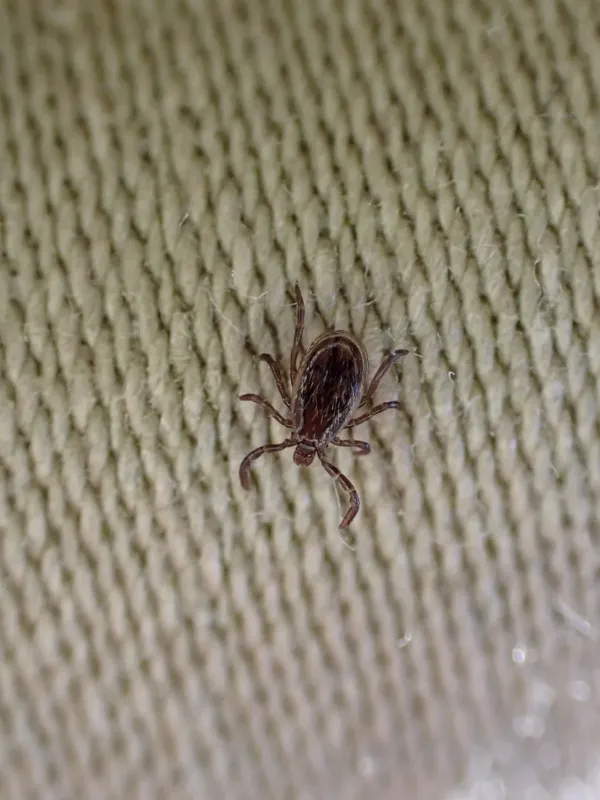
Description
How to identify
The Deer tick (Ixodes dammini), often classified as the northern strain of the Black-legged tick (Ixodes scapularis), is an arachnid belonging to the family Ixodidae. They are notorious for being the primary vector of Lyme disease.
Adult ticks have a flat, reddish-brown body. Females are approximately 2–3 mm long but can expand significantly when engorged with blood. Males are smaller and possess a hard, dark dorsal plate covering most of their back.
The life cycle consists of four stages: egg, larva, nymph, and adult. Each stage (except the egg) requires a blood meal from a host, which is essential for the tick's progression and survival.
It is crucial to understand that these ticks are not plant pests; they do not damage crops. Their presence is strictly tied to the availability of vertebrate hosts in the environment surrounding agricultural fields.
They are typically found in moist, shaded environments such as leaf litter, brush, and high grasses near forest edges, making them a significant occupational hazard for farmers.
What it damages
While Ixodes dammini does not consume plant matter, it causes substantial indirect economic damage to agricultural operations. The risk of tick-borne diseases often discourages labor from working in certain sections of the farm.
Livestock producers face high costs due to tick infestations on cattle, which lead to decreased weight gain, stress, and the transmission of blood-borne pathogens that require veterinary intervention.
Farm workers and employees are at constant risk of tick bites. This leads to absenteeism, increased insurance costs, and the necessity of mandatory safety protocols that can slow down daily operations.
The presence of these ticks forces farmers to maintain higher standards of land grooming, increasing the frequency of mowing and brush clearing along field perimeters.
Ultimately, the threat posed by ticks reduces the overall usability of the land, making areas near woodland buffers less productive and more expensive to maintain for safe agricultural use.
When it appears
Tick activity is highly dependent on temperature. Adult ticks become active as soon as temperatures rise above 5°C (41°F) in early spring, with peak activity usually occurring in May and June.
A second, secondary peak of activity for nymphs occurs in late summer and early autumn. Activity persists until the first hard frost, which significantly reduces the survival rate of active ticks.
Moisture is a critical factor for their survival. Ticks avoid dry, sunny spots and prefer the high humidity found in dense foliage or undergrowth, which provides protection from desiccation.
Ticks exhibit a diurnal rhythm, being most active during the cooler parts of the day, specifically at dawn and dusk, when the humidity is at its highest.
In regions with mild winters, the tick season can be significantly extended, forcing farm managers to implement year-round surveillance and protective measures.
Signs of infestation
Monitoring for the presence of deer ticks can be performed using the "drag cloth" method, where a white flannel cloth is pulled through tall grass or vegetation along field borders.
The ticks will cling to the fabric, allowing for easy identification. High counts per meter indicate that the area requires immediate intervention or clearing.
Routine self-checks and inspections of clothing after working in brushy or wooded areas are essential for early detection, preventing ticks from attaching to the skin.
The behavior of livestock can indicate a tick problem. Animals that appear agitated, frequently scratch, or show reluctance to enter certain grazing patches may be reacting to a high tick load.
The sighting of host animals, such as deer or mice, near fields is a strong indicator of a high tick population, as these animals serve as primary blood sources for the tick's reproductive success.
Control measures
The most effective cultural control is rigorous vegetation management. Mowing grass short and removing brush along field edges denies ticks the moisture they need to survive.
Chemical control involving acaricide applications can be effective when sprayed on forest edges and perimeter zones during the peak activity season in spring.
- Installing gravel or woodchip buffers between wooded areas and fields.
- Implementing rodent control programs to reduce tick host populations.
- Mandating the use of permethrin-treated work clothing for field staff.
- Using veterinary-approved acaricides for all livestock to prevent infestation.
Sanitation of the farm premises is also important. Removing piles of leaves, branches, and woody debris eliminates the micro-habitats where ticks thrive during dry periods.
Integrating these strategies into a comprehensive farm management plan ensures that the risks associated with Ixodes dammini are minimized, fostering a safer environment for agricultural production.
Taxonomy
- Latin name
- Ixodes dammini
- Family
- Ixodidae
- EPPO code
- IXODDA
Discussion
No discussions yet — be the first.