
Marsh springtail
Isotomurus palustris
Description
How to identify
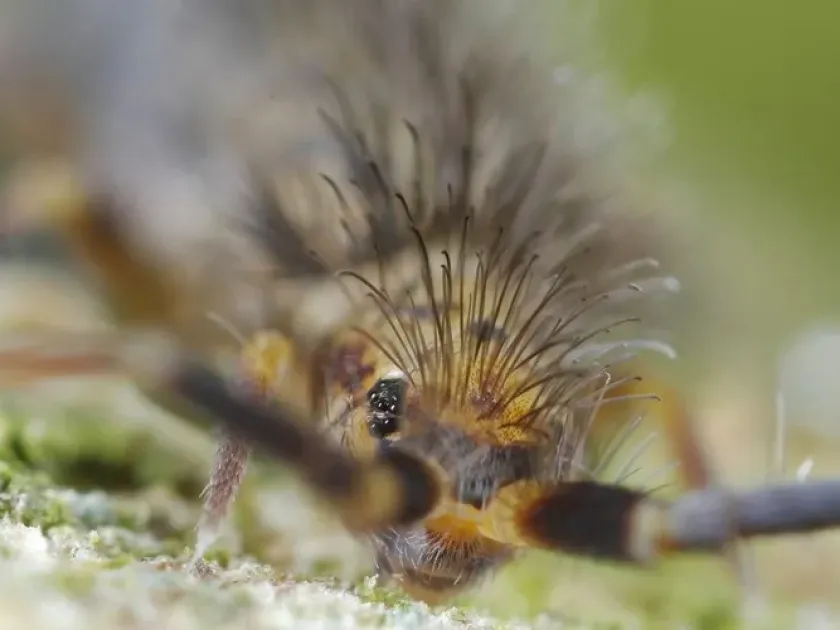
The marsh springtail (Isotomurus palustris) belongs to the order Collembola and the family Isotomidae. These are tiny arthropods, usually 2–3 mm long, characterized by an elongated body and a specific spring-like organ called the furcula.
The coloration of adults varies from greyish-green to brown, often with a distinctive pattern on the back. Unlike many other species of springtails, this particular species prefers moist environments.
The insect leads a predominantly hidden lifestyle in the upper layers of the soil or on damp leaves. Thanks to their furcula, they are capable of making sudden jumps, which is their primary way of moving when threatened.
The biology of the species is closely linked to high humidity, as their delicate cuticle is prone to rapid drying. While they are an important part of the soil fauna, they can multiply to damaging levels in conditions of excessive moisture.
Development occurs without metamorphosis, with nymphs appearing similar to adults as they pass through several molts. Eggs are laid in the soil or on decaying plant debris, where the young feed on organic matter.
What it damages
The pest attacks a wide range of crops, including vegetable seedlings, greenhouse crops, and ornamental flowers. Young plants with delicate root systems are particularly vulnerable to attack.
The main damage occurs in greenhouses and in waterlogged areas of open ground. Springtails nibble on fine roots, root hairs, and the lower parts of young plant stems.
Damaged root areas become entry points for fungal and bacterial infections. As a result, plants start to lag in growth, turn yellow, and may eventually perish.
Mass gatherings of springtails are often observed in pots with houseplants and in seedling trays where the irrigation regime is poorly managed. They may even consume seeds before they germinate.
The damage is expressed not only in the physical destruction of tissues but also in the suppression of the plant's general state, making it less resilient to environmental stressors.
When it appears
The greatest activity of the pest is observed during periods of high soil moisture, especially in spring and autumn. In greenhouses and conservatories, springtails can reproduce all year round.
Ideal conditions for their development are temperatures between +15 and +22 degrees Celsius and substrate moisture levels above 70%. When the soil dries out, the population density drops sharply.
The spring season is the most critical, as young sprouts do not have sufficient protection against pest feeding. It is during this time that agronomists often record instances of seedling mortality.
In autumn, springtails move to deeper layers of the soil or locations with plant debris, where they successfully overwinter. Activity resumes with the arrival of warmer weather.
In greenhouses, the development cycle is uninterrupted, which creates a continuous threat to seedlings throughout the growing season, requiring constant monitoring of humidity.
Signs of infestation
The first sign of the pest's presence is the occurrence of jumping individuals on the soil surface after heavy watering. They resemble tiny grains of sand that suddenly start moving.
Seedlings begin to look depressed, leaves lose turgor and acquire a chlorotic tint. A detailed inspection of the root system often reveals traces of surface root feeding.
On the surface of the substrate in pots, one might observe a coating consisting of excrement and organic particles, which springtails feed upon. This creates a favorable environment for mold.
In neglected cases, seeds in the soil stop germinating, as the embryo is consumed before it sprouts. Such infestation clusters often occur as patches in areas of moisture accumulation.
The presence of a large number of springtails also indicates excessive irrigation or poor drainage in the container, which inherently harms plant health.
Control measures
The foundation of control is a strict irrigation management regime. It is necessary to allow the top layer of the soil to dry out between waterings, which makes conditions unsuitable for springtail development.
The use of drainage systems and sterile soil substrates prevents mass reproduction of the pest. It is important to remove plant debris in a timely manner.
For chemical protection, contact and stomach insecticides authorized for specific crops are used. Soil treatment is often performed by drenching the substrate.
Biological methods include the use of entomopathogenic fungi or nematodes, which effectively reduce the population density without harming the environment.
- Optimization of substrate moisture.
- Heat or cold treatment of soil mixtures.
- Use of yellow sticky traps for population monitoring.
- Application of specialized biological products.
Taxonomy
- Latin name
- Isotomurus palustris
- Family
- Isotomidae
- EPPO code
- ISOOPA
Discussion
No discussions yet — be the first.