
Isotomurus
Isotomurus
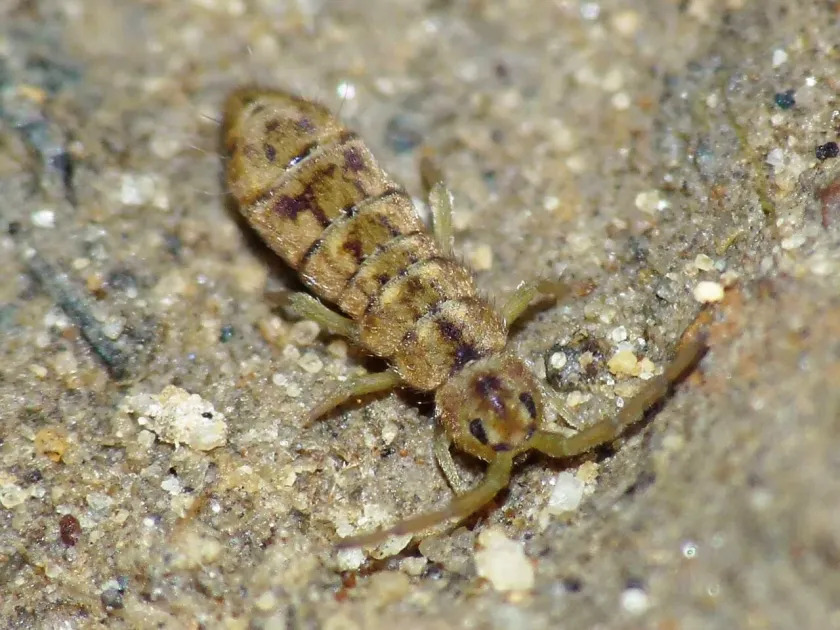
Description
How to identify
Isotomurus is a genus belonging to the order Collembola, commonly known as springtails, and the family Isotomidae. These are tiny arthropods, rarely exceeding 2–3 millimeters in length.
The insect possesses an elongated body typical of its family. Their coloration varies from gray to greenish and mottled patterns, which provides excellent camouflage within moist soil litter and organic matter.
A distinctive feature of Isotomurus is the presence of a furcula (springing organ) on the abdomen, allowing them to perform rapid jumps when disturbed. They are wingless and lead a cryptic, moisture-dependent lifestyle.
These organisms are highly dependent on humidity, as their life cycle is inextricably linked to the moisture content of the topsoil or substrate surface. They quickly succumb to desiccation in dry environments.
Reproduction occurs within the soil, where females deposit eggs in small clusters near organic debris. Nymphs resemble adults and undergo several molting stages before reaching sexual maturity.
What it damages
Isotomurus damages a wide range of agricultural and ornamental crops, especially in greenhouse environments and nurseries. Young plants with tender tissues are the most susceptible to their feeding activities.
The primary food sources for these pests are tender rootlets, root hairs, and lower stem tissues in direct contact with damp soil. During seed germination, they can completely consume the developing embryo.
Under waterlogged conditions, springtails graze on the epidermis of young sprouts, creating microscopic wounds. These wounds provide entry points for pathogenic fungi and bacteria, leading to root rot and damping-off.
Furthermore, Isotomurus may damage foliage touching the wet soil surface by chewing small, irregular holes. This significantly reduces the photosynthetic capacity of the plant.
The pest poses a particular threat to container-grown plants and those in hydroponic systems, where high organic content and constant moisture allow populations to reach damaging levels very rapidly.
Signs of infestation
The first sign of an Isotomurus infestation is stunted growth and a general unthrifty appearance of the plants for no obvious reason. This is often accompanied by the yellowing of lower leaves.
Upon inspecting the soil or substrate surface, one may observe clusters of tiny, jumping organisms, especially following irrigation, as they surface to avoid excess water saturation.
Roots of affected plants pulled from containers often show clear signs of grazing, such as small lesions or the absence of fine root hairs. The overall root system may appear stunted and necrotic.
In severe infestations, a characteristic film of pest excrement and fungal mycelium may develop on the soil surface, further complicating the plant's health status.
Plants infested with Isotomurus are highly prone to "damping-off" diseases, which often result in mass mortality of seedlings within a short period if left unmanaged.
Control measures
The primary management strategy for Isotomurus is the optimization of irrigation. Avoiding over-saturation and standing water is crucial, as high humidity is the main driver of population explosions.
Using sterilized growing media is an effective preventative measure. Substrates should be heat-treated or treated with biological control agents to suppress any existing pest populations before planting.
For established populations, soil drenches with systemic or contact insecticides, labeled for use against soil-borne pests in protected environments, can provide effective control.
Top-dressing the soil surface with sand or expanded clay (leca) can physically prevent springtails from reaching the plant stems and roots, effectively cutting them off from their food source.
When the first individuals are detected, shallow cultivation to allow the top layer of soil to dry out will significantly reduce pest activity and promote the natural mortality of eggs and nymphs.
Taxonomy
- Latin name
- Isotomurus
- Family
- Isotomidae
- EPPO code
- ISOOSP
Discussion
No discussions yet — be the first.