
Idiarthron
Idiarthron
Description
How to identify
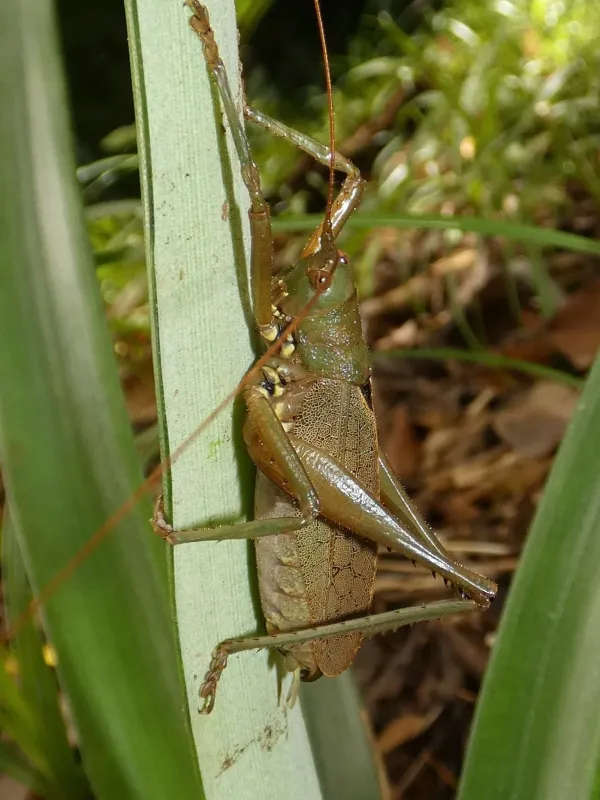
Idiarthron is a genus belonging to the order Orthoptera and the family Tettigoniidae, commonly known as bush-crickets or katydids. They are characterized by a slender body, long hind legs adapted for jumping, and very long, thread-like antennae.
Adults are typically green or brown, providing excellent camouflage among foliage. They possess well-developed wings, allowing for significant mobility and dispersal across agricultural fields during the growing season.
The life cycle involves an egg stage, which serves as the overwintering phase in the soil or plant debris, followed by nymphal stages and the final adult stage. Nymphs resemble miniature versions of adults but lack functional wings.
Developmental speed is highly dependent on environmental temperature. During warmer spells, the life cycle completes more rapidly, potentially leading to multiple pulses of activity within a single growing season.
Identifying the specific species within the Idiarthron genus often requires an expert examination of morphology, as they share many characteristics with other similar Orthoptera found in the same region.
What it damages
Idiarthron causes damage through the feeding activities of both nymphs and adults. They are generalist herbivores, meaning they can target a broad range of crops including cereals, legumes, and various vegetables.
The primary damage involves the consumption of leaf tissue. By chewing irregular patches on leaves, the pest reduces the total photosynthetic surface area, which leads to plant stress and reduced biomass accumulation.
Beyond foliage, the pest often attacks reproductive structures such as buds, flowers, and developing fruits. This type of damage is particularly severe as it directly impacts yield and market quality.
Feeding wounds created by their robust mandibles serve as entry points for various bacterial and fungal pathogens, potentially leading to secondary infections that cause rotting of stems or fruit.
In high-density infestations, Idiarthron can cause significant economic losses, especially if the infestation coincides with critical growth stages of the crop when recovery is difficult.
Signs of infestation
The most common sign of Idiarthron activity is the presence of uneven, ragged leaf edges. Unlike caterpillars that may leave small holes, bush-crickets tend to consume large sections of the leaf margin.
The auditory signature of male Idiarthron, which produce a rhythmic chirping sound during the evening and night, is a reliable indicator of their presence in the field.
The presence of frass (insect excrement) on leaves and beneath plants is a clear indicator of a feeding population. Observation of the field at dawn or dusk often reveals the pests resting on plant surfaces.
Large numbers of individuals jumping away when the crop is disturbed is a sign of a high population density. This sudden movement is a common reaction to vibrations in the surrounding environment.
Plant parts, such as developing stems, showing signs of being gnawed or girdled, are common in severe infestations and indicate that the insects are actively feeding on more robust plant tissues.
Control measures
Management begins with cultural practices such as deep autumn plowing. This disrupts the egg-laying sites in the soil and reduces the number of pests that successfully overwinter.
Weed management, particularly along field margins, is crucial. Eliminating vegetation that serves as a reservoir for Idiarthron helps prevent their migration into the primary crop fields.
Chemical control with registered insecticides is recommended when the population density exceeds the economic threshold. Applying treatments during the early nymphal stages is usually more effective.
Biological control methods involve enhancing the presence of natural predators, such as insectivorous birds and predatory insects, which can play a significant role in limiting pest populations.
Regular field scouting using visual inspection or trap counts is essential. Early detection allows for targeted interventions, reducing the overall pesticide footprint while protecting the crop from significant damage.
Taxonomy
- Latin name
- Idiarthron
- Order
- Orthoptera (locusts)
- Family
- Tettigoniidae
- EPPO code
- IDATSP
Discussion
No discussions yet — be the first.