
Seychelles fluted scale
Icerya seychellarum
Description
How to identify
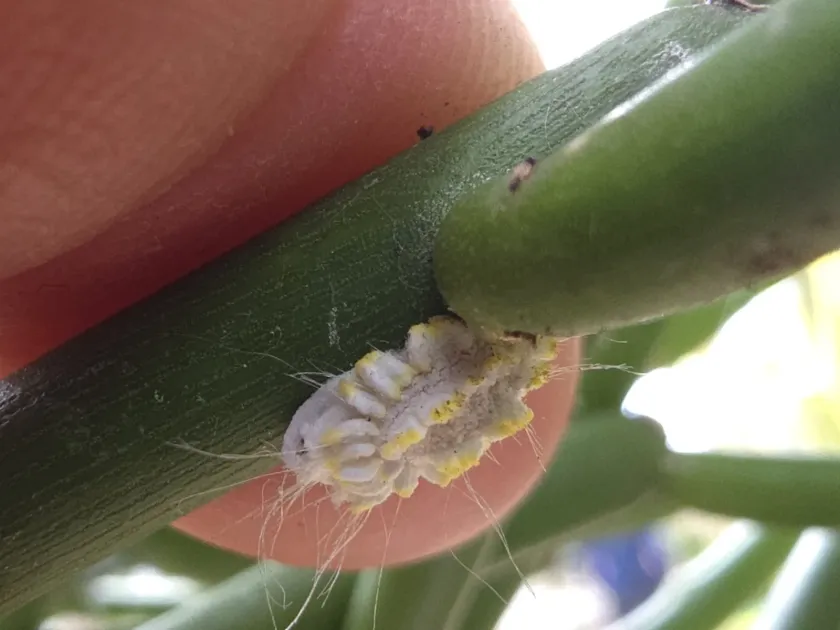
The Seychelles fluted scale (Icerya seychellarum) is a member of the Margarodidae family. Adult females are oval-shaped, typically 6–10 mm long, and covered in white waxy secretions.
The hallmark of this species is the presence of deep longitudinal grooves on the ovisac, which is where the eggs are stored and protected before hatching.
First-instar nymphs, commonly referred to as crawlers, are bright reddish and highly mobile, allowing them to spread across the plant canopy efficiently.
The species primarily reproduces through parthenogenesis, meaning females can produce viable offspring without mating, leading to rapid population explosions.
They thrive in tropical and subtropical climates where high humidity levels and stable warm temperatures support their continuous development throughout the year.
What it damages
This pest is a major polyphage, impacting a diverse range of crops such as citrus, avocado, mango, coffee, and several ornamental palm species.
By extracting plant sap from leaves and stems, these insects weaken the host plant, leading to stunted growth, leaf deformation, and fruit drop.
In addition to physical damage, the toxic saliva injected while feeding often leads to necrosis of the affected plant tissues and yellowing of the foliage.
Large colonies can envelop entire branches, sapping the vitality of the tree and significantly reducing the quality and quantity of the harvest.
The economic impact is profound in commercial orchards where the presence of the scale insect ruins both the produce and the health of the trees.
Signs of infestation
The most visible sign of infestation is the accumulation of white, cottony waxy fluff on the undersides of leaves and along the tender green shoots.
Plants often exhibit sticky honeydew excretions, which quickly become colonized by sooty mold, creating a distinct black coating on leaves and stems.
This sooty mold layer blocks sunlight and interferes with photosynthesis, causing the tree to suffer from systemic chlorosis and nutrient deficiency.
A secondary indicator is the increased activity of ant colonies, which are attracted to the sweet honeydew and provide protection to the scales from predators.
Severely infested plants appear visibly unhealthy, with curled, yellowing leaves and a general lack of vigor during the active growing season.
Control measures
Biological control is the gold standard for managing this pest, particularly through the introduction of specific predators like the Rodolia beetles.
Horticultural mineral oils are highly effective as they suffocate the insects by coating their spiracles, preventing them from breathing.
Systemic insecticides, particularly neonicotinoids, can be applied to target scales that are protected by their thick, waxy outer coverings.
Sanitation practices, including the pruning and immediate destruction of heavily infested limbs, remain a vital part of integrated pest management.
- Regular monitoring of tree canopy.
- Ant control to prevent the protection of scales.
- Using authorized systemic chemical treatments.
Taxonomy
- Latin name
- Icerya seychellarum
- Order
- Hemiptera (bugs, aphids, leafhoppers)
- Family
- Monophlebidae
- EPPO code
- ICERSE
Discussion
No discussions yet — be the first.