
Crypticerya
Crypticerya
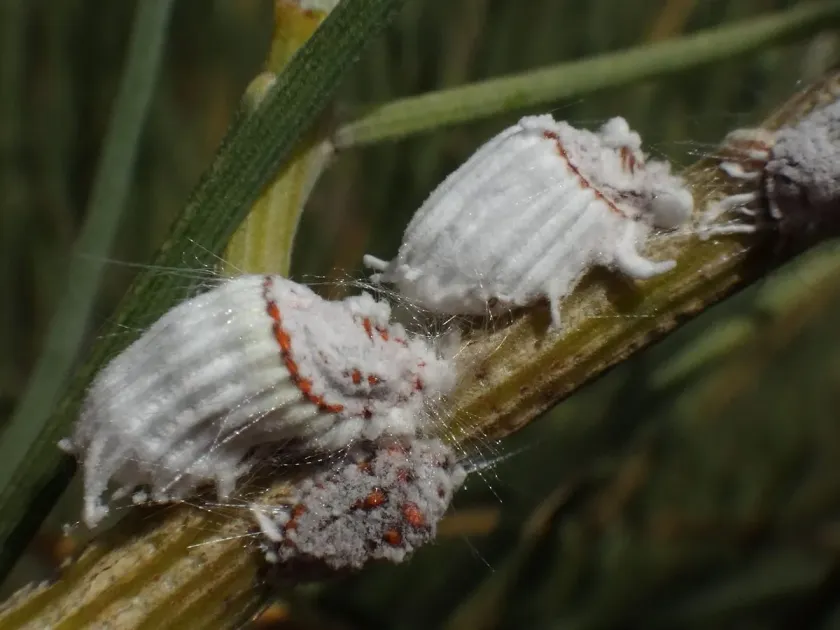
Description
How to identify
Crypticerya belongs to the family Margarodidae, a group of insects commonly known as giant scale insects or giant mealybugs. These pests are notorious for their significant impact on various horticultural and agricultural crops.
Adult females are characterized by an oval body shape, typically covered in a dense, white or yellowish waxy secretion. They often produce a large, distinct egg sac (ootheca), which serves as a protective structure for their offspring.
Males are rarely encountered and do not feed; they are winged and exist solely for reproduction. The population primarily expands through parthenogenesis, allowing for rapid colonization of host plants.
The first-instar nymphs, known as crawlers, are highly mobile. They move actively across the plant to find suitable feeding sites, which facilitates the quick spread of the infestation throughout an orchard or greenhouse.
The insects are often found in crevices of bark, on the undersides of leaves, and at the base of petioles. Their coloration, ranging from reddish-brown to black, is frequently masked by the voluminous waxy secretions they produce.
##damage##Crypticerya is a polyphagous pest with a strong preference for citrus trees, vineyards, and various ornamental shrubs. It feeds by inserting its mouthparts into the plant tissue to extract phloem sap.
As the insects feed, they inject toxic saliva into the host plant. This process disrupts the plant's physiological functions, leading to reduced vigor, chlorosis, and stunted growth of young shoots.
A significant portion of the damage is caused by the excretion of honeydew, a sugary byproduct. This substance coats the leaves, providing a perfect substrate for the growth of sooty mold, which inhibits photosynthesis.
Continued heavy infestation results in the deformation of branches, premature leaf drop, and overall physiological stress. In severe cases, the affected plants may decline rapidly and eventually die.
Furthermore, the physical presence of these pests on fruits degrades their aesthetic quality and market value, making them unsuitable for commercial sale without intensive cleaning and treatment.
##season##The activity and lifecycle of Crypticerya are heavily influenced by temperature. In subtropical and tropical climates, these insects can breed continuously throughout the year if host plants remain available.
In temperate zones, the most intensive development and reproduction occur during the warmer months, when temperatures consistently exceed 20°C. This is when the population size typically peaks.
In greenhouses and interior gardens, Crypticerya can maintain a constant reproductive cycle, creating overlapping generations. This makes management particularly difficult as all life stages are often present at the same time.
Migration to new host plants is most common during the summer when the crawler stage is active. They can be dispersed by wind currents, machinery, or human movement between infected and healthy sections of a crop.
While feeding rates may slow down during the winter, the pests remain present on perennial plants. Monitoring during the dormant season is crucial to prevent early spring outbreaks.
##signs##The most visible indicator of an infestation is the presence of white, cotton-like masses on the bark, leaves, or stems. These are the egg sacs created by the female insects.
The sticky honeydew coating on leaves and stems is a major warning sign. This substance often attracts ants, which will farm the scale insects to collect the honeydew, effectively protecting the pests from natural predators.
The development of a black, powdery layer (sooty mold) on the foliage is a secondary sign. This indicates that the insect population is well-established and has been feeding on the plant for an extended period.
Stressed appearance, including yellowing leaves, curling, and early senescence, are common symptoms of significant nutrient loss caused by the feeding activity of these scale insects.
Close inspection of bark crevices and leaf axils usually reveals the adult females, which appear as immobile, waxy lumps, or the small, scurrying crawlers that are constantly moving across the plant surface.
##control##Managing Crypticerya requires a multifaceted approach. Because the waxy coating provides a natural defense against contact sprays, traditional topical insecticides are often insufficient.
The most effective strategy involves the use of systemic insecticides, which are absorbed by the plant. This ensures the toxin is ingested by the pest during feeding, bypassing the protective waxy layer.
Biological control plays a significant role in managing this pest. The introduction of natural enemies, such as the predatory ladybird beetle Rodolia cardinalis, has proven highly successful in reducing population levels in many regions.
Good agricultural practices are essential. Regular pruning and disposal of heavily infested plant parts help reduce the total population and prevent further spread to healthy plants.
Maintaining plant health through optimal irrigation and balanced nutrition reduces susceptibility to attacks. Avoiding overcrowding and ensuring proper ventilation in greenhouse settings further limits the spread of the infestation.
Taxonomy
- Latin name
- Crypticerya
- Order
- Hemiptera (bugs, aphids, leafhoppers)
- Family
- Monophlebidae
- EPPO code
- CRPTSP
Discussion
No discussions yet — be the first.