
Crypticerya genistae
Crypticerya genistae
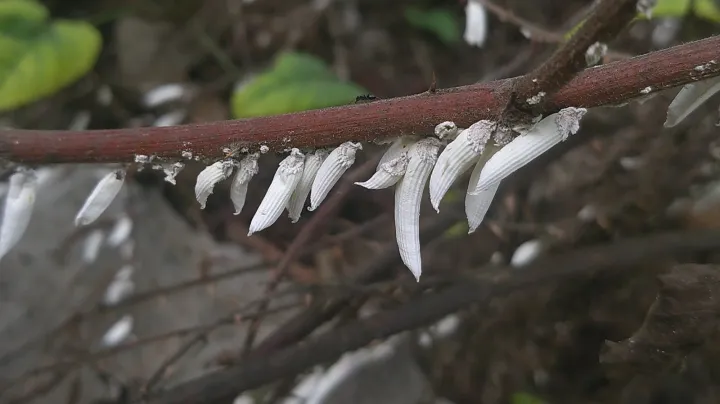
Description
How to identify
Crypticerya genistae is a specialized scale insect belonging to the family Monophlebidae. This pest is easily recognized by the female's unique morphology, which includes a reddish-brown body protected by a thick layer of white, cotton-like waxy secretions.
Adult females are sedentary, firmly attached to the plant stems or leaf axils where they feed. The white wax is not just a coating but also forms an ovisac (egg sac), which can be quite large relative to the insect's body size, often appearing as fluffy white clumps on the plant.
Males are rarely observed and possess wings, allowing them to travel in search of mates. The life cycle involves several nymphal stages, with the first instar, known as the 'crawler' stage, being the only highly mobile phase responsible for infestation spread.
Microscopic examination of the antennae and legs is often required for precise identification, as the species shares visual similarities with other Icerya relatives. Their presence is usually signaled by the white, fuzzy appearance of infested plant parts.
Due to their waxy covering, these insects are well-protected against various environmental stressors, making them highly resilient and difficult to eradicate once a colony has become established on a host plant.
What it damages
Crypticerya genistae is a polyphagous pest, though it shows a marked preference for various leguminous species and certain ornamental shrubs. It thrives in nursery and greenhouse environments, where it can rapidly infest entire batches of plants.
The insects feed by inserting their stylets into the plant tissue and sucking out phloem sap. This constant nutrient extraction significantly weakens the plant, leading to stunted growth and a general decline in vigor.
Affected plants often show chlorosis and leaf deformation. In cases of severe infestation, the loss of nutrients causes premature leaf drop and, in young or stressed plants, may lead to total death.
The excretion of honeydew is a significant secondary damage factor. This sugary substance accumulates on leaves and stems, creating a sticky environment that facilitates the growth of sooty mold, which blocks sunlight and hinders photosynthesis.
Beyond physical damage, the aesthetic impact is severe. Ornamental plants covered in white wax and black sooty mold are commercially unsaleable, causing direct economic losses for nursery operators and landscapers.
Signs of infestation
The most prominent sign of a Crypticerya genistae infestation is the visual appearance of white, cottony egg sacs on the branches and the underside of leaves. These look like small bits of fluff attached to the plant.
Another tell-tale sign is the presence of a sticky, glistening substance known as honeydew on the leaves and nearby surfaces. This substance is highly attractive to ants, which often farm the scale insects for their sugar-rich secretions.
The growth of black sooty mold on the leaves is a direct consequence of the honeydew accumulation. This layer of mold makes the foliage appear dirty and dark, effectively masking the true color of the plant.
Plants under attack will exhibit signs of poor health, such as wilting, yellowing, and the twisting of young shoots. If a plant seems to be under constant stress despite proper watering and fertilization, an inspection for hidden scales is necessary.
- White cottony wax deposits on stems
- Sticky residue on foliage (honeydew)
- Presence of black sooty mold
- Stunted growth and leaf curling
- Increased ant activity around plants
Control measures
Effective management begins with strict quarantine protocols for new plant material. Inspecting incoming stock is crucial to prevent the accidental introduction of this pest into pristine environments.
Systemic insecticides are the most effective chemical control method. By using products that are absorbed into the plant's vascular system, the toxin reaches the sap, effectively killing the scale insects as they feed.
Horticultural oils or insecticidal soaps can be used for contact control. These substances act by coating the insects and suffocating them, as well as breaking down the protective waxy layer that keeps them safe from environmental harm.
Biological control agents, such as predatory beetles of the genus Rodolia, have been successfully employed to manage scale populations. These predators specifically target Icerya and related species, offering an eco-friendly alternative to chemicals.
Regular sanitation, including the pruning and immediate destruction of heavily infested plant parts, is vital to reduce the overall population pressure in a garden or greenhouse setting.
Taxonomy
- Latin name
- Crypticerya genistae
- Order
- Hemiptera (bugs, aphids, leafhoppers)
- Family
- Monophlebidae
- EPPO code
- CRPTGE
Discussion
No discussions yet — be the first.