
Cottony cushion scale
Icerya
Description
How to identify
The cottony cushion scale (Icerya purchasi) is a notorious scale insect belonging to the family Monophlebidae. It is recognized as a major pest of citrus and various ornamental plants worldwide.
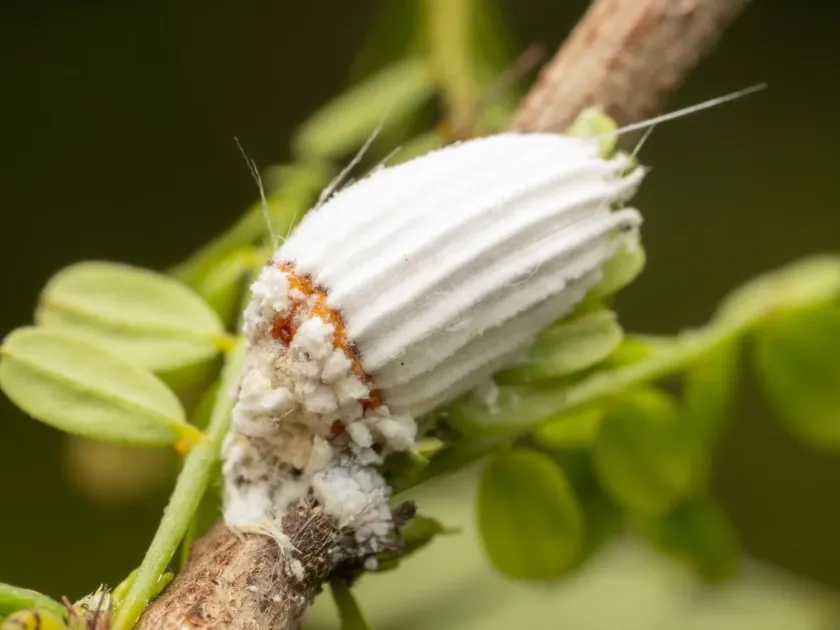
Adult females are characterized by their reddish-brown bodies covered in a waxy secretion. The most distinctive feature is the white, fluted, cotton-like ovisac (egg sac) attached to the rear of the body, which can contain hundreds of eggs.
Males are rarely seen; they are winged and very small, while females remain stationary on the plant tissue. The nymphs, often called crawlers, are the mobile stage responsible for spreading the infestation to new areas of the plant.
Development involves several nymphal stages before reaching adulthood. The crawlers are extremely small, bright red, and mobile, allowing them to disperse quickly across the host plant or be carried by wind to neighboring trees.
The life cycle is highly influenced by temperature and humidity. In warm, favorable climates, the pest can undergo multiple generations per year, leading to rapid population explosions that can overwhelm host plants.
What it damages
Citrus trees, including lemons, oranges, and grapefruits, are the primary hosts for the cottony cushion scale. The pest feeds by inserting its mouthparts into the phloem and sucking out the plant's sap.
Besides citrus, this scale affects a wide range of woody plants such as roses, pittosporum, acacia, and bay laurel. Its ability to infest diverse plant species makes it a persistent challenge for gardeners and commercial growers.
Constant sap extraction causes significant physiological stress. Heavily infested trees show stunted growth, leaf yellowing, and premature senescence, which drastically reduces the photosynthetic capacity of the plant.
In addition to direct damage, the scales excrete large amounts of honeydew. This sticky substance serves as a substrate for the growth of sooty mold, which coats the leaves in a black, soot-like layer, further inhibiting light absorption.
Severe infestations often result in branch dieback and, in extreme cases, the total death of the host plant. Crop yield is severely impacted, not only through reduced tree vigor but also through direct contamination of fruit with wax and mold.
Signs of infestation
The most visible sign of an infestation is the presence of white, cotton-like egg sacs on twigs, branches, and occasionally on the leaves or fruit of the host plant. These sacs are highly distinct and difficult to miss.
Another indicator is the sticky honeydew covering the foliage. If leaves appear shiny or sticky, it is a clear sign that sap-sucking insects like scales or aphids are present and actively feeding on the plant.
The development of a black, powdery coating known as sooty mold on the leaves and bark is a secondary sign. This fungus grows on the honeydew and confirms that the infestation has been present for a significant period.
Physical symptoms include yellowing leaves, leaf drop, and overall thinning of the canopy. You may also notice ants frequently visiting the plant, as they are often attracted to the sweet honeydew produced by the scales.
A closer inspection of the plant during the growing season will reveal the mobile crawlers. These tiny, reddish insects can be seen moving along the veins of the leaves or seeking suitable sites on the bark to settle and feed.
Control measures
Biological control is the gold standard for managing this pest. The predatory vedalia beetle (Rodolia cardinalis) is highly specific to the cottony cushion scale and has been used successfully worldwide to reduce populations to non-economic levels.
Chemical control should be approached with caution as the scale's waxy covering can make it resistant to contact insecticides. Systemic insecticides or the use of horticultural oils are often recommended to penetrate the waxy layer.
Cultural management involves pruning and destroying heavily infested branches. Removing these areas of high population density helps to limit the spread and provides immediate relief to the remaining part of the tree.
It is crucial to avoid the unnecessary use of broad-spectrum pesticides, as these can kill the natural enemies (like the vedalia beetle) that keep scale populations in check. Integrated Pest Management (IPM) is essential for long-term success.
Quarantine measures are necessary when moving nursery stock. Always inspect new plants for any signs of cottony growth or scale insects before introducing them into an existing garden or orchard environment.
Taxonomy
- Latin name
- Icerya
- Order
- Hemiptera (bugs, aphids, leafhoppers)
- Family
- Monophlebidae
- EPPO code
- ICERSP
Discussion
No discussions yet — be the first.