
Hypopta ambigua
Hypopta ambigua
Description
How to identify
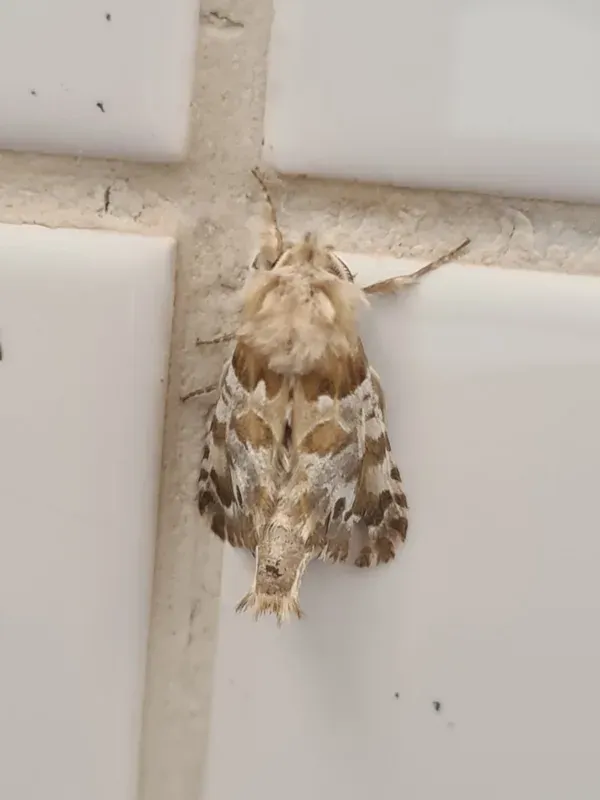
Hypopta ambigua is a member of the order Lepidoptera and the family Cossidae, commonly known as carpenter moths or wood-boring moths. The adult moth has a wingspan of approximately 20–25 mm.
The moth features grayish-brown wings with a distinctive mottled or net-like pattern, which serves as camouflage against the bark of trees and grapevines.
The body is thick and covered in dense hair, typical of the Cossidae family, making the insect appear quite robust for its size.
Larvae are equipped with powerful, chewing mouthparts designed for boring into solid wood. Their body color is generally pale, ranging from dirty white to yellowish, with a dark-colored head capsule.
Pupae develop within the tunnels created by the larvae. Before the moth emerges, the pupa partially exits the bore hole, a key diagnostic feature for detection.
What it damages
The primary host for Hypopta ambigua is the grapevine (Vitis vinifera). The larvae cause damage by boring into young shoots and older woody parts like canes and trunks.
Besides grapevines, this pest can also infest various fruit trees, particularly stone fruits, making it a generalist wood-borer in some environments.
Larval boring disrupts the plant's vascular system, hindering the transport of water and nutrients, which significantly weakens the infested plant.
Visible damage includes stunted growth, yellowing of leaves, and reduced fruit yield. In severe infestations, the structural integrity of the grapevine may be compromised.
Heavy boring can lead to the necrosis of entire cordons or even the death of the grapevine, causing substantial economic losses in commercial vineyards.
When it appears
The flight period for Hypopta ambigua adults usually occurs in mid-summer. Mating takes place shortly after emergence, followed by egg-laying.
Eggs are typically deposited in bark crevices or near bud bases, providing a protected starting point for the neonate larvae to bore into the wood.
The larvae are active feeders during late summer and autumn. They overwinter inside their larval galleries within the woody tissues of the host plant.
Activity resumes in the spring with the onset of sap flow. The larvae feed intensively during this period, expanding their galleries significantly before pupation.
Pupation happens inside the galleries in late spring or early summer, completing the life cycle. Depending on local climate conditions, the insect generally completes one generation per year.
Signs of infestation
The most visible sign of infestation is the presence of sawdust-like frass (excrement) expelled from small entry holes in the bark of the grapevine.
Stunted development of shoots or sudden wilting without evidence of fungal diseases or water stress is often an indicator of internal wood-boring activity.
Darkened or oozing sap spots on the wood can mark the entry points of the larvae. Closer inspection may reveal these structural disturbances in the vine's bark.
During pruning, one may find long, sawdust-packed tunnels inside the canes or cordons, which is a definitive sign of past or present Hypopta ambigua activity.
Discarded pupal exuviae protruding from the wood surface serve as a clear sign that adults have successfully emerged and that the cycle is continuing.
Control measures
Cultural control is the most effective approach. Pruning and immediate burning of heavily infested wood are essential to reduce the population size.
Avoiding mechanical damage to the trunk during cultivation helps prevent easy entry points for the larvae to access the vine's woody tissues.
- Sanitary pruning and removal of infested plant debris from the vineyard.
- Cleaning damaged areas and applying specialized insecticidal wound dressings.
- Monitoring adult populations using pheromone traps to time interventions accurately.
- Using biological control agents during the critical larval hatching phase.
Chemical control is only effective when larvae are in their initial stages of infestation, before they bore deep into the wood, requiring precise timing of applications.
Encouraging natural predators such as birds and parasitic wasps can help keep populations of Hypopta ambigua below the economic injury level.
Taxonomy
- Latin name
- Hypopta ambigua
- Order
- Lepidoptera (butterflies)
- Family
- Cossidae
- EPPO code
- HYPTAM
Discussion
No discussions yet — be the first.