
Hypopta moth
Hypopta
Description
How to identify
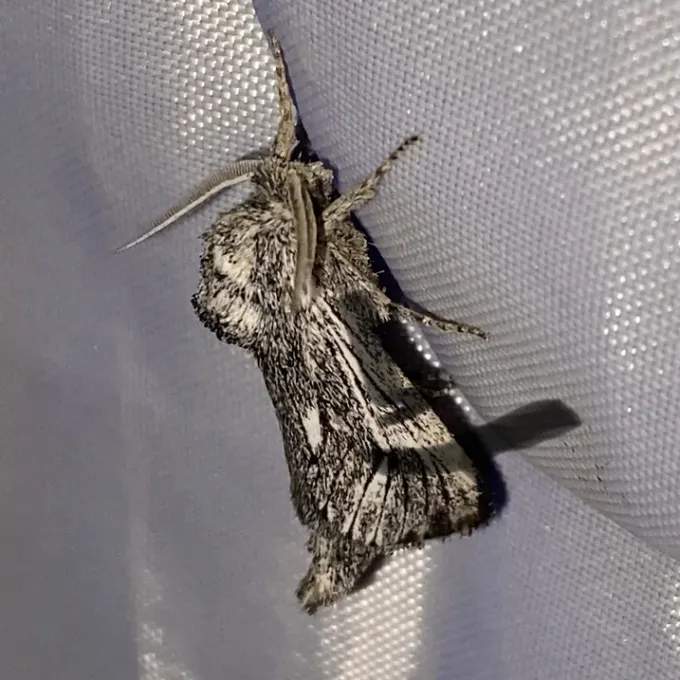
The Hypopta moth (genus Hypopta) is a member of the Cossidae family, a group of lepidopterans known as carpenter or wood-boring moths that cause damage to trees and woody plants.
Adult moths are typically cryptic in appearance, featuring mottled grey or brown wings that allow them to blend into tree bark, making them difficult to spot during the day.
The larvae, or caterpillars, are the damaging stage of the life cycle. They are fleshy, often reddish-white, and possess strong mandibles capable of boring deep into solid wood.
The biological cycle often spans multiple years, as the larvae grow slowly while feeding on the internal tissues of the host plant, hidden from external predators and many pesticides.
These moths are highly specialized, often targeting weakened or stressed trees where the nutritional quality of the sapwood is suitable for larval development.
What it damages
Hypopta larvae bore tunnels through the wood, disrupting the vascular system of the host plant, which is responsible for transporting nutrients and water to the canopy.
This internal tunneling weakens the structural integrity of the branches and trunks, making them prone to breakage during high winds or heavy storms.
Affected trees often show reduced growth rates, yellowing of leaves, and dieback of the crown as the damaged wood fails to support the physiological needs of the plant.
In vineyards and orchards, severe infestations can lead to a significant decline in fruit yield and, in some cases, the total death of the specimen over several seasons.
Furthermore, the tunnels created by the larvae serve as entry points for various pathogens, including fungi and bacteria, which can accelerate the death of the tree.
Signs of infestation
The most visible sign of an infestation is the presence of frass, a mixture of excrement and wood particles, which the larvae push out of their tunnels onto the bark or the ground.
Entry and exit holes are usually visible on the bark surface, sometimes accompanied by sap flow or dark staining, indicating that the tree is actively being bored.
Wilting of foliage on specific branches is a strong indicator that the vascular supply to those parts of the tree has been severed by larval galleries.
During the flight season, empty pupal cases can often be found protruding from the exit holes, indicating that the insects have completed their development and emerged.
In advanced cases, trees may exhibit distorted growth patterns or hollow sections within the trunk that can be detected by tapping the bark.
Control measures
Preventative cultural practices are essential, including the removal and destruction of infested branches to interrupt the life cycle of the moth.
Maintaining the health of the trees through proper irrigation, fertilization, and care is the best defense against wood-boring pests like Hypopta.
For localized infestations, systemic insecticides can be injected directly into the larval galleries, followed by sealing the holes with pruning paste or grafting wax.
Pheromone traps and light traps placed strategically in orchards can help monitor the population and capture adult moths before they lay eggs on susceptible hosts.
- Prune and dispose of infested wood immediately.
- Ensure adequate tree vigor to improve natural resistance.
- Monitor for frass throughout the growing season.
- Use professional-grade sealing agents for treated tunnels.
Taxonomy
- Latin name
- Hypopta
- Order
- Lepidoptera (butterflies)
- Family
- Cossidae
- EPPO code
- HYPTSP
Discussion
No discussions yet — be the first.