
Hyperaspis undulata
Hyperaspis undulata
Description
How to identify
Hyperaspis undulata is a species of lady beetle belonging to the Coccinellidae family, known for its distinct appearance and specific biological habits in agricultural landscapes.
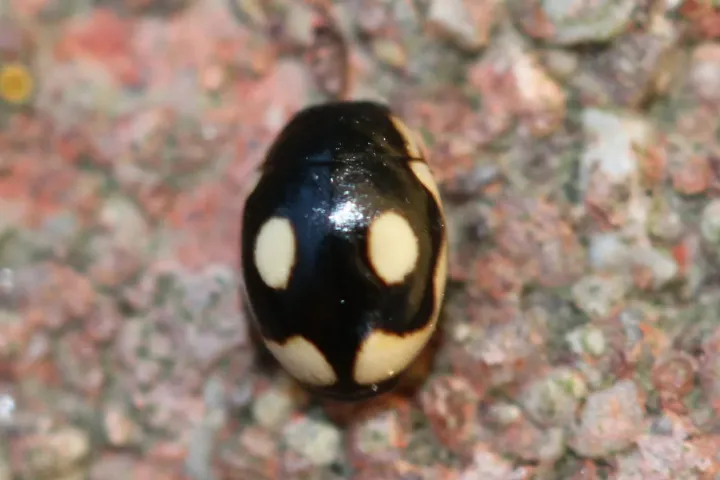
The adult beetle is small, typically measuring between 2 and 4 millimeters in length, and possesses a rounded, domed body shape characteristic of the family.
Its elytra are dark-colored, featuring a unique, wavy-like pattern of yellow or reddish-orange spots, which makes the insect relatively easy to identify in the field.
The larvae are campodeiform and are frequently covered with wax-like secretions, which serve as a primary defense mechanism against potential predators in their environment.
The lifecycle includes four main stages: egg, larva, pupa, and adult, with overwintering occurring primarily as adults hidden within organic mulch or soil debris.
What it damages
While many species in the genus are considered beneficial, Hyperaspis undulata can be found feeding on plant tissues under certain ecological conditions, causing stress to the host plants.
Infestations typically affect the soft, young tissues of host plants, including shoots, leaves, and buds, which are essential for the plant's development and seasonal growth.
The feeding activity leads to leaf deformation, yellowing (chlorosis), and stunted growth, effectively reducing the photosynthetic capacity of the plant.
In nurseries, high populations can cause significant cosmetic and structural damage to seedlings, hindering their marketability and overall development.
Secondary damage often occurs when the weakening of the plant makes it more susceptible to opportunistic pathogens or other pests, complicating the health of the crop.
Signs of infestation
Key signs of an infestation include the presence of discolored patches on leaves and evidence of gnawing on the edges of foliage or along the main veins.
The accumulation of waxy or sticky substances on the underside of leaves or within shoot junctions often indicates the active feeding phase of the larvae.
Early leaf drop and the curling of terminal shoots are common symptoms that suggest the pest population has reached a level requiring intervention.
Finding groups of adults on plant stems during peak sun hours serves as a reliable visual indicator of the pest's presence and activity on the plot.
Stunted development of new growth despite optimal soil nutrients is another diagnostic indicator frequently associated with high pest density.
Control measures
Managing Hyperaspis undulata requires a multi-faceted strategy that prioritizes habitat management and the use of integrated pest management (IPM) practices.
The removal of plant debris during the autumn and spring is crucial, as it eliminates primary hibernation sites and reduces the overwintering adult population.
Encouraging natural biological controllers in the garden environment can help keep populations below the economic injury level without the need for synthetic chemicals.
In severe cases, application of targeted, low-toxicity insecticides can be used, provided they are applied during the early stages of the pest's activity.
- Regular monitoring of sensitive crop varieties.
- Manual removal of affected plant parts when infestation is localized.
- Promotion of biodiversity to support beneficial insect populations.
Taxonomy
- Latin name
- Hyperaspis undulata
- Order
- Coleoptera (beetles)
- Family
- Coccinellidae
- EPPO code
- HYERUN
Discussion
No discussions yet — be the first.