
Hyalomma anatolicum
Hyalomma anatolicum
Description
How to identify
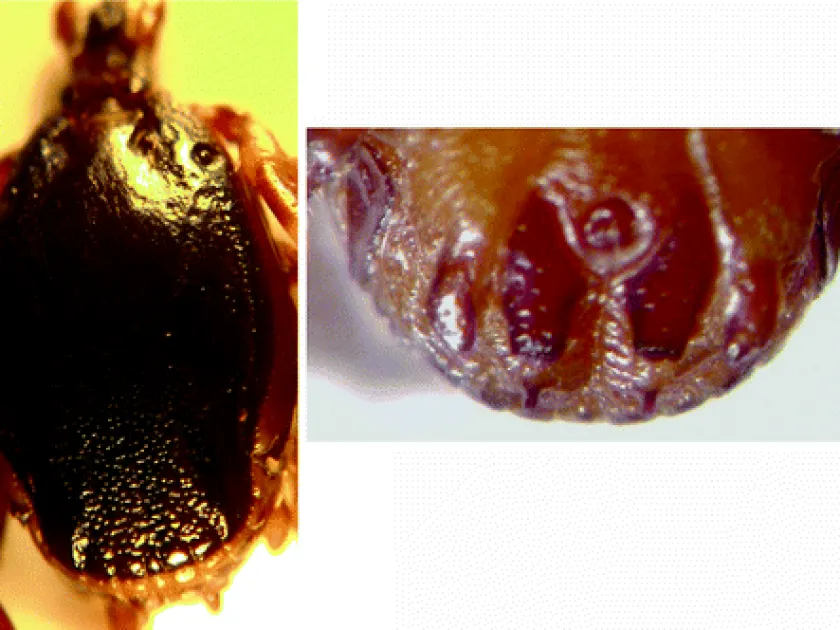
Hyalomma anatolicum is a species of hard tick belonging to the Ixodidae family. Adult specimens are recognized by their dark brown to reddish-brown coloration and a highly sclerotized scutum covering the dorsal surface.
A distinctive physical feature of this species is the presence of pale rings on the segments of the legs, which serves as a reliable marker for identification. Adults measure between 3 to 7 mm, though females expand significantly when engorged with blood.
The tick possesses a robust mouthpart designed for deep penetration into the skin of the host. The long palps ensure a firm attachment, making it difficult for the animal to dislodge the parasite through grooming or scratching.
This species follows a multi-host lifecycle, typically requiring different hosts for its developmental stages. Its adaptation to arid and semi-arid regions makes it a dominant parasite in many pasture environments.
The ability to withstand varying environmental conditions has allowed Hyalomma anatolicum to thrive in diverse geographical settings, particularly in areas with intensive livestock grazing systems.
What it damages
Hyalomma anatolicum is a major threat to livestock health, primarily targeting cattle, horses, and sheep. As an obligate blood-feeder, it causes substantial physiological strain on its hosts.
The most severe impact of this tick is its role as a vector for pathogens, specifically those causing theileriosis. This tick-borne disease can be fatal to cattle, leading to massive economic losses for the farming industry.
The physical act of feeding causes significant discomfort and pain, which leads to reduced feed intake, weight loss, and lower productivity in milk and meat production. Stressed animals are more susceptible to other secondary infections.
Lesions caused by tick bites often develop into secondary bacterial infections, resulting in abscesses and skin degradation. This damages the quality of hides, which is a significant factor in economic loss for agricultural sectors.
In cases of heavy infestation, young animals may suffer from severe anemia and generalized intoxication, necessitating immediate medical intervention and veterinary oversight to prevent mortality.
When it appears
The activity of Hyalomma anatolicum is highly seasonal, beginning in the spring and peaking during the hottest summer months. Climate plays a decisive role in the duration of its activity period.
Larval stages are most active in the vegetation during the late spring and early autumn, where they wait to attach to passing hosts. Warm and humid conditions in the soil provide ideal environments for their development.
The species thrives in temperature ranges between +25 and +35 degrees Celsius. These conditions accelerate the developmental stages, leading to higher population densities during mid-summer.
Overwintering occurs either in the adult or nymph stage, often in soil, under debris, or within the cracks of livestock sheds. This survival strategy ensures that the population persists even after harsh winter conditions.
Depending on local climate, the life cycle may take several months to complete. When conditions are favorable, multiple generations can emerge, increasing the parasite pressure on local livestock populations.
Signs of infestation
The presence of Hyalomma anatolicum is confirmed by visually inspecting animals. Ticks frequently attach to areas with thinner skin, such as the udder, perineum, tail base, and the area around the anus.
Animals affected by high tick burdens exhibit constant restlessness, rubbing against fences, posts, or trees. This behavioral change is often a clear indicator that the animal is suffering from tick-induced irritation.
A drop in milk yields and a general decline in the physical condition of the herd are often associated with active infestation. Owners should monitor for lethargy and lack of appetite during the peak summer months.
Local inflammation, swelling, and the presence of scabs at bite sites are classic symptoms. If a tick is found, it is typically engorged and firmly attached to the host's skin.
Clinical signs of blood-borne diseases, such as fever, anemia (pale mucous membranes), and respiratory distress, require urgent laboratory testing to confirm the role of Hyalomma anatolicum as the vector.
Control measures
Effective control involves the regular application of acaricides, including sprays, dips, and injectable treatments. These methods are essential for reducing tick populations on the animals.
Implementing pasture management, such as rotational grazing, helps break the tick's life cycle. By restricting access to certain areas, the parasite is prevented from successfully completing its developmental stages.
Livestock housing should be routinely cleaned and treated with appropriate insecticides to eliminate hiding spots like wall cracks and floor crevices where ticks overwinter.
Clearing vegetation and weeds around the farm perimeter reduces the habitat for tick larvae, making the area less attractive for the parasite to persist and await hosts.
Strict quarantine protocols for newly introduced animals are vital to prevent the introduction of tick populations and tick-borne pathogens into a previously clean and healthy livestock herd.
Taxonomy
- Latin name
- Hyalomma anatolicum
- Family
- Ixodidae
- EPPO code
- HYAMAN
Discussion
No discussions yet — be the first.