
Heterotoma meriopterum
Heterotoma meriopterum
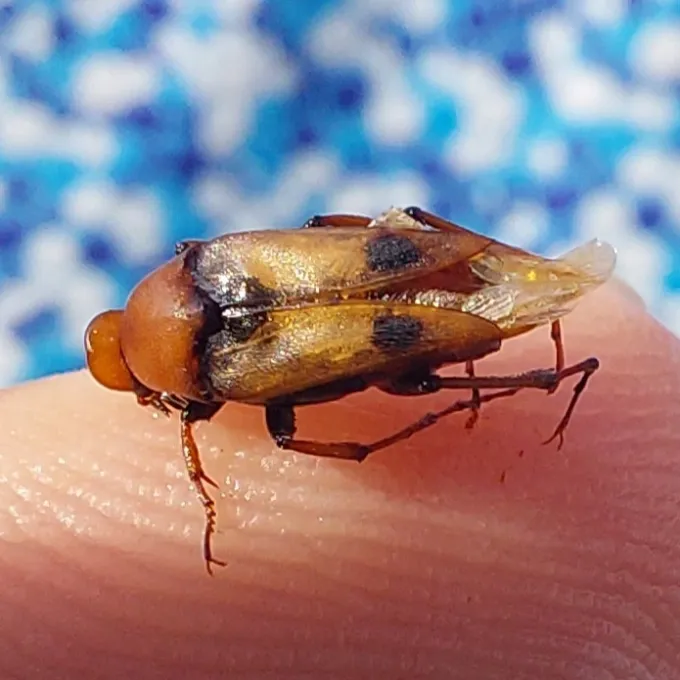
Description
How to identify
Heterotoma meriopterum is a member of the Miridae family, commonly known as mirid bugs or plant bugs. These insects are characterized by their elongated shape and dark, almost black or dark brown coloration, reaching about 6–7 mm in length.
A distinctive feature of this species is the swollen second antennal segment, which appears as a dark, thickened knob. The head and pronotum are often covered in fine, light-colored hairs that give the insect a matte appearance.
Adults possess functional, membranous wings, allowing them to fly between branches and host plants. Nymphs, while resembling adults, are wingless and significantly smaller, undergoing several developmental stages before maturation.
While many mirids are predatory, H. meriopterum often exhibits a mixed diet. They are known to puncture plant tissues to extract sap, which can classify them as pests in certain agricultural and gardening contexts.
Identification in the field requires close inspection of the undersides of leaves and young shoots. Because they are shy, they often hide in shaded areas of the foliage during the warmest parts of the day.
What it damages
This pest primarily attacks fruit-bearing trees such as apples, pears, and plums. It is also found on various ornamental shrubs and wild plants, which serve as alternative reservoirs for the population.
Damage is caused by both nymphs and adults piercing the epidermis of leaves and succulent shoots. These punctures disrupt cellular integrity and can lead to chlorotic spots or necrotic lesions on the foliage.
When populations are high, the bugs feed on developing fruit buds and young fruit. This activity often causes fruit deformation, scarring, and premature fruit drop, which significantly impacts harvest yield.
Feeding activity can also facilitate the entry of pathogens into the plant. Bacteria and fungi often colonize the puncture wounds, leading to further decay and stress for the host plant.
In nurseries and young orchards, intensive feeding can stunt the growth of young shoots, leading to reduced vigor and structural abnormalities in developing saplings.
When it appears
The species overwinters in the egg stage. Eggs are laid by females in the bark of young shoots or within the petioles of leaves, ensuring they remain protected throughout the cold winter months.
Nymphs typically emerge in late spring, coinciding with the opening of buds and the emergence of fresh foliage. This timing allows the pests to immediately access high-quality nutrition for their growth.
The development of nymphs occurs throughout late spring and early summer. During this period, favorable temperatures accelerate their metabolism and ensure rapid transition to the adult stage.
Adults appear in mid-summer and remain active until early autumn. While the species generally completes one generation per year, environmental factors can occasionally influence the exact timing of their lifecycle.
As autumn approaches, females focus on oviposition to secure the next generation. Monitoring bark condition and late-season activity is essential for planning effective cultural practices for the following year.
Signs of infestation
The earliest signs of infestation are small, light-colored or brownish spots on leaves. Over time, these spots can coalesce, leading to leaves that appear discolored and wilted.
Distortion of young, terminal leaves is a common symptom. This curling or twisting occurs because the bugs' saliva disrupts the normal growth regulators within the plant's vascular tissues.
Small, depressed, or necrotic dots on young fruit are clear indicators of feeding activity. As the fruit grows, these areas may become corky or scarred, ruining the visual quality of the crop.
Evidence of a significant infestation often includes the presence of dark, droplet-like excrement on the leaves and branches. This is a reliable indicator of active bug colonies in the crown.
Direct observation is possible by shaking branches over a white collection tray or using an entomological net during the cooler hours of the day when the insects are most active.
Control measures
Cultural control includes routine pruning of fruit trees to remove infested twigs and reduce available overwintering sites. This simple practice helps manage the population density at the source.
Biological control involves preserving natural predators, such as spiders, lacewings, and other predatory bugs. Maintaining high biodiversity in the orchard environment is crucial for natural population regulation.
Chemical intervention should be reserved for scenarios where economic damage thresholds are exceeded. Systemic insecticides applied during the early nymphal stages are generally the most effective.
Orchard hygiene, including the removal of loose bark and clearing leaf litter, helps minimize shelter for overwintering pests. Keeping the surrounding area clean prevents future re-infestation.
- Regular monitoring using sticky traps to detect early population spikes.
- Application of microbial biopesticides if environmental regulations permit.
- Maintaining spatial separation between young nurseries and older, heavily infested orchards.
Taxonomy
- Latin name
- Heterotoma meriopterum
- Order
- Hemiptera (bugs, aphids, leafhoppers)
- Family
- Miridae
- EPPO code
- HTETME
Discussion
No discussions yet — be the first.