
Raspberry beetle
Heterhelus
Description
How to identify
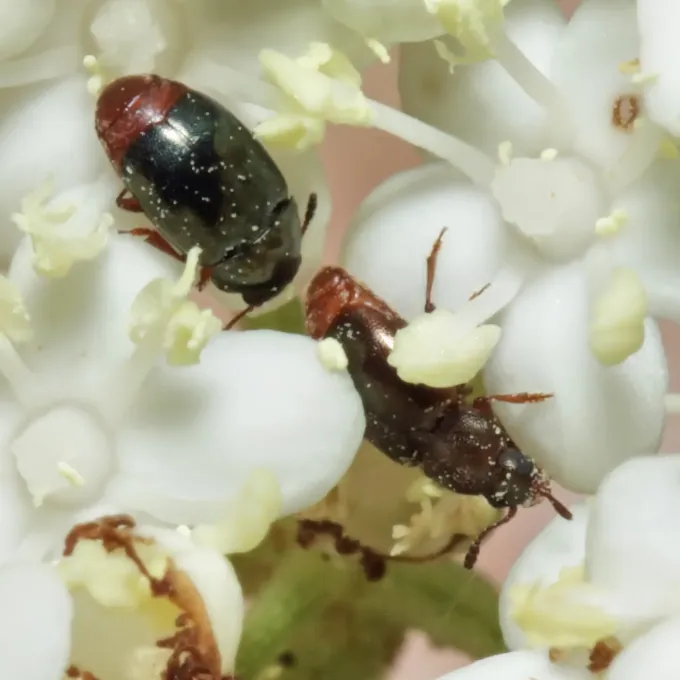
The raspberry beetle (lat. Heterhelus) belongs to the family Nitidulidae, commonly known as sap beetles. These are small insects measuring approximately 2.5–3 mm in length with an oval, brownish-gray body.
The body of the adult beetle is covered in fine, dense hairs, giving it a matte appearance. They possess distinct clubbed antennae, which are typical for this family and aid in sensory perception.
Larvae are whitish with a brown head capsule, reaching about 3–4 mm. They lead a cryptic life inside the flower buds, which makes them difficult to spot without close inspection of the plant tissues.
Adults overwinter in the soil or under leaf litter, emerging in the spring as temperatures rise. Their emergence is highly synchronized with the swelling of buds on host plants.
They are strong fliers and can quickly colonize raspberry and blackberry patches as soon as the weather becomes favorable for their activity.
What it damages
The raspberry beetle primarily infests crops within the Rosaceae family, causing significant damage to raspberries, blackberries, and their various cultivated hybrids.
Adult beetles feed on pollen, petals, and the internal tissues of developing flower buds. This activity often prevents the buds from opening, causing them to wither and fall off prematurely.
Larvae feed directly inside the receptacle and developing ovary, resulting in the destruction of the potential berry. This leads to a direct reduction in fruit yield.
In cases of heavy infestation, farmers may lose up to 50% of the early harvest. Early-ripening varieties are generally at the highest risk as they bloom during the peak activity of the beetles.
Besides direct yield loss, damaged plants are prone to physiological stress, which can lead to poorer growth and increased susceptibility to fungal diseases throughout the season.
When it appears
The lifecycle begins in early spring when air temperatures reach approximately 12–15°C, triggering the beetles to leave their hibernation sites in the soil.
They migrate to the bushes to feed on opening buds. Mating occurs shortly after, and females lay eggs inside the buds through small punctures made in the petal tissue.
The larval stage lasts for several weeks, during which the larvae consume the internal parts of the bud. Once developed, they descend into the soil to pupate.
Pupation takes place throughout the summer, and the new generation of adults emerges later in the season. These beetles feed on foliage until autumn before entering diapause.
Understanding this timing is crucial for management, as the most effective control measures must be implemented before the eggs are laid inside the buds.
Signs of infestation
The first signs of infestation include small, needle-like punctures on young leaves and the outer scales of the flower buds, which are caused by adult feeding.
Withered, yellowing, or hanging buds that have failed to develop properly are a strong indication of larval presence inside the floral structures.
Widespread dropping of buds and undeveloped ovaries on the ground is a common sight in heavily infested patches and signifies that the pest population is significant.
- Prematurely withered or dried flower buds.
- Deformed flowers that fail to produce fruit.
- Visible tiny holes on the surface of the buds.
- Reduced growth and vigor of the flowering shoots.
To detect the presence of adults, shaking the canes over a white sheet of paper during the early morning hours is a reliable monitoring method.
Control measures
Cultural control is essential; this includes regular soil cultivation under the bushes to disrupt the pupation cycle of the larvae in the soil.
Sanitation practices such as removing leaf litter and plant debris in the autumn are effective in destroying the overwintering habitat of the beetles.
Chemical control should be limited to the pre-flowering stage. It is vital to avoid spraying during bloom to protect essential pollinators like bees and other beneficial insects.
Biological control options, such as the use of entomopathogenic fungi or predators, can help maintain population levels below the economic threshold without harming the environment.
By monitoring the pest density, growers can target their interventions only when necessary, saving costs and minimizing chemical residues on the fruit.
Taxonomy
- Latin name
- Heterhelus
- Order
- Coleoptera (beetles)
- Family
- Nitidulidae
- EPPO code
- HETHSP
Discussion
No discussions yet — be the first.