
Cactus lace bug
Hesperolabops gelastops
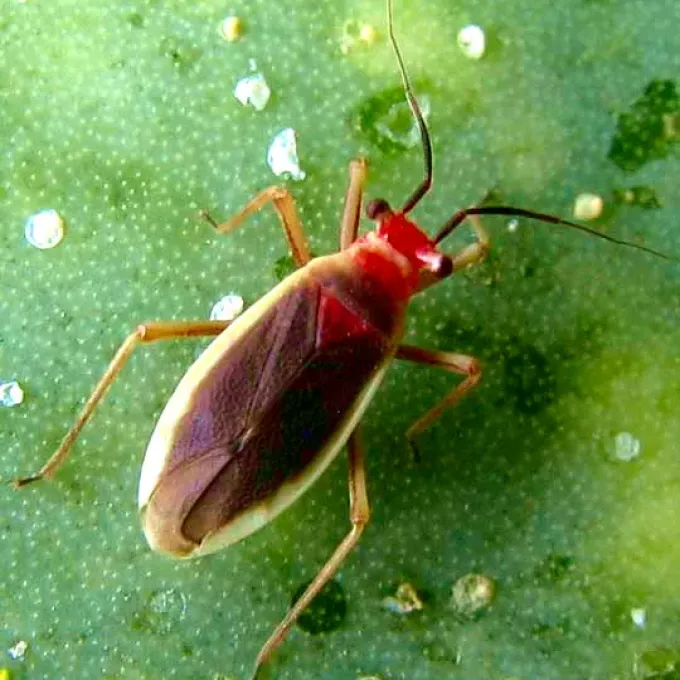
Description
How to identify
The cactus lace bug (Hesperolabops gelastops) is an insect belonging to the order Hemiptera and the family Tingidae. It derives its name from the intricate, lace-like pattern of veins on its pronotum and wings, which is a characteristic feature of the family.
Adult bugs are generally dark in color, ranging from dark brown to almost black. They are small, typically measuring between 3 to 4 millimeters in length, making them easily overlooked in dense cactus spines or on the surface of succulent stems.
The nymphs go through several developmental stages (instars) before reaching adulthood. They are less mobile than the winged adults and tend to cluster together on specific sections of the host plant to feed and develop.
These insects possess piercing-sucking mouthparts, which are specialized for puncturing the thick, waxy epidermis of cacti and other succulent plants to extract their nutrient-rich cell sap.
Because of their small size and cryptic habits, they often hide in crevices, the bases of spines, or in the natural folds of the succulent’s surface, which complicates their detection and control.
What it damages
The primary hosts for Hesperolabops gelastops include various species of cacti (Cactaceae), particularly Opuntia, as well as other succulent species that are commonly cultivated in indoor collections and botanical gardens.
By constantly extracting cell sap, the lace bugs significantly disrupt the plant's metabolic functions, including photosynthesis. This depletion leads to reduced growth vigor, stunting, and general poor health of the infested specimen.
As they feed, the bugs inject saliva containing enzymes into the plant tissues. This causes local cell death and the formation of characteristic bleached, yellowish, or necrotic spots on the epidermis.
In cases of heavy infestation, the aesthetic damage can be severe, causing the plant's skin to become rough, scarred, and brown. Weakened plants are also more susceptible to opportunistic secondary infections by fungi and bacteria.
In commercial nurseries, these pests can spread rapidly from plant to plant, as the adults can fly to new hosts, making them a significant threat that requires immediate containment and intervention.
When it appears
The life cycle of the cactus lace bug is highly influenced by ambient temperatures. In greenhouse environments where warmth is maintained, the insects can continue to reproduce and thrive throughout the entire year.
Activity generally peaks during the warmer months, corresponding with the active growing season of the cactus plants. High temperatures coupled with moderate humidity provide ideal conditions for rapid population growth.
During cooler periods, bugs may enter a state of reduced activity, hiding within the potting media or deep within the plant tissues, only to emerge when temperatures rise to resume feeding and egg-laying.
Because generations often overlap, it is common to find both immature nymphs and mature adults present on the plant simultaneously, which makes breaking the life cycle with a single treatment difficult.
Monitoring should be most intensive at the end of the winter dormancy period, as the warming temperatures trigger the emergence of the overwintering generation, potentially leading to explosive population growth.
Signs of infestation
The first signs of infestation are small, pale yellow or white stippling marks on the cactus skin. Over time, these spots expand and coalesce into large, unsightly patches of dead or discolored tissue.
The presence of dark, tiny fecal spots (frass) on the surface of the plant or among the spines is a diagnostic indicator that is often easier to spot than the bugs themselves.
Over time, the affected areas of the epidermis become rough to the touch and take on a "rusty" or corky appearance. This scarring is a permanent record of the bug's extensive feeding activity.
Plants suffering from severe infestations exhibit signs of dehydration, loss of turgor, and overall weakening. Growth is either significantly stunted or completely halted as the plant struggles to recover.
- Stippling and chlorotic spotting on the plant skin.
- Visible dark excrement on the surface of the cactus.
- Corky, scarred, or brownish epidermal lesions.
- Loss of turgor and general stunted growth.
- Direct observation of insects hidden in spine bases.
Control measures
Quarantine is the most important preventive measure. Every new plant entering a collection must be carefully inspected and kept isolated for a period to ensure it is free of these pests.
Mechanical control, such as wiping the plant with a soft brush dipped in an alcohol solution, can be effective for very minor infestations on a few plants, but it is labor-intensive and rarely sufficient for large collections.
Systemic insecticides are the most effective management tool. When applied as a soil drench or systemic spray, these chemicals are taken up by the plant, turning the sap toxic to the bugs that feed upon it.
A multi-application approach is necessary, usually involving repeat treatments every 7 to 14 days. This interval is crucial to ensure that newly hatched nymphs are killed before they can reach maturity and lay more eggs.
Always verify the plant's tolerance to specific insecticides before large-scale application, as some succulents are sensitive to certain chemical formulations. Follow all safety labels strictly during application.
Taxonomy
- Latin name
- Hesperolabops gelastops
- Order
- Hemiptera (bugs, aphids, leafhoppers)
- Family
- Miridae
- EPPO code
- HSPRGE
Discussion
No discussions yet — be the first.