
Melon ladybird
Henosepilachna elaterii
Description
How to identify
The melon ladybird (Henosepilachna elaterii) is a member of the Coccinellidae family, but unlike its carnivorous cousins, it is a significant agricultural pest. The adult beetle is hemispherical in shape, measuring about 6-7 mm in length, and is covered with dense, fine hairs.
The body color is generally yellowish-brown or light brown. The elytra feature distinctive black spots, typically numbering between 12 and 14, which serve as a primary diagnostic feature for identifying the species in the field.
The eggs of the melon ladybird are elongated and bright yellow. They are deposited by the female in neat, compact clusters on the undersides of leaves, a behavior typical for this species.
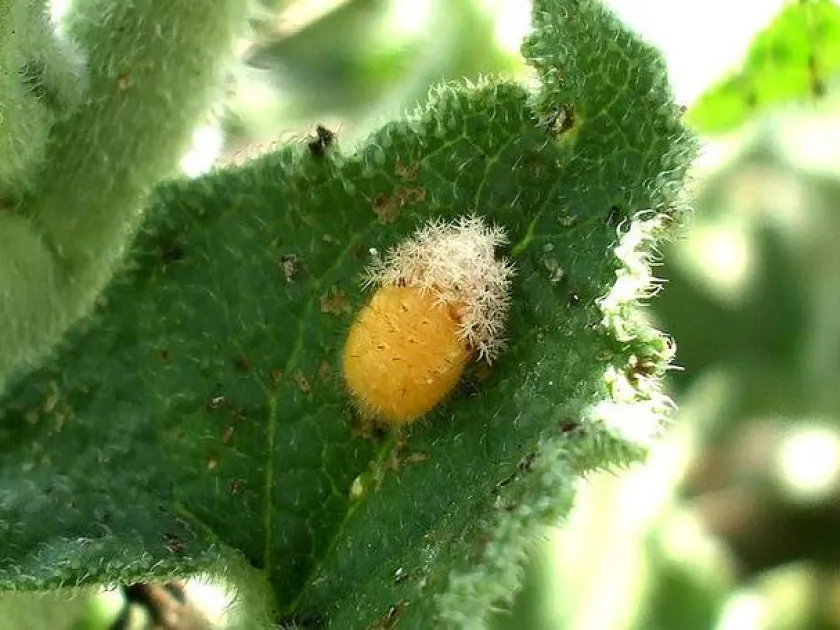
Larvae of the melon ladybird reach up to 10 mm in length. They have a yellowish body covered in numerous branched black spines, which provide a formidable defense against predators and make them quite easy to spot.
The pupa, which attaches to the leaf surface, is also yellowish and often retains remnants of the larval skin. Depending on environmental temperatures, the entire life cycle from egg to adult takes approximately one month.
What it damages
This pest specializes in attacking plants within the Cucurbitaceae family. Common targets include melons, watermelons, cucumbers, pumpkins, squashes, and zucchini, often resulting in severe crop losses if left unmanaged.
Both adults and larvae feed by scraping the plant tissue. They consume the parenchyma of the leaves, leaving the epidermis and the large leaf veins intact, which gives the leaves a skeletonized appearance.
When infestation levels are high, the destruction of leaf tissue significantly inhibits the plant's ability to photosynthesize. This leads to stunted growth and poor fruit development, directly reducing yield quality.
In addition to foliage, the beetles may feed on the tender skin of young fruit. These superficial injuries degrade the aesthetic quality of the harvest and create pathways for fungal and bacterial infections.
Without intervention, large swarms of this beetle can cause widespread defoliation, eventually killing the host plant and ruining entire fields of cucurbits in a relatively short period.
When it appears
Adult beetles overwinter in sheltered areas, such as plant debris, leaf litter, or the upper layers of the soil. As temperatures rise in the spring, they emerge to search for fresh host plants to feed upon.
The peak activity period occurs during the warm summer months of June, July, and August. These conditions are ideal for the rapid reproduction and development of multiple generations of the pest.
Infestation usually intensifies throughout the season. The first generation emerges in early summer, and subsequent generations can significantly increase the population density by the time the fruit matures.
As autumn approaches and temperatures drop, the adults begin to seek out suitable hibernation sites. They cease active feeding as they transition into a state of diapause for the winter months.
In warmer climates, the melon ladybird may produce multiple generations in a single year, making it a persistent and challenging pest for farmers to manage throughout the entire growing season.
Signs of infestation
The most visible sign of infestation is skeletonized foliage. This appears as a grid-like pattern on the leaves where the soft tissues have been consumed, leaving only the veins behind.
A closer inspection of the undersides of the leaves often reveals the characteristic bright yellow egg clusters or groups of spiny, yellowish larvae feeding in proximity to one another.
Plants undergoing heavy attack may show signs of wilting and yellowing. The foliage may curl and eventually dry out prematurely, which severely weakens the plant's structural integrity.
Shallow, irregular scars on the surface of young melons or pumpkins indicate that the beetles have turned their attention to the fruit. These marks are unmistakable signs of current pest activity.
- Skeletonized leaf patterns resembling a grid.
- Clusters of yellow, barrel-shaped eggs on leaves.
- Presence of spiny yellow larvae on foliage undersides.
- Premature browning and necrosis of leaves.
- Superficial scarring on maturing vegetable fruit.
Control measures
Proper field hygiene is the first line of defense. Removing and destroying all crop residues after harvest prevents the beetles from finding suitable overwintering sites near the fields.
Crop rotation is a highly effective preventive measure. By planting non-host crops for several years in a field previously occupied by cucurbits, growers can break the pest's reproductive cycle.
Manual removal of egg clusters and larvae is feasible in smaller home gardens. Regularly inspecting the plants during the early stages of the season can prevent a population explosion.
Chemical control involving insecticides may be required in commercial operations when infestation thresholds are exceeded. It is crucial to follow product guidelines to ensure safety and effectiveness.
Biological control agents, including natural predators or pathogens, can sometimes manage the population in integrated pest management systems. Monitoring is key to deciding when intervention is necessary.
Taxonomy
- Latin name
- Henosepilachna elaterii
- Order
- Coleoptera (beetles)
- Family
- Coccinellidae
- EPPO code
- HENSEL
Discussion
No discussions yet — be the first.