
Hemipenthes catulina
Hemipenthes catulina
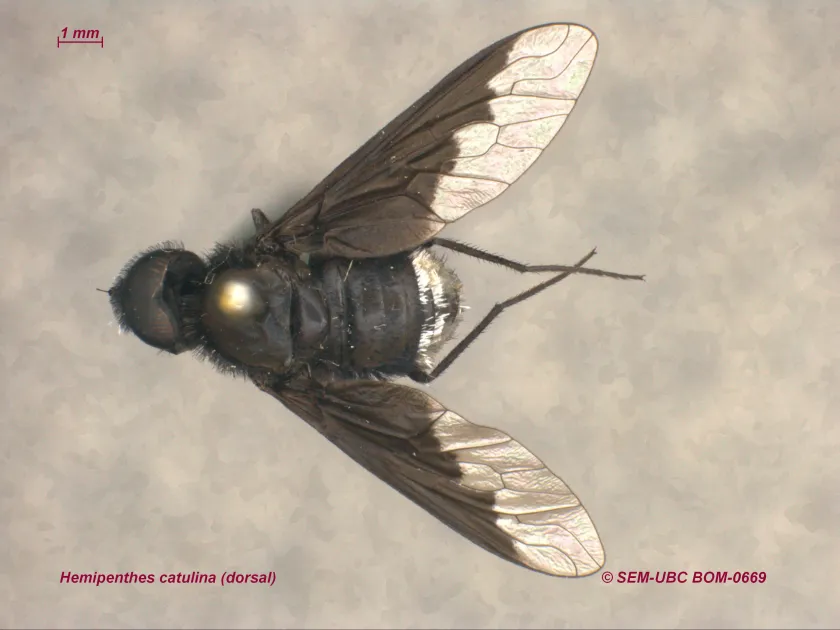
Description
How to identify
Hemipenthes catulina is a species of fly belonging to the family Bombyliidae, commonly known as bee flies due to their fuzzy and stout appearance.
These flies are easily recognized by their distinct wing patterns, which usually feature dark brown or black markings, and their rapid, hovering flight.
While adults look quite similar to bees, they do not possess a stinger and rely on their speed and agility to escape potential threats in the environment.
The larval stage is hidden within the soil, where they parasitize the pupae of other insects, making identification of this stage difficult for the average farmer.
Adults are typically 10–15 mm in size and are most often seen frequenting flowers or hovering over bare patches of soil during sunny days.
What it damages
The primary concern regarding Hemipenthes catulina is its role as a parasite of other insects, which may include beneficial species that help control primary crop pests.
By attacking the pupae of useful insects, this fly can disrupt natural biological control systems, leading to an increase in other pest populations.
Direct damage to plant tissues is non-existent, but the negative impact on the pollinator and entomophagous insect community can indirectly lower agricultural yields.
The economic impact is often debated, as bee flies are also considered pollinators, and their overall role in the ecosystem is complex and multifaceted.
In intensive farming environments, large populations of these flies should be monitored, especially if they are observed targeting the nesting sites of beneficial bees or parasitic wasps.
When it appears
Adults are most active during the spring and summer months, particularly during warm and sunny periods when they can easily forage for nectar.
The life cycle involves complete metamorphosis, with eggs being laid in or near the soil, providing the larvae access to their host insects.
Most of the development occurs underground, where the larvae feed on host pupae until they reach maturity and emerge as adult flies.
Overwintering usually takes place in the soil in the larval or pupal stage, allowing the species to survive colder temperatures and reappear the following spring.
The presence of adult flies is strongly correlated with the availability of floral resources and the population density of their insect hosts in the vicinity.
Signs of infestation
The most common sign of their presence is the sight of adults hovering low over the ground, which suggests the area is a preferred site for oviposition.
Farmers might notice a decline in the populations of ground-nesting pollinators or other beneficial insects that occupy the same habitat as the flies.
Using yellow sticky traps can provide an effective way to detect the presence of adult flies within orchard or garden settings.
Since the damage is indirect, there are no specific plant symptoms like chewed leaves or damaged fruits, making behavioral observation crucial.
Regular field scouting during peak bloom periods helps in tracking their population dynamics throughout the growing season.
Control measures
Control strategies should focus on preservation and ecological balance rather than total eradication, given the pollinating role of adult flies.
Minimizing the use of broad-spectrum soil insecticides helps protect the beneficial insects that compete with or regulate the population of these flies.
Tilling the soil in the late autumn can disrupt the overwintering stages of the flies, reducing their emergence numbers in the following year.
Maintaining diverse habitats with hedgerows and wildflower borders supports natural predators, which can keep bee fly populations in check.
Integrated Pest Management (IPM) practices should be followed to ensure that any intervention does not inadvertently damage the farm's native biodiversity.
Taxonomy
- Latin name
- Hemipenthes catulina
- Order
- Diptera (flies)
- Family
- Bombyliidae
- EPPO code
- HEMNCA
Discussion
No discussions yet — be the first.